
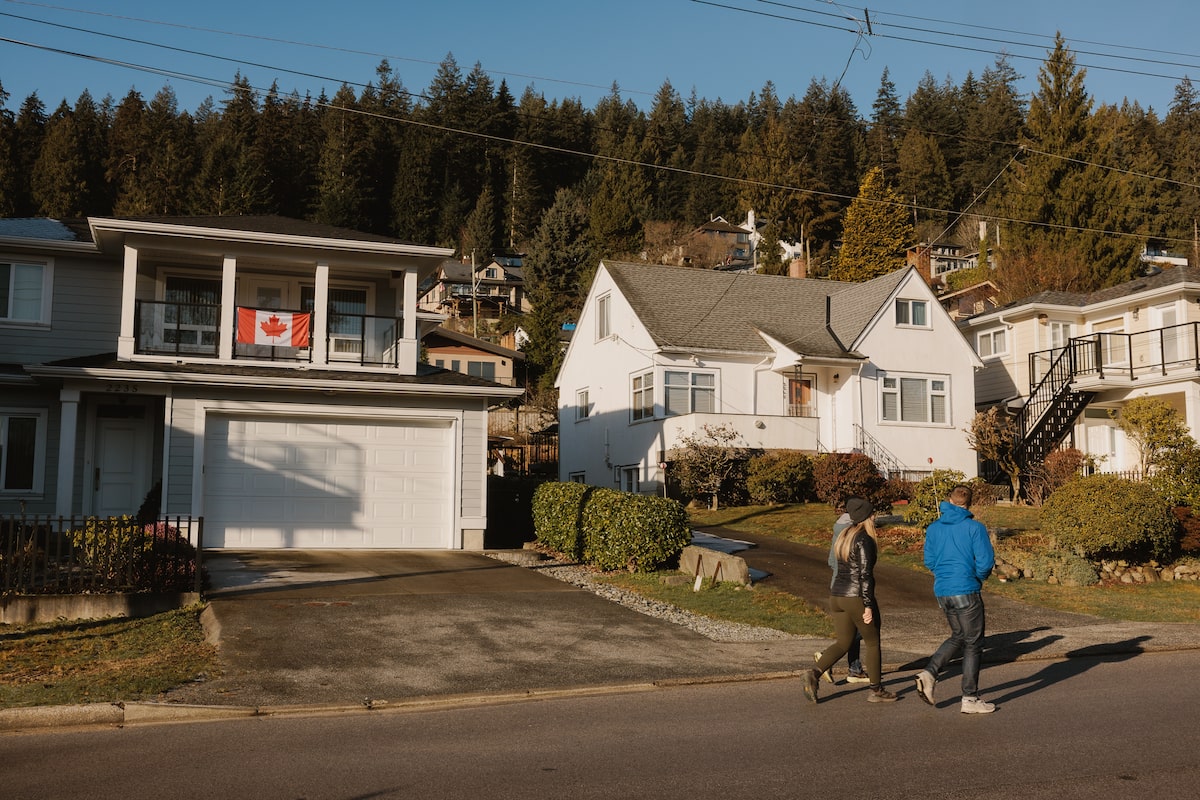
Locals and tourists flock to Deep Cove in North Vancouver, B.C., for ocean activities.Rachel Pick/The Globe and Mail
On Feb. 6, data editor Mahima Singh, consumer affairs reporter Mariya Postelnyak and reporter Andrew Galbraith answered reader questions on the third edition of our Canada’s Most Livable Cities ranking, including why certain communities came out on top and what your community’s place on the list could mean for you.
In this edition, we introduced a way to separate the ranking based on population. With this new feature, Ottawa came out as the most livable major city, with North Vancouver, West Vancouver and Pitt Meadows, B.C. coming out on top of their respective size categories.
Readers asked about the methodology of certain factors such as safety, crime and housing and how they were weighted, why certain cities dropped in ranking from previous years and what puts B.C. cities consistently at the top of the list. Here are some highlights from the Q&A.
Creating the ranking
Was living and green quality of life one of the criteria used in the lists?
Mahima Singh: We use a variable called the GreenLiving index to measure attitudes and behaviours related to household environmental issues. It’s based on 27 factors, such as using alternative energy at home, installing energy-saving lights, buying green cleaning products, and volunteering for environmental causes. It also includes residents’ modes of transport, including walking, cycling and public transport.
Mariya Postelnyak: In addition to the GreenLiving index mentioned by Mahima, access to parks, green spaces and recreation gave a big boost to cities that moved up in our ranking this year. In Summerland, B.C., for example, a new system of parks was a huge part of what helped it rise 171 spots in this year’s ranking with gains in community, safety and amenity scores.
The city invested $8.5-million for a new outdoor plaza, new misting stations and things like improved signage and access points to connect residents to nearby trails and the town’s centrepiece, Giants Head Mountain Park, which sits on an extinct volcano.
Sun Oka Provincial Park, located at the southern end of town, was also included in a $21.59-million provincial investment in BC Parks to boost access to outdoor recreation.
These cities’ livability rankings jumped further than anywhere else in Canada. What’s their secret?
Do some factors matter more than others? Many of the top cities on the ranking don’t have high scores on housing affordability, for example.
Andrew Galbraith: The question of housing affordability inevitably comes up any time one thinks about the livability of the Metro Vancouver area. My family and I moved to the Vancouver area a few years ago and I was blown away by what we were expected to pay to rent a small two-bedroom apartment.
What I would say is that we’ve been happy with the trade-off we made for livability. That may not be true for everyone.
I was also surprised in my reporting to talk a resident of West Vancouver – a notoriously unaffordable area – who found that she could get more for her money in Ambleside than in the city of Vancouver itself. Again, your mileage may vary.
Whytcilff Park in West Vancouver, B.C.Rachel Pick/The Globe and Mail
As our population becomes increasingly more physically inactive, I would like to know what importance you put on the variety, ease of access to sport venues and wilderness spaces within and adjacent to communities studied?
Singh: We track how close a city is to parks and how walkable it is. We also take into account residents’ modes of transportation, whether biking, walking, or public transport.
The B.C. distinction
Why do you pretend that North Van is one city when it is two different municipalities, but that West Van is a different city when it is an adjacent municipality with no visible difference from the two North Vans?
Galbraith: You make a fair point that these cities and districts do blend into each other. Sxwíxwtn Wilson Williams from the Squamish Nation pointed out that of course these boundaries didn’t exist historically. And the mayors of West Vancouver, and the City and District of North Vancouver also all spoke to me about their working relationships and the significant integration and cooperation between their respective councils.
Mayor Little from the District of North Vancouver gave the example of fire trucks. In an emergency, you might get a truck from the district or city of North Vancouver or West Vancouver responding to your 911 call. Recreation services are also integrated, he said. So they are technically separate entities, but, in practice, services can be shared pretty seamlessly from the public’s point of view.
I live in Richmond, B.C., and don’t understand your stat that suggests crime is 90 per cent worse here than in the rest of Canada. Can you explain?
Singh: We use the “likelihood of crime” index, which predicts crime and loss using over 100 types of population and economic data, along with patterns in behaviour, police reports, and client loss events.
The index uses the Canadian average as a baseline. For example, if you see +90 per cent, it means the likelihood of crime in that city is 90 per cent higher than the Canadian average.
Changes in city rankings
Why did Calgary drop so substantially in the latest report?
Singh: Calgary fell 71 places this year because the way it scores in most of the categories we track dropped.
It dropped the most in demographics, safety, housing, and the economy. These are our most important categories, so the city’s overall score dropped significantly.
Prices went up in the city, especially for housing, and the number of people living there grew much faster than in the rest of Canada. This could put pressure on things such as roads and public services, so the city got a low score in that area.
Illustration by Kathleen Fu
Why is London, Ont., so low on the list? Is it transit, roads and an unsafe core of the city?
Singh: Yes, you are right, London dropped the most in the transportation category. It now takes more time to get around the city, and it is harder to walk places than it was last year.
My city didn’t make the list this year, or last. What can we do to get our ranking up that worked for other communities?
Postelnyak: Some of it is about tangible improvements – upgrades to a recreation centre or investment in new transit. Other times, it’s about a city’s resilience and ability to withstand headwinds that push other towns lower in our ranking, thereby giving it a relative boost.
A lot of the time though, it’s the little stuff that propels a city up in our ranking – a new ice rink or pickleball court, updates to an aging community pool, or new bus routes connecting residents to the amenities that are already available. Quispamsis is a great example of that last point. This suburb of Saint John jumped more than 80 spots in our ranking this year, and is inching its way closer to the top. It already had pretty high-end amenities like a 50-metre lap pool and indoor walking track at its qPlex arena. But a new transit pilot last year helped make all of those great amenities more easily accessible for residents, which was a gamechanger.
Why didn’t Kelowna even make the top 100 list this year? I am asking because for those of us who live here, the quality of life feels unmatched.
Singh: Kelowna scored lowest in Safety and Housing, which are two of our most important categories, so its overall score dropped. It did get high scores in Climate, Education and Amenities, but these categories matter less than Housing and Safety in the final ranking.
Illustration by Kathleen Fu
Themes around livability
How much density is healthy for quality of life? And how much is too much?
Galbraith: I think the answer to this depends on your point of view. The mayors of the City and District of North Vancouver both had some interesting things to say. The City is significantly denser than the surrounding District, but for our ranking we combined the two.
Mayor Buchanan from the City said that its density in part reflected deliberate choices by city council aimed at making the city healthy. She told me that she sees housing as a key social determinant of health, and that planning for the city’s future requires making difficult choices around redevelopment that might see more single family homes converted into multi-family homes. She also talked about access to transit and walkability as contributing to overall health.
Mayor Little from the District had a different view. The district had prioritized planning around town centre developments for many years and he expressed frustration in particular with provincial legislation that he said would mean putting multiple units into single family lots. He argued that this would make car-dependent neighbourhoods even more car-dependent and create community conflict.
Why didn’t you include cycling rates or paths as part of your ranking? Many of the most livable cities are cycling cities.
Galbraith: I absolutely agree that cycling rates and paths are a great indicator of a livable city.
I can’t speak to the methodology, but would note that the City of North Vancouver has put a lot of emphasis on bicycle infrastructure and urban walkways. I also learned about an e-bike share program that’s active across the North Shore – a big help for residents and visitors dealing with the inevitable hills!