
Optimising aerospace fastener production
10 February 2026
SACMA Group is expanding its capabilities with a new range of machines for tailor-made solutions in special materials, particularly those used in the aerospace industry – ensuring the high standards for working with these materials are met.
Designed for different production volumes, from small batch sizes to high volume production, the machines cover a wide range of wire diameters from 3mm to 25mm, with temperature capacities ranging from 300°C (572°F) to 900°C (1,652°F). They are also compatible with the Internet of Things (IoT) for ‘real time’ monitoring and data collection, supporting ‘Smart’ manufacturing practices to increase productivity and efficiency.
Included in the range are SACMA’s warm forming headers equipped with a universal heating unit, suitable for all types of materials, allowing quick changeovers and motorised adjustments. The presses are incredibly versatile, without any restriction to the product range, producing fasteners, nuts, brackets and customised solutions with the same and unique machine.
The multi-stage warm forming machines use a precise tool design to form blanks in a near net shape, sometimes eliminating the need for grinding operations. This revolutionary process is made possible by the fully integrated heating unit, which includes two induction coils. One is positioned directly behind the wire feeder and the other is positioned inside the frame next to the shear bush. This unique system ensures uniform heating of the wire that reaches the core, guaranteeing the perfect homogeneity of the blank for the forming process. Furthermore, for maximum stability, the frame and coolant system are continuously thermoregulated, optimising tolerance management for parts.
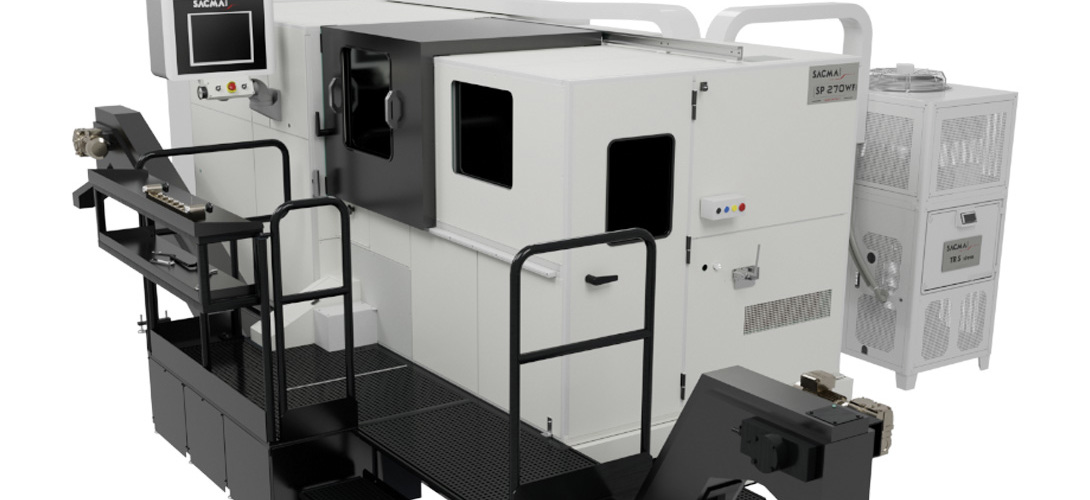
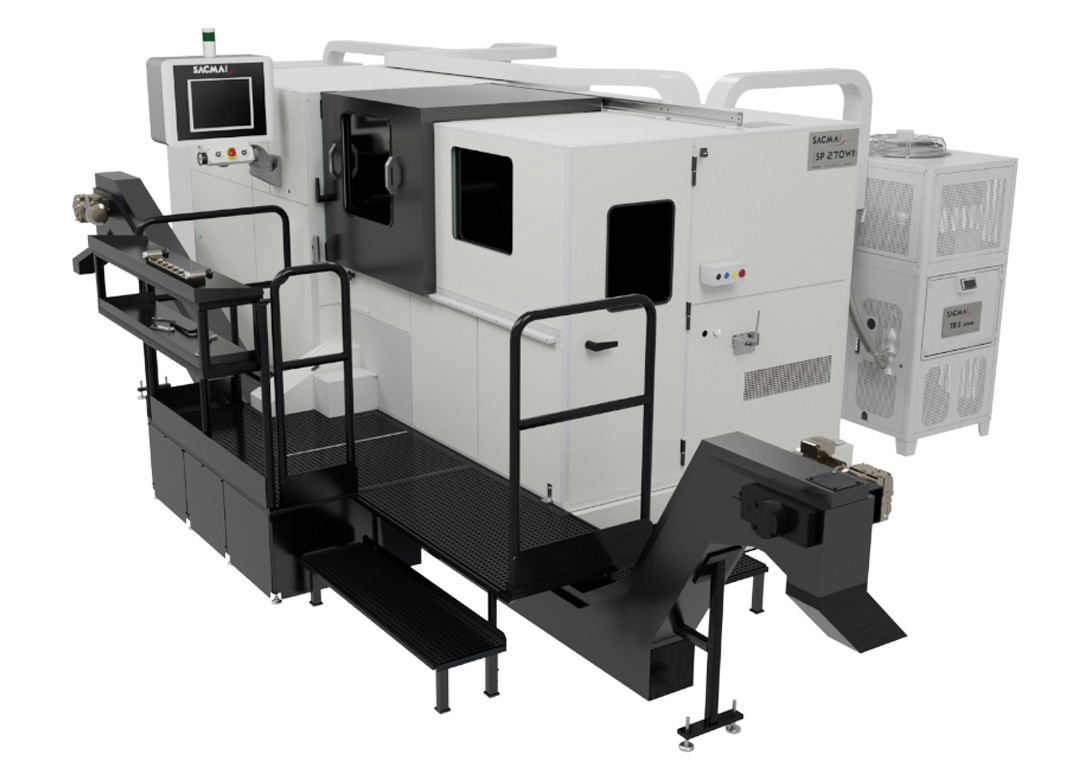
The most popular models for the aerospace industry are the SP270WF900 and SP370WF900, which enable the run of 80% of screws and nuts. These machines are also equipped with the latest version of an HMI program, as well as feature a simple and intuitive user interface for ease of use. Plus, all partial recipes are stored without any restrictions, which ensures easy and quick changeovers – making them ideal for low quantity production batches. Also available in this new range is the combined 1D/2B KSP12, which offers an integrated hot forming unit and threading station, for the production of simple fasteners in only one process.
To complete the range of SACMA headers, Ingramatic’s warm forming thread rolling machines are designed to be able to thread both cold and hot blanks, depending on the requirements of the material and the production speed. These high performance machines feature the revolutionary I-Thread concept and offer significant improvements in thread quality, productivity and efficiency. The 300ppm maximum production speed enables titanium parts to be produced in warm forming mode, drastically reducing the production time and allowing the material flow to move better.
In addition, the WF thread rollers can roll all shapes of bolts, screws, studs and parts from materials usually unable to be rolled using traditional machines. Some of the most popular models in the aerospace industry include the RP220WF with a 12kW heating unit, as well as the RP420(L)WF with a 24kW heating unit. These machines are equipped with a quick set-up system where all settings are fully motorised. The one piece cast iron frame and reaction block, which counteracts the stresses of thread rolling, ensures that no bending occurs when threading special materials and profiles. User-friendly and highly ergonomic, the machines also feature an HMI program with all WF functions on a separate page for the warm forming system, enabling constant control with the display of the ‘real time’ temperature, as well as the kilowatts required to heat the parts.
Finally, for secondary operations, HS ASPE offers the HDT12 and HDT20 models, which are combined machines suitable for drilling, boring, facing, chamfering, broaching and tapping. These operations can be performed sequentially or in overlapping modes – with up to four spindles. This functionality not only increases product consistency and output rates, but also reduces the need for multiple machines, ensuring higher productivity and reliability.