
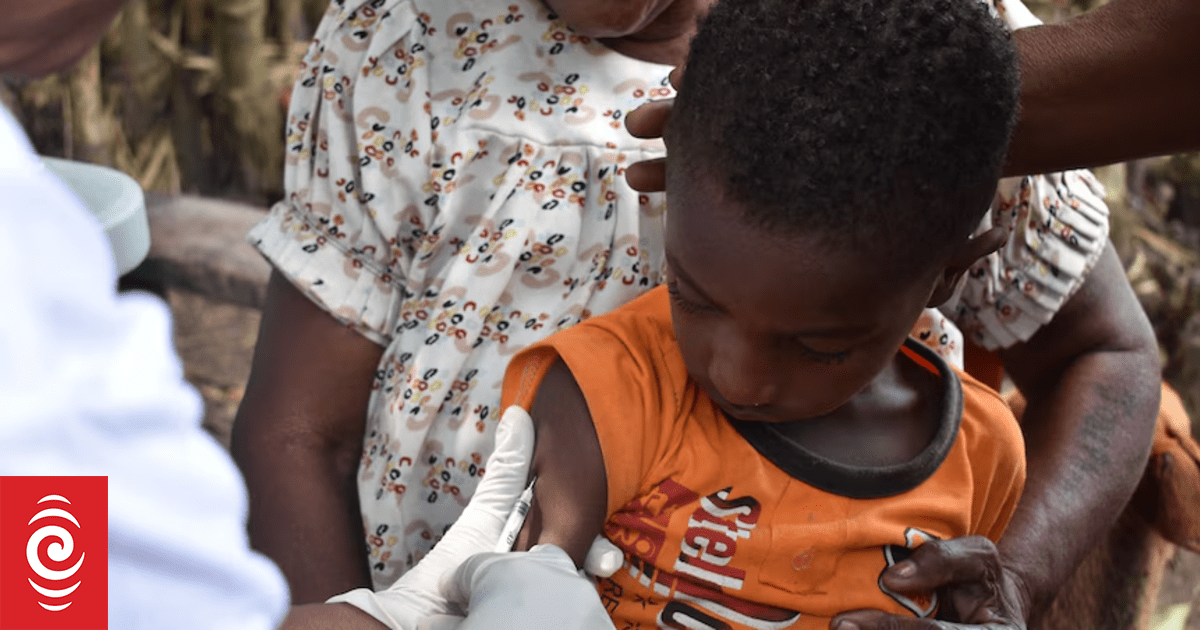
The World Health Organization says it has confirmed two polio infections in PNG.
Photo: Supplied / UNICEF/PNG/Chamber
Senior health officials in Papua New Guinea say progress is being made in the campaign against polio.
An outbreak was declared in May last year following the detection of poliovirus in waste water in the two main cities, Lae and Port Moresby.
In the latest polio update provided to RNZ Pacific, the Health Minister Elias Kapavore said the country currently had five cases of children paralysed by polio.
“These children are receiving appropriate care and rehabilitation,” Kapavore said, applauding the efforts of health workers to reach remote villages to identify the cases.
As of October, 64 positive detections of the virus were reported across PNG – Morobe Province had the most cases with 32, National Capital District had 25, while Eastern Highlands and Western Highlands had 3 and 4 cases respectively.
“Since 13 October, no further positive samples have been confirmed,” the minister said.
Mass immunisation drive
Kapavore said the outbreak occurred because vaccination rates of children in PNG were very low.
But he said with support from Australia, New Zealand, Japan and others, a campaign to vaccinate children against polio swung quickly into gear. New Zealand contributed $2 million.
“With commitment from many of our partners, we got many of our provincial health authorities for our 22 provinces to engage in this campaign to vaccinate more than 2 million children in the past twelve months,” he said.
Kapavore said while the vaccination target of 95 percent of children was not achieved, 83 percent was still a good result. The benefits are starting to be seen in some of the polio hotspots.
Lae City’s Angau Memorial Hoispital acting medical services director Dr Lincoln Menda said Morobe has benefited from a “massive, massive vaccination right across Morobe Province”.,
“We have vaccinated a majority of the vulnerable populaion, especailyl children, and we have prevented infection.
Awareness
Menda described the polio response as “an ongoing issue” with efforts to grow public awareness about polio in the wider community remaining a priority.
“We are continuously giving them education on the universal precautions such as washing hands, using the toilets straight and disposal of toilets in the right places.”
Kapavore said overcoming lingering vaccine hesitancy that surged during the Covid-19 pandemic was a challenge.
“It’s an issue that we were challenged with, with regard to public perception about vaccinations as a result of Covid-19.
“But there’s been more awareness conducted by many of our health workers. And people have now accepted the fact that we must allow our children to be vaccinated.”
Kapavore expressed gratitude to PNG’s partners who helped in the polio response – including the Australian, New Zealand and Japanese governments, Unicef, the WHO and the Global Polio Eradication Initiative.