
Alones/Shutterstock
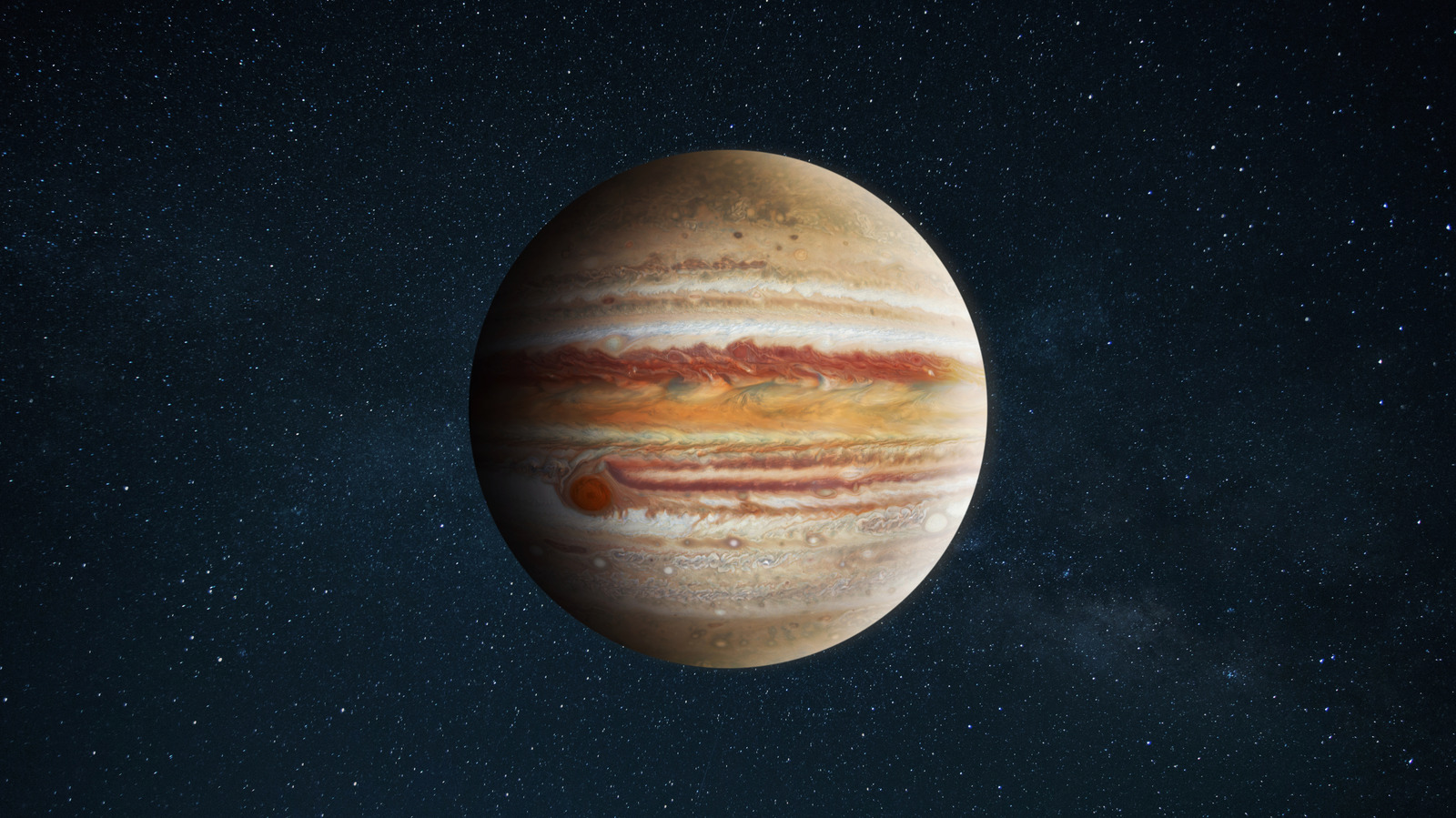
Jupiter is the largest planet in the Solar System, a gas giant so massive in scale that it can fit more than a thousand Earths inside it. It’s a distant planet that we know fairly little about. But it turns out, even the things that we did know weren’t the most accurate. New findings show that Jupiter is smaller and flatter than previous estimates, which means we might have to update our textbooks.
This new information comes from a research paper recently published in Nature Astronomy. The findings show that Jupiter is slightly smaller than previously thought, having a radius around 12 kilometers (7.5 miles) smaller from north to south and 4 kilometers (2.4 miles) smaller at the equator. This also shows that Jupiter is a lot more oblate than scientists originally believed, having a more pronounced equatorial bulge. Other findings from the paper show that Jupiter has a cooler atmosphere than existing models and is rich in metals, contrary to earlier assumptions.
How the new information on Jupiter was obtained
Thibault Renard/Getty Images
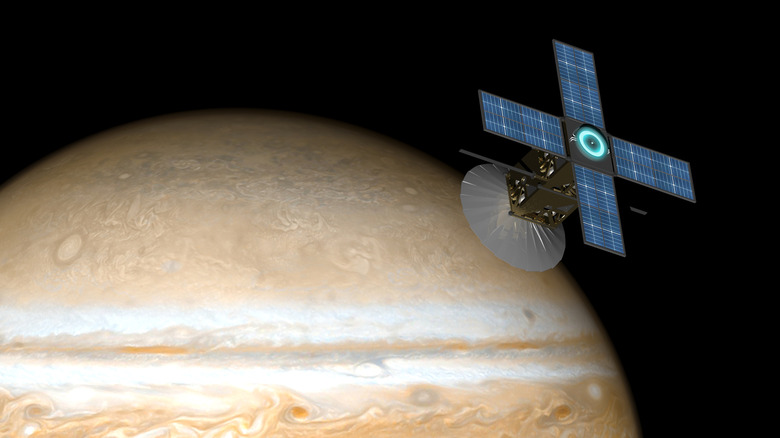
Scientists derived current models of Jupiter from five-decade-old radio occultation observations — a method of remotely gathering data by measuring the bending and delay of radio signals — from the Pioneer and Voyager spacecrafts (the latter of which is still active today). Alongside this, they also used data gathered by the Galileo probe that penetrated Jupiter’s atmosphere in 1995. The new findings take data from NASA’s Juno spacecraft, which has been in Jupiter’s orbit since 2016.
Juno observed Jupiter from an angle previously not used by going on an extended orbit behind the planet from Earth’s perspective. As it moved, Jupiter’s large mass blocked and distorted the radio signal being sent back, but those on the Juno team were able to calculate these distortions to create a full map of Jupiter’s size, shape, and temperature profiles.
The reason prior findings weren’t as accurate was because they didn’t account for Jupiter’s strong winds. This signal interference caused discrepancies in data taken from those previous observations.
Reconciling inconsistencies in Jupiter’s observation
buradaki/Shutterstock
Prior to Juno’s data, there was a disagreement in the data between findings from the Galileo probe and observations made by Voyager and Pioneer. Galileo’s data showed a planet that’s hot and not abundant in elements, whereas Voyager and Pioneer portrayed one that’s colder and element-rich.
Juno’s findings reconcile these two different datasets, showing that Jupiter’s atmosphere isn’t uniform: There are parts that are hotter and more volatile than others. Most of the water vapor is concentrated near the equator, with the rest of the outer atmosphere relatively dry. Galileo’s probe was most likely just unlucky and recorded in one of the more barren spots of the atmosphere.
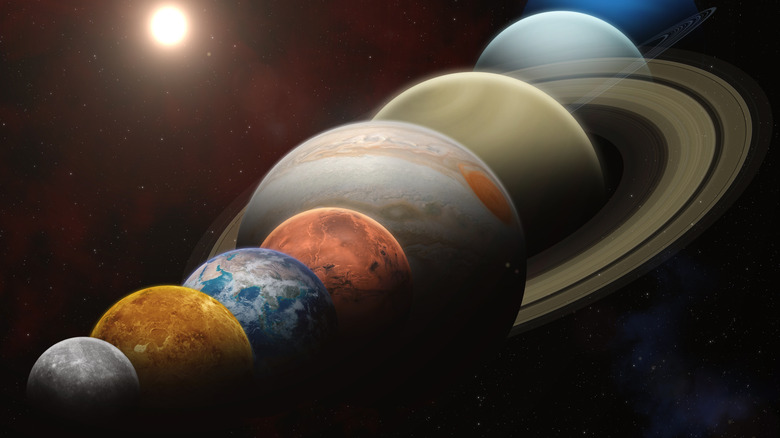
These findings will give us more insight into many of the questions we have for Jupiter, including how old Jupiter really is. Furthermore, since Jupiter is likely the oldest planet in the solar system, scientists working on the paper believe that researching Jupiter can help us learn more about how the solar system formed, how planets evolve, and potentially even how life came to be on Earth.