
When Indigenous trainee zoo keeper Vincent Hamilton bent down to check a trap in the Sturt National Park recently he was on the verge of making an unexpected but very welcome discovery.
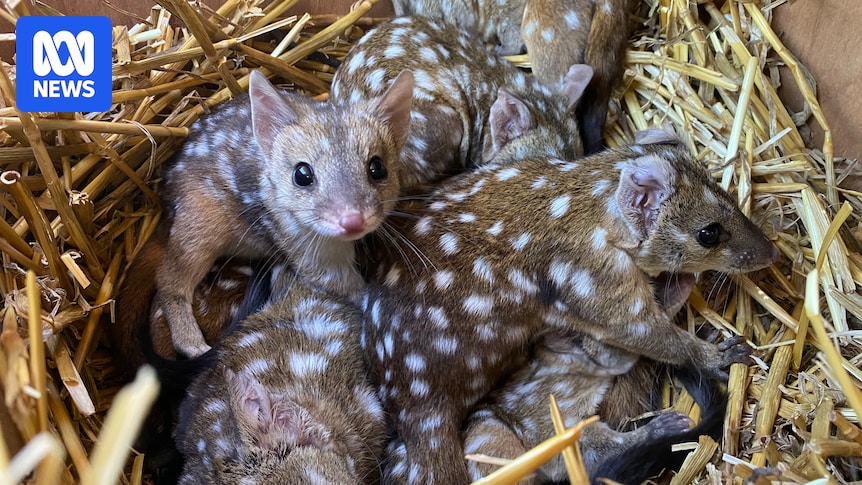
Inside was a baby chuditch, or western quoll, believed to be one of the first born in the wild in New South Wales in more than a century.
“He was actually in our very last trap and we thought it was a golden bandicoot at the time,” Mr Hamilton said.
“And then [I] opened the trap and here comes this beautiful, very young boy who hasn’t been caught or seen before.
“We measured and weighed him and took samples of his skin and fur for researchers, and then I actually got to release him.”
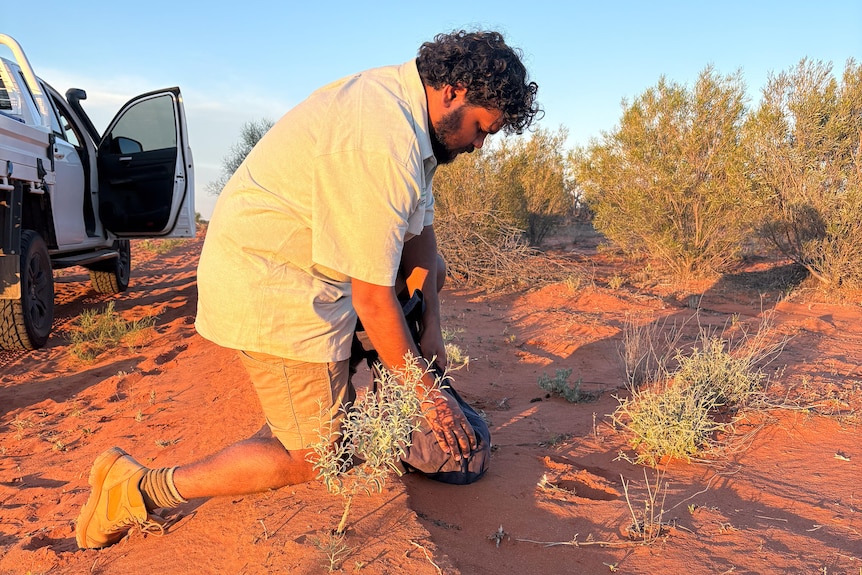
Taronga trainee keeper Vincent Hamilton in the Sturt National Park. (Supplied: Taronga Western Plains Zoo)
The species was thought to be extinct in NSW until 2024 when an initial 16 Taronga-bred animals were released into the park’s 100-square-kilometre Wild Training Zone, which is the size of 11,000 football fields.
Their survival has not come easily with the quolls navigating life alongside the carefully managed feral predators inside the training zone.
Feral cat numbers are controlled through shooting and trapping, allowing the native species to learn and adapt to living alongside them.
In late 2025 a team of conservationists travelled west to monitor the progress of the program, capturing 57 chuditch and bilbies, including the six newly identified animals.
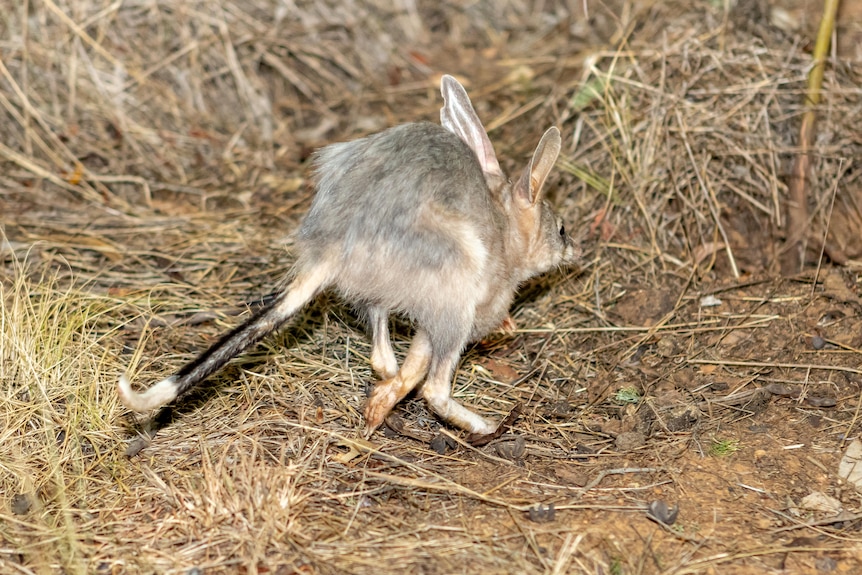
A bilby in the Taronga Sanctuary. (Supplied: Rick Stevens)
Another First Nations trainee, Jarred Clark, was also on hand to help.
“It turned out to be one of the most successful data collections and just proved that the work they are doing out there is actually working,” Mr Clark said.
The survey was part of the Wild Deserts partnership with UNSW Sydney and NSW National Parks.
Surviving and thriving
Bilbies were once found across 70 per cent of mainland Australia but have been reduced to fragmented populations in the Northern Territory, the Great Sandy Desert, Pilbara and Kimberley regions of Western Australia and south-western Queensland.
Since the project started a total of 305 bilbies and 68 chuditch have been released.
Loading…
Watching the animals reproduce in their natural habitat gave the trainees valuable hands-on experience and insight into conservation work.
“Seeing the work that is put in behind the scenes, and as a proud Indigenous man being a part of a project like this that means so much to our people, I really love being a part of it,” Mr Clark said.
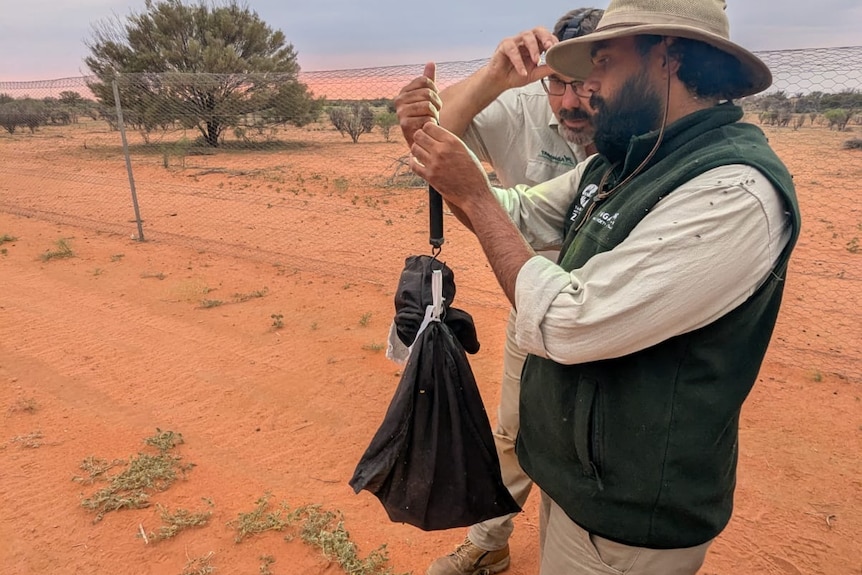
Jarred Clark (front) and Steve Kleinig prepare zoo-bred bilbies for release. (Supplied: Taronga Western Plains Zoo)
Their participation highlights the growing role of Indigenous trainees in supporting threatened species programs and protecting biodiversity in western NSW.
“Being on country and working with these endangered species was really eye-opening,” Mr Hamilton said.
“It really shows you how the country would have looked back in the day when they lived in the wild.”
Creating conservation pathways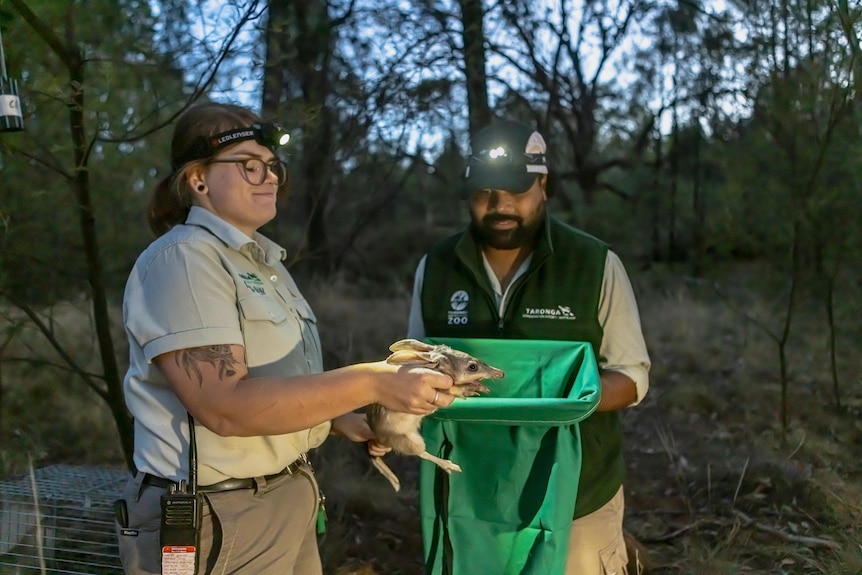
Leonie Pascua and Jarred Clark assess a bilby in the Taronga Sanctuary. (Supplied: Rick Stevens)
Not only are the pair working with animals, they also help with the zoo’s youth program where children in foster care come to the zoo once a week.
“We teach them things they don’t get taught — how to clean up areas, how to do daily chores and also do the fun things like working with the animals, feeding the animals,” Mr Hamilton said.
“I love being a role model for the kids and giving them something to do, not just sit at home.
“I was a foster child, too, so it really helps. The kids look up to me and help them get a foot in the door and hopefully, maybe, one day they will work at the zoo too.”