
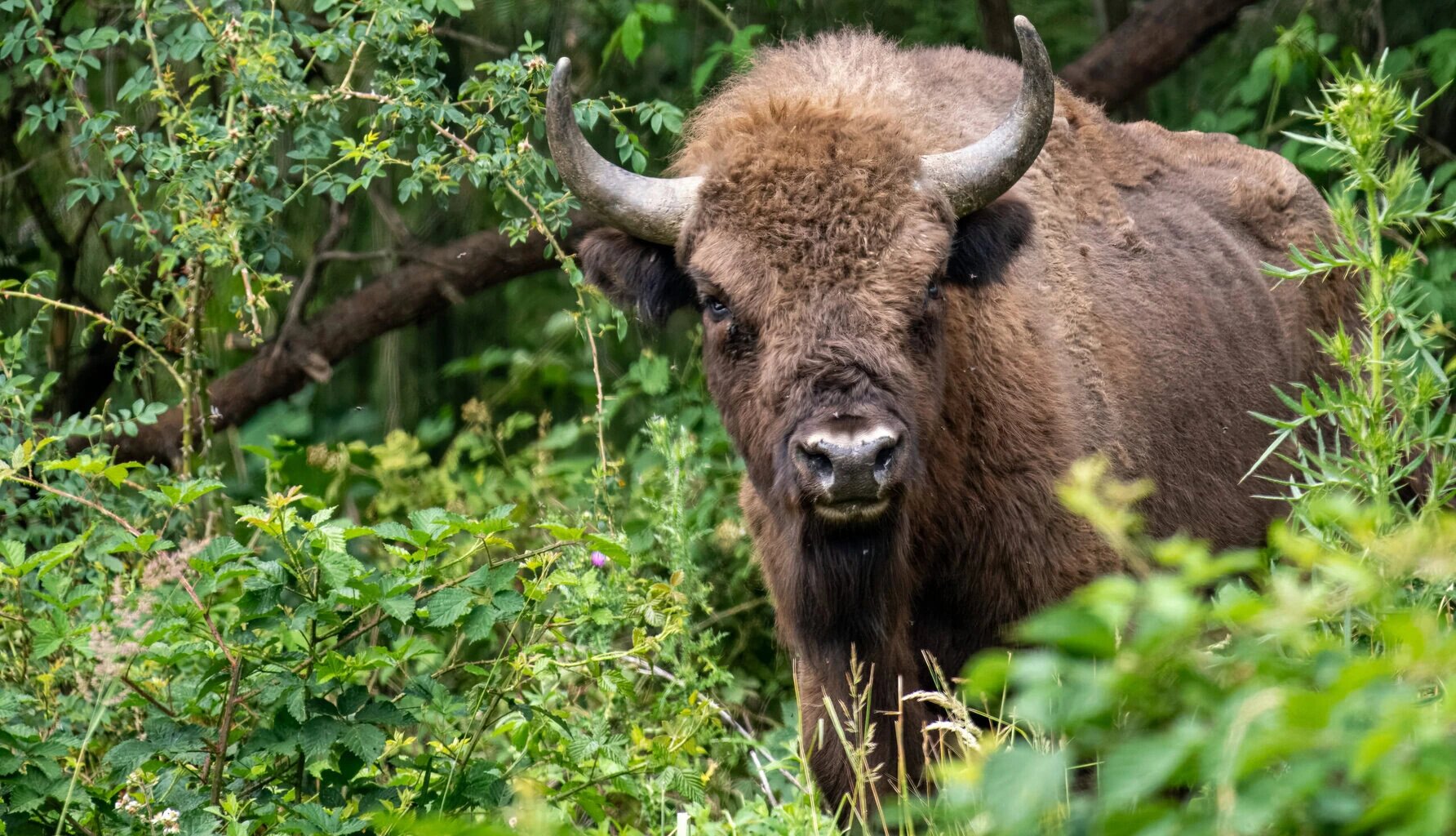
Once rewilded, a new set of challenges emerges. Introduced bison behave somewhat differently from the ones now being born in the wild. “They are relatively used to humans and, in winter, when there isn’t much to graze on, often forage in apple orchards in lower altitudes,” Sebastian Ursuta, who handles communications for Rewilding Romania, says.
Ursuta’s phone is the bison hotline, available to community members who have close encounters with the animals. “The bison are gentle but can look intimidating,” he says. His job is to visit bison contact areas, allay people’s fears about the animals and assess the damage, if any. Rewilding Romania has also successfully piloted training mountain dogs to deter the bison from coming too close to human habitations, and now rangers are always accompanied by canines.
Weighed down by negative news?
Our smart, bright, weekly newsletter is the uplift you’ve been looking for.
“Once an older guy called and said ‘the bison are here,’ and I was like, ‘okay, did they do any damage?’” Ursuta recounts. “He said they didn’t, ‘but they are here, and I haven’t met a bison before and I don’t know what to do!’” Ursuta, along with rangers like Ioan Simescu, smooths things over when “sometimes the bison help themselves to an apple or two from private orchards, breaking a few branches here and there.”
The practice of hunting poses another challenge. In 2017, a wild European bison was shot after it crossed the border from Poland into Germany, highlighting the need for more comprehensive trans-boundary measures to support bison comeback. Rewilding Romania has been fencing areas close to habitations where the bison tend to stray, but this is expensive and needs regular maintenance.
The incident underscores the need for developing awareness about bison. For Ursuta and the Rewilding Romania team, this means incentivising the community to become “bison smart.”
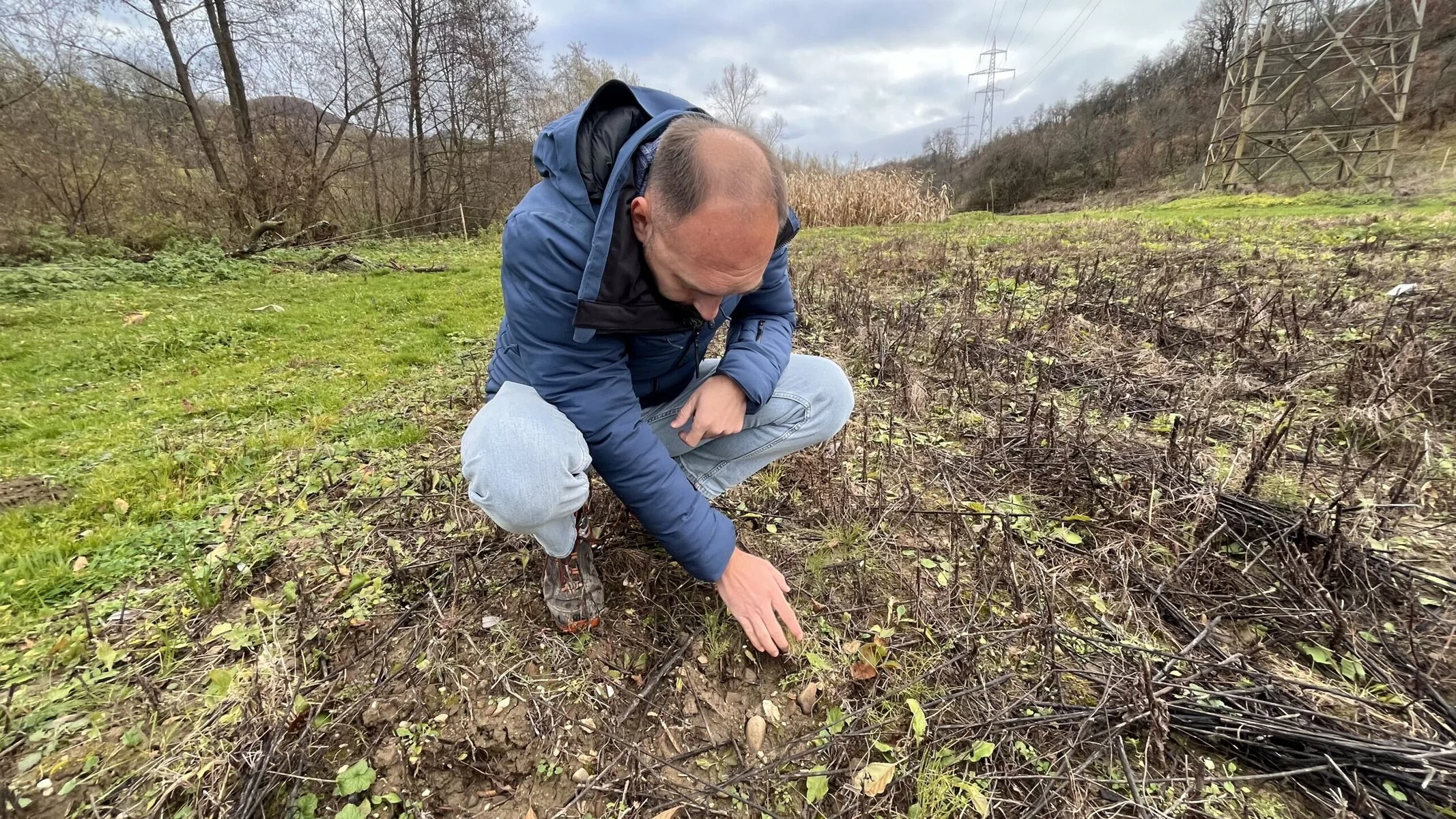 Sebastian Ursuta examines a bison hoofprint near an orchard. Credit: Geetanjali Krishna
“By linking bison to local pride, and also local businesses and jobs, we hope to get local people to welcome them into the community,” says Rewilding Romania’s Paula Cristina Bora, who organizes livelihood training, capacity building and outreach programs that help people to see bison as an opportunity instead of threat. Bora recently worked with a local producer to develop an apple spritzer, made with “co-existence apples” bought at prices higher than the market rate from orchards frequented by bison, which is already working its way into cocktails in taverns in Timisoara, the nearest town.
Simescu, a local resident who now works as a guide and ranger with Rewilding Romania, says that reintroducing the bison has created several business opportunities for locals. New homestays and wilderness camps have opened, and some have already begun offering bison-spotting hiking holidays.

Wait, you’re not a member yet?
Join the Reasons to be Cheerful community by supporting our nonprofit publication and giving what you can.
In the autumn of 2023, a herd of reintroduced wild bison reportedly migrated naturally from the Țarcu Mountains to the Domogled-Cerna Valley National Park. Ursuta estimates the local bison population at over 250, of which they have rewilded 105. “Way over half of them have now been born in the wild, and we also have a second generation of wild bison,” he says. “We’re carefully selecting new bison for reintroduction, to increase the population’s genetic diversity.”
Contrary to traditional approaches, which feared that rewilding grazing species could further degrade grasslands and meadows, a 2024 study used a model developed by scientists at the Yale School of the Environment and found the opposite. The research has not been peer reviewed but estimates that the nearly 50 square kilometers of grasslands within the wider Țarcu mountains where the European bison herds now live are capturing roughly 10 times as much carbon as they were before the species was reintroduced.