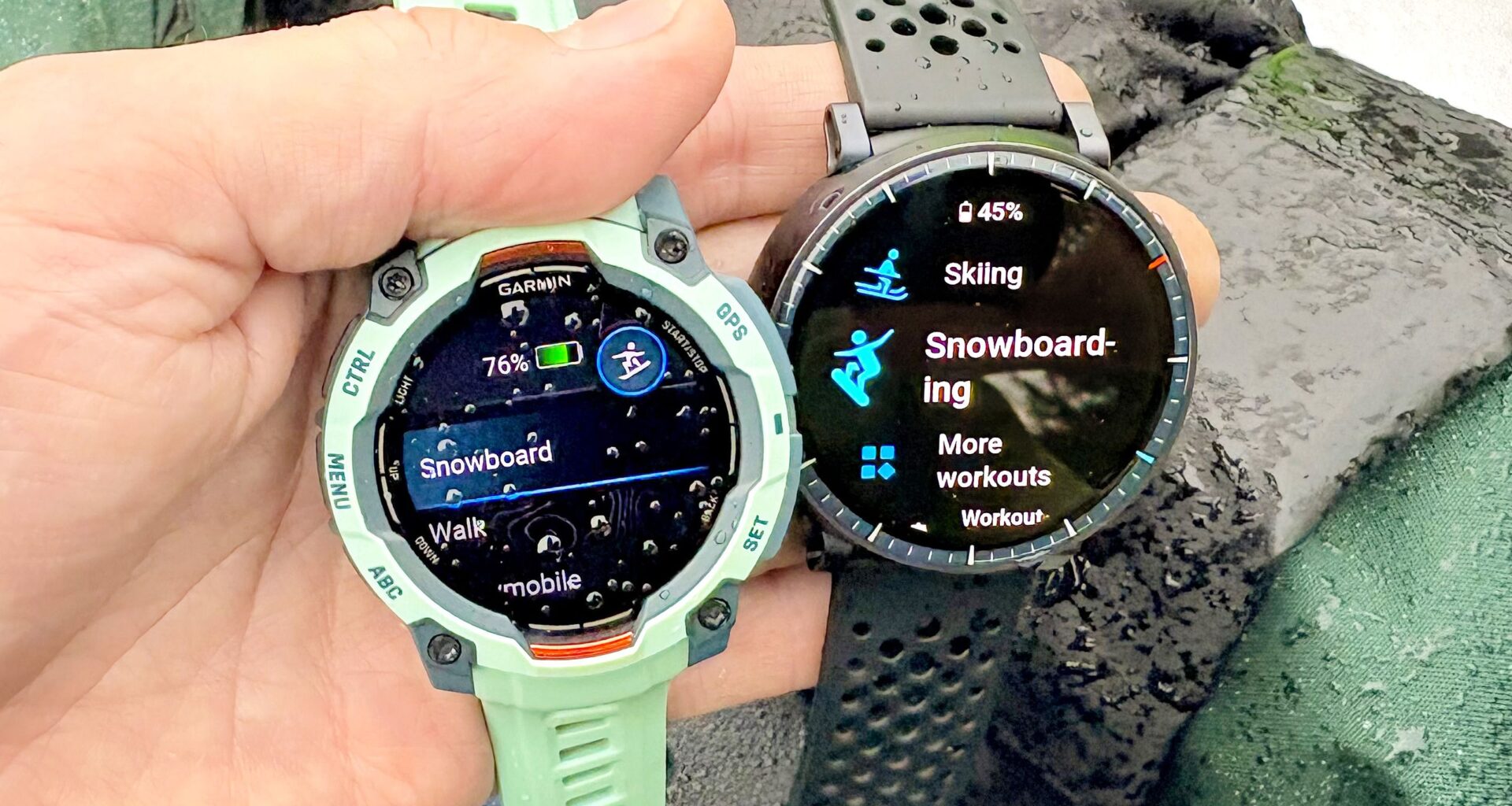
Can a budget-minded smartwatch from a relatively new brand beat a tried-and-true Garmin when it comes to accurately tracking your outdoor adventures? I decided to find out by pitting my favorite rugged smartwatch in 2026, the Garmin Instinct 3, against the new for 2026, Amazfit Active Max, while snowboarding Blackcomb Mountain in British Columbia, Canada.
The Instinct 3 model I tested (45mm AMOLED edition) is priced at $449 compared to $169 for the Active Max. What’s the catch with the latter? There isn’t one. Amazfit has been producing solid-performing smartwatches with similar or better specs to the big boys for several years now, and the Active Max is the brand’s latest release.
Garmin Instinct 3 vs Amazfit Active Max
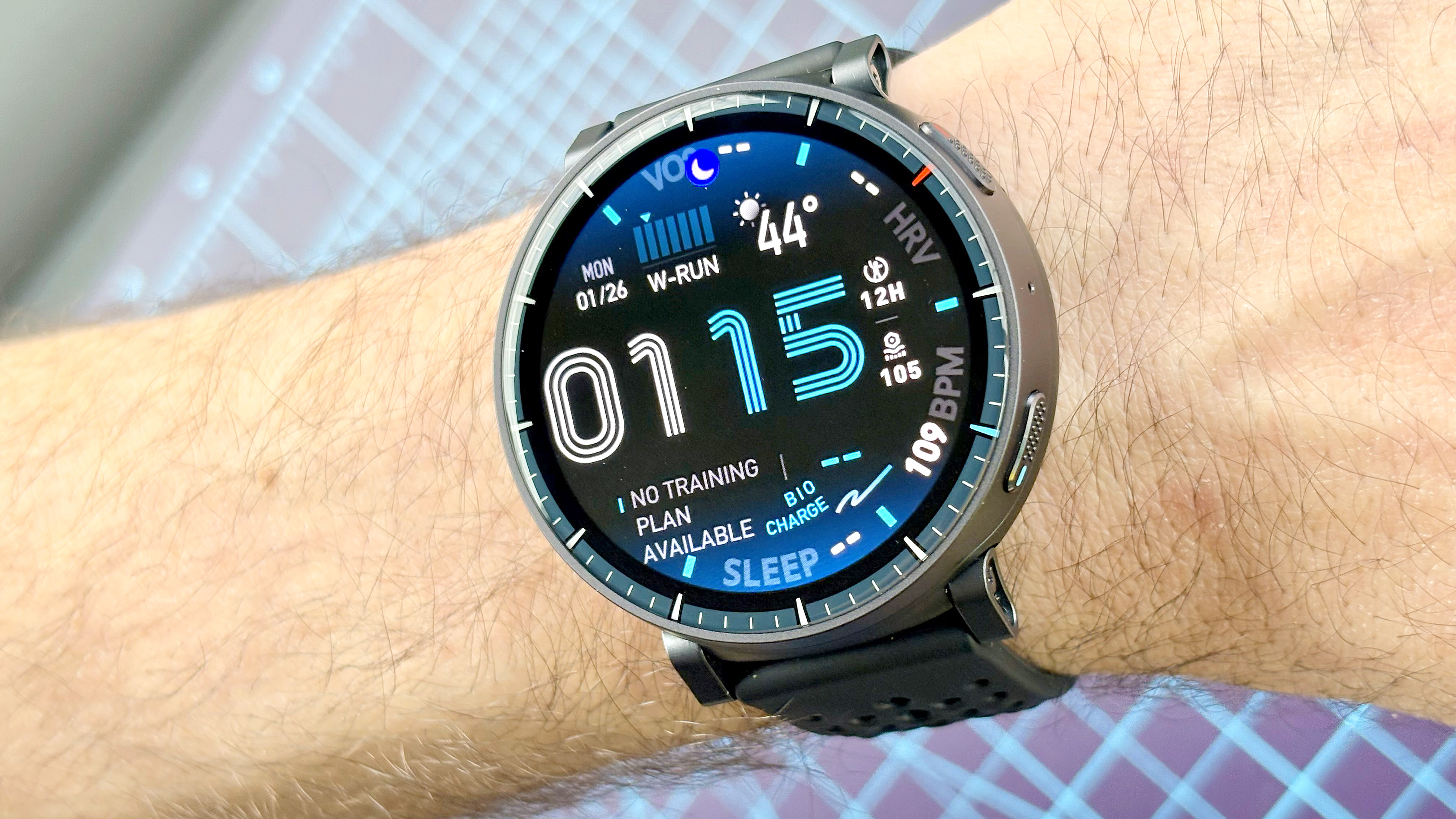
(Image credit: Dan Bracaglia/Tom’s Guide)
A larger, longer-lasting take on 2025’s Amazfit Active 2 — one of the best cheap smartwatches on the market today — the Max is a well-rounded smartwatch for health and fitness tracking, with a big, bright display and premium bells and whistles, including support for offline maps and music downloads.
You may like
The Instinct 3, meanwhile, is a supremely tough-built, long-lasting smartwatch (with a nifty built-in LED flashlight) aimed at hardcore outdoor enthusiasts (like myself). It’s already logged countless snowboard missions with reliable accuracy, making it my go-to for anything mountain-related.
While the Instinct 3 isn’t Garmin’s most tit-for-tat alternative to the Active Max — that’d be either the Garmin Forerunner 265 or Forerunner 570 — both support a wide range of outdoor adventure activities, including skiing and snowboarding, with the promise of extensive post-ride data, including a map of your endeavours.
Moreover, the Garmin Instinct 3 and Amazfit Active Max are both battery life champs with way more than enough juice to last even the longest day of riding.
Ski and snowboard tracking

(Image credit: Dan Bracaglia)
My third day of riding for the season got off to a late start; just the way I like it. With the mountain mostly to myself as the masses hit the canteen, I made way for my favorite section of Blackcomb with a profound sense of joy and excitement.
Despite little overnight accumulation, the snow was feeling soft and agreeable under my board, while socked-in conditions eventually gave way to intermittent bursts of sunshine. It was nothing short of perfection.
In addition to recording my day riding with the Amazfit Active Max (on my left wrist) and the Garmin Instinct 3 (on my right wrist), I also logged everything using both Strava and the Slopes app — two of my favorite ski tracking apps — running on an iPhone 16 Plus. Find the results below.
Swipe to scroll horizontallySnowboard stats comparedHeader Cell – Column 0
Garmin Instinct 3
Amazfit Active Max
Strava app
Slopes app
Total descent
14,160 feet
13,589 feet
14,505 feet
13,943 feet
Max speed
36.5 mph
36.5 mph
36.1 mph
36.6 mph
Downhill distance
14.51 miles
11.68 miles
n/a
11.8 miles
Total distance
23.52 miles
21.63 miles
22.55 miles
n/a
Average moving speed
7.2 mph
8 mph
8.7 mph
16.4 mph
Number of runs
8
10
11
8
Max elevation
6,297 feet
6,398 feet
6,290 feet
6,299 feet
Elapsed time
5 hours, 1 min
5 hours,1 min
4 hours, 58 minutes
4 hours, 57 mins
Riding time
1 hour, 52 mins
1 hour, 36 mins
n/a
1 hours, 15 mins
Lift time
1 hour, 33 mins
n/a
n/a
57 mins
Average heart rate
125 bpm
124 bpm
n/a
n/a
Max heart rate
179 bpm
180 bpm
n/a
n/a
Total calories burned
1,784 calories
2,626 calories
n/a
n/a
Except for an estimated lift riding time, the Amazfit Active Max recorded all of the same metrics as the Garmin Instinct 3, including those I care about most: total descent, max speed, and riding time.
You may like
The Max noted slightly less total descent than the other tracking methods, but it’s not too far off. This could be because the Max sports a comparably less sophisticated single-band GPS antenna, compared to multi-band antennas in my phone and the Instinct 3.
The Instinct 3 and Active Max noted identical top speeds and similar average moving speeds. The Amazfit recorded less distance covered, both downhill and overall, than the Instinct 3. However, Amazfit’s tallies match up nicely with Strava’s total distance and Slopes’ downhill distance. Make of that what you will.
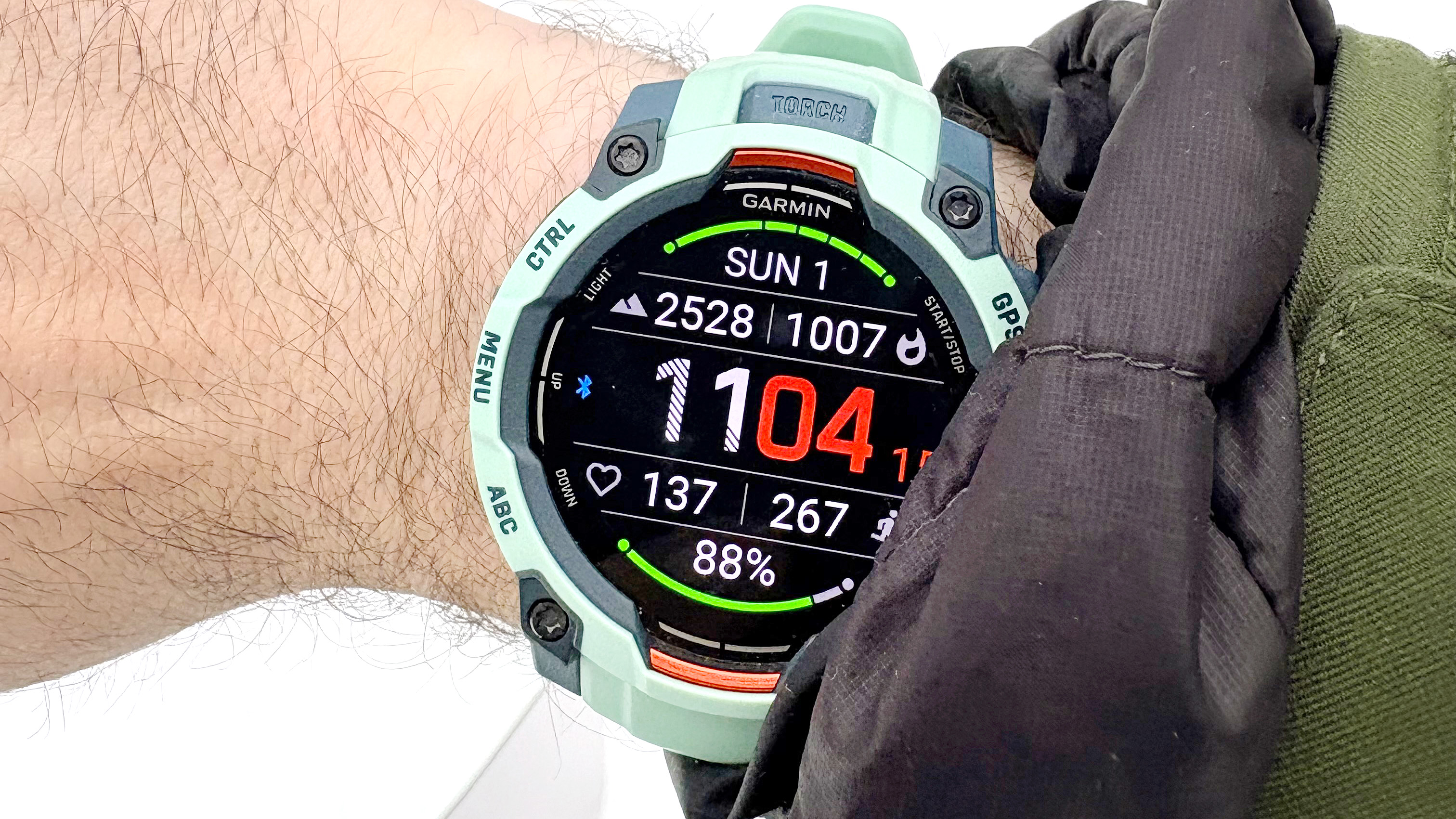
(Image credit: Dan Bracaglia/Tom’s Guide)
Did I do eight runs, ten runs, or 11 runs? I guess that depends on what each tracking method categorizes as a ‘run.’ For example, if I stop halfway down the mountain, move off to the side, spend 15 minutes eating a sandwich, and then continue the rest of the way down, is that one run or two? According to Garmin and Slopes, it’s one. Meanwhile, Amazfit and Strava seem more keen to split it into two. Ultimately, I prefer the former approach.
There’s some discrepancy regarding the actual amount of time I spent riding, with Amazfit splitting the difference between Garmin and the Slopes app. Meanwhile, both smartwatches measured nearly the same average and max heart rate for the day, while Active Max calculated more calories burned (I rarely give this metric much credence).
Verdict
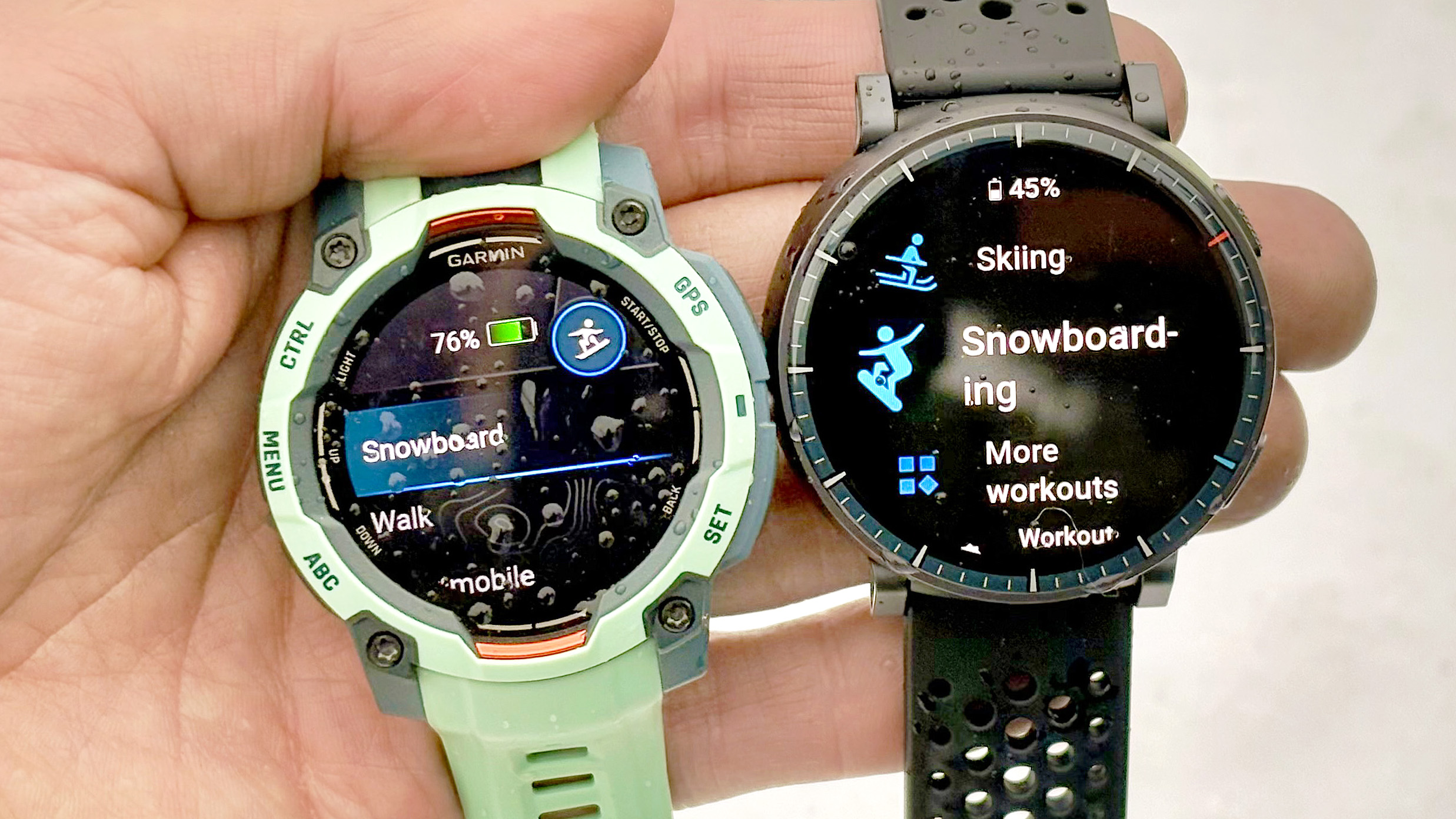
(Image credit: Dan Bracaglia/Tom’s Guide)
Can a budget smartwatch match the performance of my favorite rugged, outdoor adventure Garmin? When it comes to the Amazfit Active Max, the answer is a resounding yes based on my experience at Blackcomb.
Recording nearly all the same metrics as the Garmin Instinct 3, the Amazfit Active Max impressed me with its slope-side performance. Across the board, the data is reliable, even with a few slight outliers. Amazfit’s post-ride map isn’t quite as interactive as what Garmin and the Slopes app deliver, but it still makes it easy to figure out which runs you conquered, post-ride.
Of course, this isn’t the first time an Amazfit surprised me on the slopes; I was thoroughly impressed when I tested the $99 Amazfit Active 2 at my local mountain last season. In fact, when it comes to overall comfort, I still prefer the slim profile of the Active 2 to the chunkier Active Max, especially under a ski glove.
More from Tom’s Guide
Follow Tom’s Guide on Google News and add us as a preferred source to get our up-to-date news, analysis, and reviews in your feeds.