
Despite a decisive election victory built on promises to ease Japan’s cost-of-living crisis, fresh government data released this week suggests voters’ faith in Prime Minister Sanae Takaichi’s brand of “trickle-down” prosperity may soon be tested.
Preliminary figures from the labour ministry show that inflation-adjusted wages shrank by 1.3 per cent last year, extending a three-year slide in real incomes as rising prices for essentials continued to outstrip pay increases.
The average employee earned 355,919 yen (US$2,280) a month last year including bonuses and overtime – 2.3 per cent more in nominal terms, but still well behind inflation, which averaged just over 3 per cent.
The headline inflation rate, which exceeded the Bank of Japan’s 2 per cent target for the fourth year running, highlights the issue facing policymakers: long-sought price growth has finally returned, but at a pace that is undermining household purchasing power.
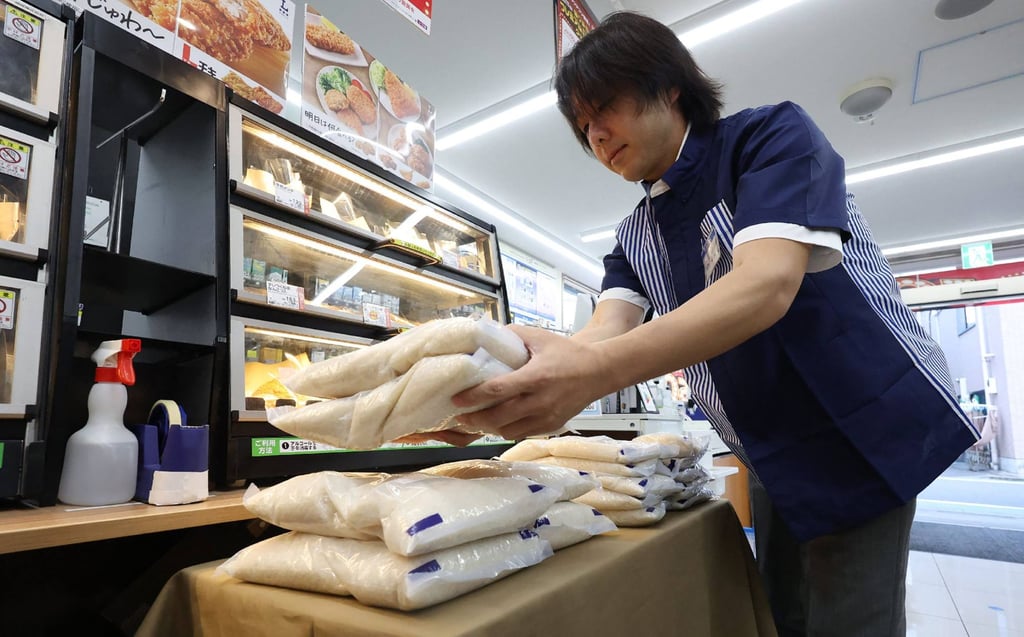 A staffmember displays bags of rice at a Lawson convenience store in Tokyo last year. Rice prices in Japan have soared by around two-thirds. Photo: AFP
The sharpest price rises came in food staples and everyday items, with rice prices soaring by more than 60 per cent in 2025, alongside increases in coffee, chocolate and household goods. Energy costs also climbed despite government caps on petrol and electricity prices.