
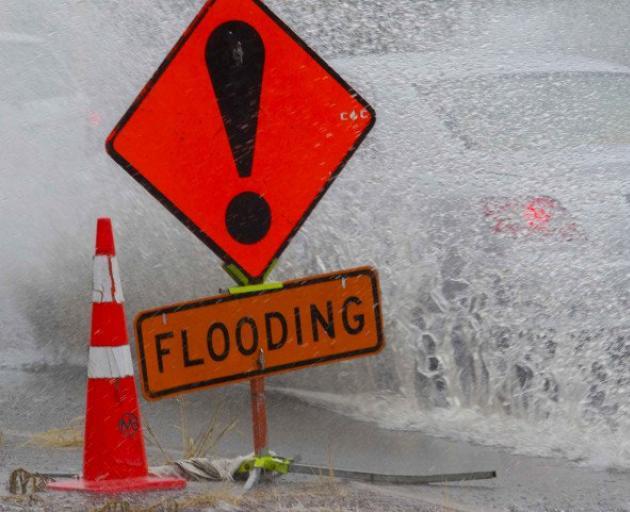
A Taieri homeowner was shocked to be refused home insurance because of flood risk when shopping around for a lower premium.
AA Insurance was under the microscope last week after it emerged it had turned down insurance cover on homes for new policy holders in parts of the South Island.
First hit was Westport, followed by small towns on the outskirts of Christchurch and then parts of Blenheim.
When contacted last week, AA Insurance said Otago would not be impacted by the policy of not offering new policies.
However, another insurer has flatly refused cover for an Outram home owned by Kay and John Gallagher.
Mrs Gallagher said she had wanted to look at switching companies after high premiums led to them looking around.
She went to Tower Insurance and put in their address in the quote and instantly received a message saying Tower would not insure the property. When pressed for more information, Tower said it was “automatically declined for coverage because the location has been identified as a flood risk”.
She said they had lived in the house for 15 years and the only time their house had flooded was water in the basement. But it was not from the nearby Taieri River but from the constant rain which poured down the driveway and the stormwater system could not cope. She had heard others had been affected by the same policy.
Mosgiel-Taieri Community Board chairwoman Rebecca Shepherd said she had only just heard about the issue but it was worrying if people could not get cover for their house.
Tower Insurance chief underwriting officer Ron Mudaliar said it was acutely aware of the climate risks faced by New Zealand.
The company did take an address-level approach when assessing risks but did not have blanket bans on towns, suburbs or regions.
Tower was the first New Zealand insurer to announce the introduction of address-level risk-based pricing for earthquakes in 2018, followed by inland flooding in 2021. Last year, it was expanded to include landslip and sea surge risks.
“Our risk-based pricing approach enables us to continue to insure homes and offer insurance across the country, including to lower risk properties within high-risk areas.”
“While our address-level approach means we look at each property’s individual risks, where several homes that are close together face the same natural hazard risks, we may make similar insurance decisions for those homes.”
With landslip and sea surge risk-based pricing in 2025, more than 90% of Tower customers were receiving a reduction in the natural hazards portion of their premium, bringing average savings of $70 per property.
Mr Mudaliar said when Tower launched flood risk-based pricing in 2021, about 90% of its home insurance customers received a reduction in the flood portion of their premium, at an average of about $25 per property.
Ultimately, risk-based pricing aimed to bring greater transparency to how risks were reflected in Tower’s premiums, he said.
It also aimed to remove cross-subsidisation, so that customers only paid for the risks their homes faced, not anyone else’s.
“It’s worth noting that the majority of Kiwis live in low-risk areas. Our modelling rates about 89% of New Zealand properties as low or very low for flood risk, 94% of properties as low or very low for sea surge risk and 93% of properties as low or very low for landslide risk.”