
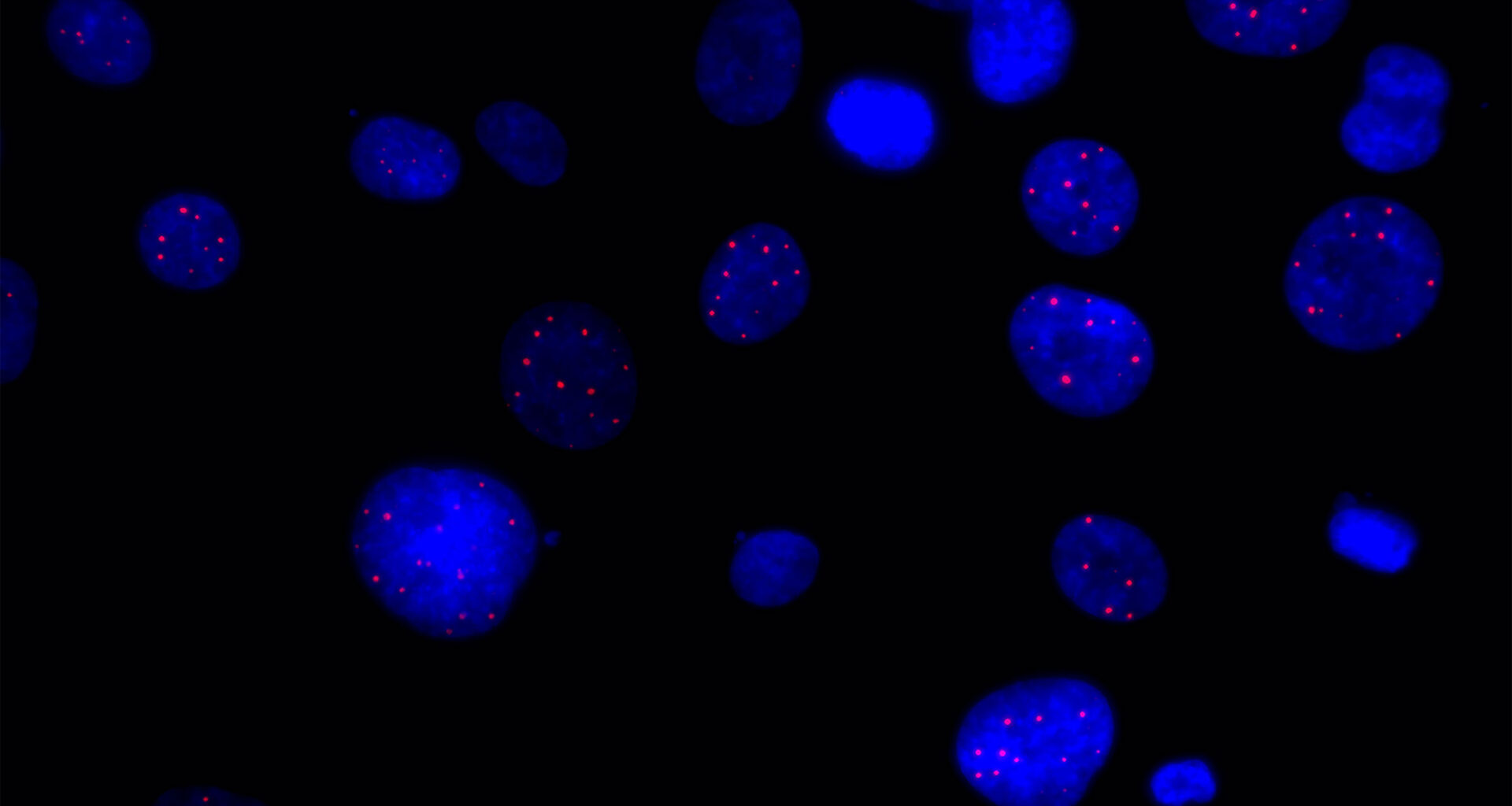
Founded in late 2024, ALTx Therapeutics has come out of stealth mode with plans to develop therapies to target the alternative lengthening of telomeres (ALT) pathway in cancer cells.
Telomeres are sections at the end of chromosomes that get shorter as cells divide and as we age. “We’ve known for some time that telomere length is a critical determinant of the lifespan of a cell. . . . During DNA replication, the replication machinery loses about 50 base pairs of sequence every time a cell divides,” explains ALTx founder and chief scientific officer Simon Boulton, who is also a principal group leader at the Francis Crick Institute, where the company is currently based.
“People who have really short telomeres tend to have aging-related phenotypes much earlier, but this is also a major problem in cancer, because cancers need to divide indefinitely. So in order to solve that ‘end-replication problem,’ they need to upregulate some telomere maintenance mechanism,” Boulton says.
Many cancers reactivate an enzyme called telomerase to increase the age of tumor cells by extending the length of the telomeres, but 10–15% of cancers use the ALT method instead. This method allows telomeres to copy information from other telomeres to maintain their length and allow excessive cell division.
“ALT ends up being used in many cancers that have a very poor prognosis. They tend to be very aggressive, and currently there’s no real therapeutic opportunity,” says Boulton, who has been researching telomeres and DNA repair in cancer with his team for more than 2 decades. Boulton is also a cofounder of another cancer biotech, Artios Pharma, which is targeting pathways of DNA damage response and has a molecule currently in Phase II trials.
Boulton and colleagues have amassed a large amount of knowledge and data about the ALT pathway, which to date has been seen only in cancer cells. ALTx is now working to find genetic targets that can disrupt the ALT process and promote cancer cell death in cancers like osteosarcoma and neuroblastoma. The company is working in collaboration with the Crick’s chemical biology team, led by Joanna Redmond, to help identify potential drug candidates to progress to clinical trials.
“We’ve got three programs that are all structurally enabled. We obviously are doing target engagement evaluation, and we’re doing lead optimization for one of them. We’re also doing a lot of preclinical toxicology evaluation,” Boulton says.
While targeting the ALT pathway is a fairly new approach in cancer therapeutics, ALTx is not the only company in this space, as others such as Tessellate Bio are also developing ALT-focused treatments.
So far, ALTx has raised £12.55 million ($17.1 million) from UK‑based life sciences investment company Syncona, the Crick, and Cancer Research Horizons, the innovation arm of nonprofit Cancer Research UK, to help move toward the clinic. It is the second company to join Syncona’s Slingshot accelerator program, which provides varied assistance to academic spin-out companies aiming to scale up.
Boulton says ALTx has also benefited from the unique atmosphere at the Crick, which has encouraged collaboration between industry and academic researchers and translation of academic research since it opened 10 years ago. Since 2022, the Crick has also had its own fund to help translate discoveries made at the institute thanks to a £50 million ($68.3 million) donation from the Chris Banton Foundation.
Chemical & Engineering News
ISSN 0009-2347
Copyright ©
2026 American Chemical Society