
Between 2009 and 2019, six children in New Zealand died after being strangled by the cord of a window blind.
Coroner Bruce Hesketh said while there had been recommendations on the safety of blind cords in previous coroner reports, there had been no effective change.
“Sadly, New Zealand still lacks mandatory regulations for corded window coverings, despite the number of deaths increasing.
“It appears that, on the available evidence, Tilly was playing in or otherwise near the blind, window and couch and the cord became wrapped around the front of her neck and she was unable to extricate herself.”
Blinds did not have safety features
According to the coroner’s report, which was released today, the blinds in the family home were installed in May 2019. They did not come with any clips or brackets for securing the chain.
There were two cords on the left side of the large corner window that hung down. Just below the window was a couch, the top of which just fit below the windowsill.
Tilly had the same type of blinds in her bedroom and in October 2021 her parents replaced the chain cord as it had snapped. They did not know how it broke.
On the morning of January 1 Tilly woke at 1.30am and went into her parents’ bedroom wanting her nappy changed and a bottle of milk. She returned again about 1.45am and spent the rest of the night in her parents’ bed.
Her mother Courtney Cambie left their Hāwera, South Taranaki, home about 5.30am to drive to Havelock North.
Her father Ryan Cambie said Tilly got up at 6.10am to look for her mother and in doing so, woke up her older sister, Lainey. He put both girls back into bed with him where they watched a movie and drank milk.
At one point, Tilly got up and got herself a yoghurt from the fridge and brought it back to bed before bringing cat food in for her dad to open. She left the room with the cat food while her father and sister stayed in bed.
A short time later, about 7.40am, Lainey left the bedroom before returning and saying Tilly was stuck in the curtain. Her feet could not touch the couch or windowsill.
Her father removed her from the cord, called 111 and performed CPR until the ambulance arrived. Tilly was transported by helicopter to Waikato Hospital where she was found to be in multiorgan failure.
Her condition deteriorated, and the doctors said she had suffered an “un-survivable event”.
She was transferred to the Intensive Care Unit for ongoing ventilation and palliative support until family members arrived.
Tilly was surrounded by her family when her breathing support was removed and she died at 7.20pm.
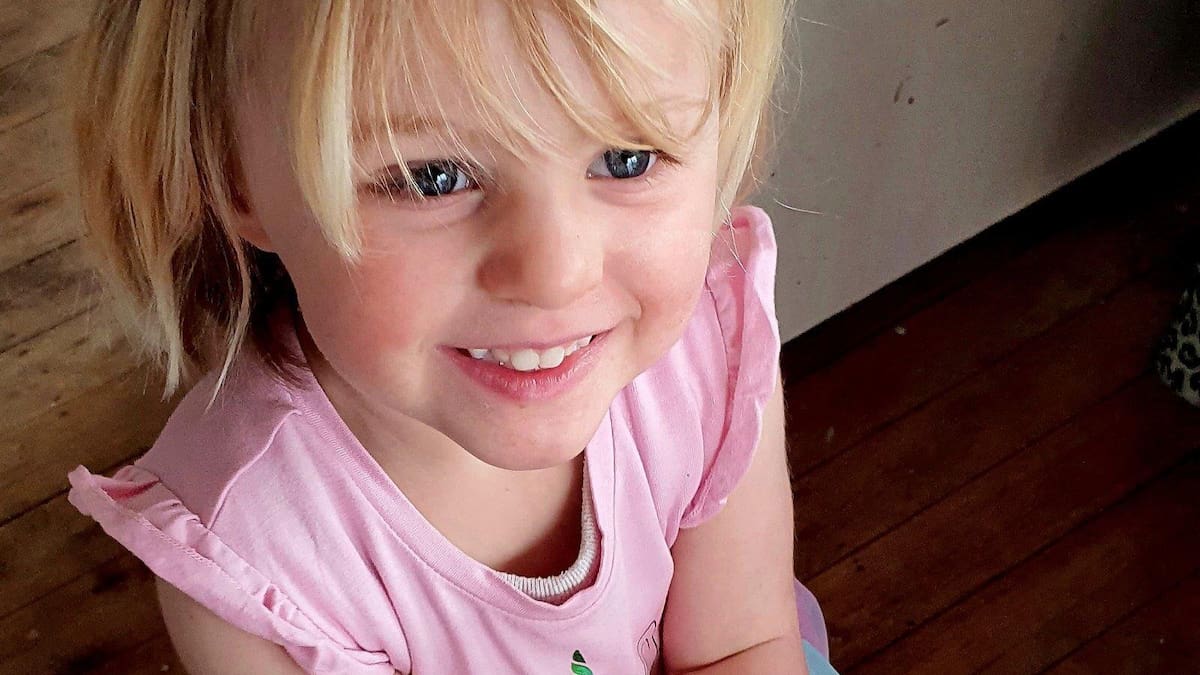
Three-year-old Tilly Cambie died when she was accidentally strangled by a blind cord in the family living room.
Mum calls for mandatory standards
Courtney Cambie told NZME Tilly was a 3-year-old who was “full of sparkles”.
“She adored her family and especially looked up to her big sister. She was simply being a child in our lounge, and no parent should have to expect a hidden industrial hazard in their own home. These products must be safe by design.”
“If mandatory safety regulations had been in place, Tilly would still be with us today. You cannot ‘educate’ away a design flaw, and no amount of parental vigilance can replace the professional, mandatory safety hardware that has been law in Australia, the US, and the UK for years.”
Coroner Mary-Anne Borrowdale and Coroner Heather McKenzie have previously extensively detailed the risks of young children and blind cords following the accidental deaths of a 19-month-old and a 3-year-old.
Coroner Borrowdale said in her report that New Zealand had no product regulations designed to ensure the safe supply and use of corded blinds.
“Efforts to educate the New Zealand public on mitigating the hazard of blind cords have focused to date on the installation of cleats or cord-tidies out of the reach of children, and on ensuring that beds and other furniture are not located near to corded blinds.
“Those efforts, while laudable, are alone not sufficient to protect young New Zealanders from the risks of corded blinds.”
Between 2009 and 2019, six children in New Zealand have died after being strangled by the cord of a window blind.
Nearly four weeks after Tilly’s death, the Ministry of Business, Innovation and Employment (MBIE) opened consultation on options to address safety risks presented by corded window coverings.
A Consultation Document was released in which MBIE acknowledged Coroner Mary-Anne Borrowdale’s recommendation that New Zealand declare prescriptive mandatory regulations or standards designed to protect young New Zealanders from the hazards of corded window coverings in domestic settings.
Since being released, another child died in 2024.
“MBIE continues to consider the introduction of standards to prevent child strangulation deaths from the options above and I would encourage MBIE to make progress sooner rather than later,” Coroner Hesketh said.
Cambie said MBIE claimed they lacked a robust case for change.
“The coroner has now explicitly stated that Tilly should be that case. I am calling on the Minister to stop putting the entire burden of safety on parents.”
“We need mandatory standards now so no other family is left holding a coroner’s report instead of their child. To every family in New Zealand: check your roller blind curtains today.”
MBIE commerce, consumer and business policy general manager Andrew Hume said its role was to provide advice and options for product safety regulation to the Commerce and Consumer Affairs Minister.
“At this stage, the Government is not considering introducing regulations for corded window coverings.”
MBIE was instead working to educate people about the dangers of blind cords and how to use them safely.
In March 2022 the New Zealand Institute of Economic Research released its paper: Corded blind safety: Keeping 1- to 4-year-old children safe.
It listed safety recommendations, including choosing cordless options for blinds, securing existing cords with cleats or cord guides, keeping cords short ensuring no loop longer than 220mm is below 1.6m from the ground.
It also recommends keeping cots, beds, and climbing furniture away from windows.
Brianna McIlraith is a Queenstown-based reporter for Open Justice covering courts in the lower South Island. She has been a journalist since 2018 and has had a strong interest in business and financial journalism.