
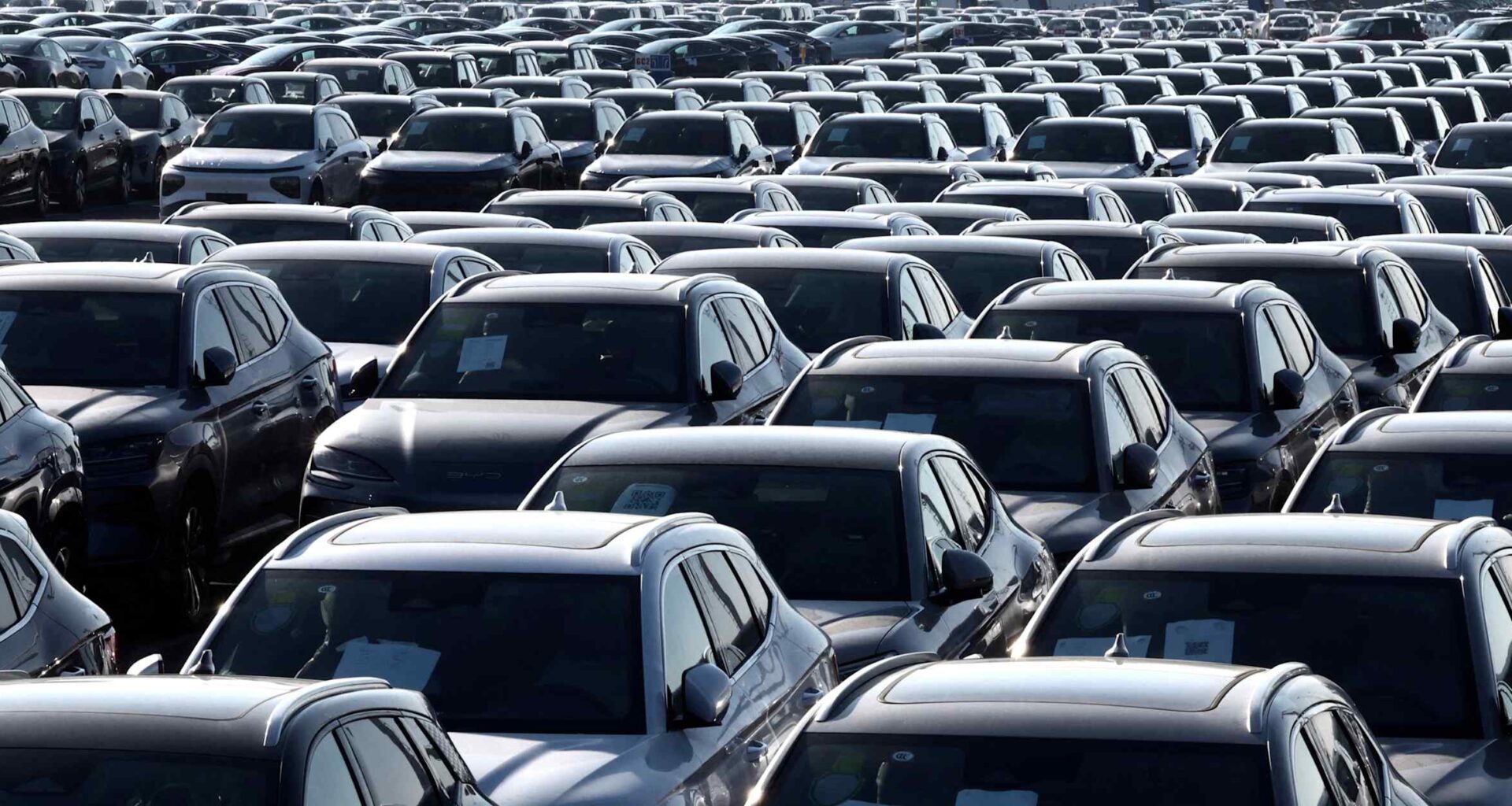
BEIJING (Reuters) — China’s car sales in January fell at the fastest pace in nearly two years as competition steepens in the cutthroat market where automakers are grappling with fading government subsidies, softening demand and tighter regulations.
Sales at home dropped 19.5% from a year earlier to 1.4 million vehicles, the biggest fall since February 2024, data from the China Association of Automobile Manufacturers showed on Wednesday.
Retail sales of electric cars and plug-in hybrids, a sector known as new energy vehicles (NEV), which had previously been outpacing the overall market, fell 22.9% last month.
Wide fluctuations in China’s car sales in the first two months of the year are common due to the shifting timing of the week-long Lunar New Year holiday as purchases are often made beforehand. This year the holiday begins in mid-February versus in late January last year, underscoring the depth of the poor market conditions at the start of this year.
A revised government trade-in policy has curtailed subsidies for lower-priced cars that make up the bulk of new car sales, setting the stage for expected flat growth this year in the world’s largest auto market.
See also

China’s car price war cost industry as much as $68bn in 3 years
BYD adds to China’s expanding auto footprint in Pakistan
At a symposium with auto firms on Friday, Vice Commerce Minister Sheng Qiuping pledged to optimize the trade-in policy implementation as part of efforts to spur auto sales.
Subsidized auto trade-ins exceeded 11.5 million vehicles in 2025, accounting for nearly half the total vehicle sales, official data showed.
Chinese electric vehicle champion BYD’s sales were particularly hit hard in January, falling 30%, worse than the industry average.
Automakers in China, jostling to lure frugal customers strained by a prolonged housing downturn and weak job market, are extending repayment terms to as long as eight years.
Carmakers are also under pressure to align with redesign requirements, as China has moved to tighten EV regulations in the wake of some high-profile accidents last year, announcing a ban on “hidden” car door handles like those popularized by Tesla from 2027 and considering limits on EV acceleration.
NEV exports more than doubled, however, offsetting flagging domestic sales as local automakers increasingly look to overseas markets to drive growth.
BYD, whose overseas shipments made up nearly half of its global sales in January, aims to become Brazil’s top carmaker by 2030, while Geely 0175.HK is in talks with Ford F.N to use the U.S. automaker’s factory space in Europe to make cars for the region, Reuters reported last week.