
Other additions, and other OSes
Another iOS 26.3 update is also aimed at interoperability, though it may only apply to iPhones covered by European Union regulations. A feature called “notification forwarding” will send your iPhone’s notifications to third-party accessories, including Google’s Android-based Wear OS smartwatches. Once the setting is enabled, users will be able to decide which apps can forward notifications to the third-party device, similar to how Apple Watch notifications work.
In current betas, Apple allows notifications to be forwarded to only one device at a time, and forwarding notifications to a third-party device means you can’t send them to an Apple Watch.
Finally, both iOS 26.3 and iPadOS 26.3 are introducing a feature for some newer devices with Apple’s in-house C1 and C1X modems: a “limit precise location” toggle that Apple says “enhances your location privacy by reducing the precision of location data available to cellular networks.”
This feature is currently only available on a handful of devices and even fewer carriers: In the US, Boost Mobile is the only one. Only the iPhone Air, iPhone 16e, or the M5 iPad Pro will offer the toggle; devices like the iPhone 17, iPhone 17 Pro, and older phones with Qualcomm or Intel modems won’t support the feature.
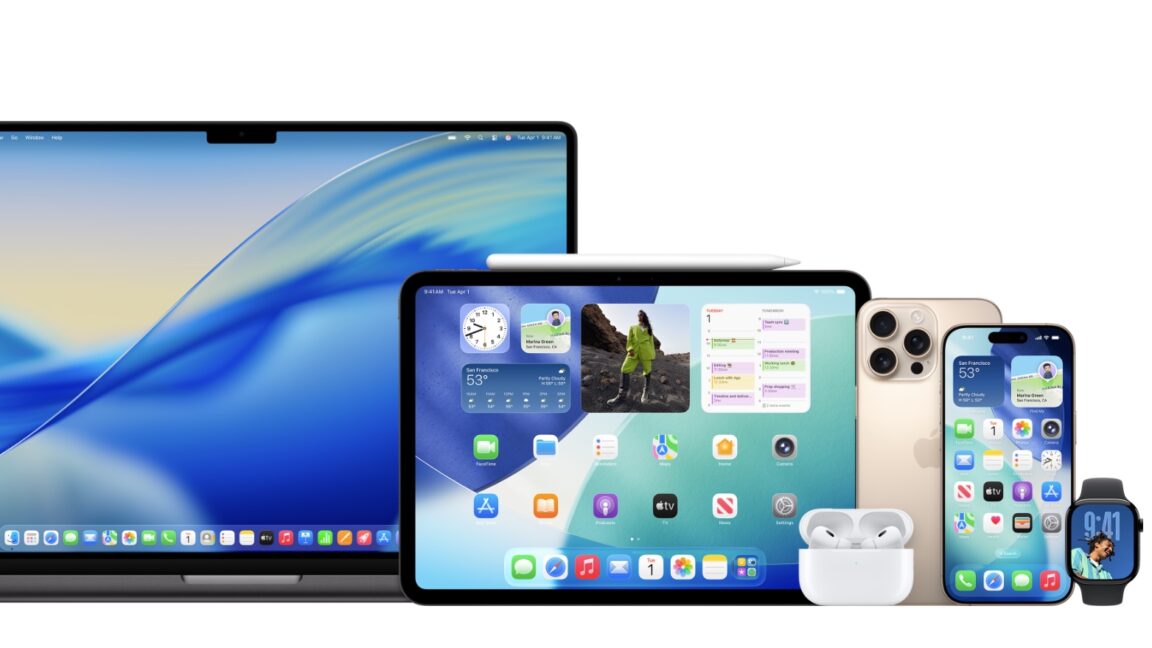
Apple has also updated all of its other major operating systems today. But macOS 26.3, iPadOS 26.3, watchOS 26.3, tvOS 26.3, visionOS 26.3 and version 26.3 of the HomePod software are all quieter updates of the bug-fixes-and-performance-improvements variety. Beta testers have found early evidence of support for the M5 Max and M5 Ultra chips, pointing to pending refreshes for some higher-end Macs, but that doesn’t tell us much we didn’t already know.
The 26.3 updates are mostly sleepy, but the 26.4 releases may be a bigger deal. These are said to be the first to include Apple’s “more intelligent Siri,” a feature initially promised as part of the first wave of Apple Intelligence updates in iOS 18 but delayed after it failed to meet Apple’s quality standards.
Apple and Google jointly announced in January that the new Siri would be powered by Google’s Gemini language models rather than OpenAI’s ChatGPT or other competing models. As with other Apple Intelligence features, we’d expect the new Siri to be available to testers via Apple’s developer and public beta programs before being released to all devices.