
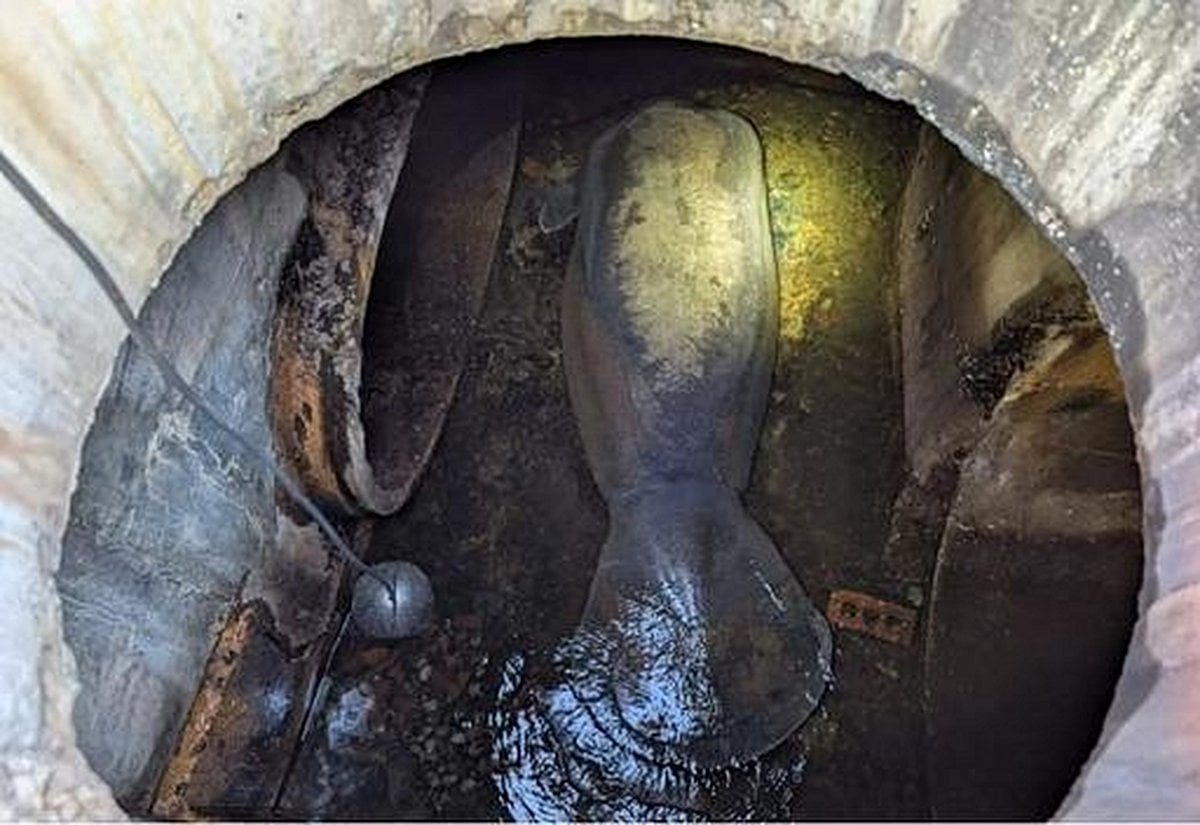
On a chilly February morning in 2026, an extraordinary rescue unfolded beneath the streets of Melbourne Beach, Florida. A mature manatee—one of the ocean’s most gentle giants—had found itself in a perilous predicament, trapped deep inside a narrow drainage pipe below a busy road. The story that followed gripped the local community and shone a spotlight on the ongoing challenges faced by this endangered species.
According to reports from WESH and corroborated by Yonhap News TV, the drama began when local authorities received a call about unusual noises emanating from a stormwater system. Residents in Brevard County, near Melbourne Beach, had heard strange sounds and noticed movement beneath the asphalt. Responding swiftly, the Florida Fish and Wildlife Conservation Commission (FWC) and the Brevard County fire department rushed to the scene, where they confirmed the presence of a manatee—sometimes affectionately called the “sea cow”—trapped in the concrete confines of the drainage pipe.
The rescue was nothing short of a logistical feat. Emergency teams sealed off the area, deploying two helicopters to provide aerial support and bring in specialized equipment. For nearly six hours, workers toiled, cutting through layers of asphalt and concrete to carefully access the pipe without causing further harm to the animal. As reported by Asia Economy, the operation involved lifting the heavy drainage cover and using a crane to gently extract the manatee, whose plight had quickly become the talk of the town.
When the animal was finally brought to the surface, it measured an impressive 2.1 meters in length and tipped the scales at 186 kilograms. Despite its ordeal, the manatee was alert and showed no signs of hypothermia—a relief to rescuers given the species’ known vulnerability to cold water. Experts have long noted that manatees struggle to maintain their body temperature when water temperatures dip below 20°C, often prompting them to seek out warmer currents or the outflows from power plants and springs during winter months. In this case, authorities believe the manatee had traveled nearly 20 kilometers from its natural habitat in the Indian River area, likely following a warm water path that led it, unwittingly, into the labyrinth of Melbourne Beach’s drainage system.
“A city worker discovered the trapped manatee during routine drainage maintenance,” Melbourne Beach Deputy Mayor Terry Cronin explained to Newsis. “It appears the animal was seeking warmth and entered the drainage system from the river, only to become stuck.” This sentiment was echoed by wildlife officials, who noted that the rescue was serendipitous—had the inspection not occurred, the manatee’s fate could have been far grimmer.
Upon examination, the manatee showed minor injuries to its tail and fins, likely sustained from contact with the concrete pipe. There were also signs of dehydration, but overall, the animal’s condition was considered stable. The FWC, quoted by Segye Ilbo, stated, “The manatee was active inside the drainage and showed no signs of hypothermia. However, the duration of its entrapment and its full health status remain unknown and require further evaluation.” To ensure a full recovery, the manatee was transported to the rehabilitation center at SeaWorld Orlando, where it would receive treatment for its wounds and dehydration before any decision about its release could be made.
Incidents like this are, unfortunately, not uncommon in Florida. As Asia Economy and JoongAng Ilbo both point out, manatees often become trapped in water control structures, drainage pipes, or collide with boats—particularly during the colder months when their search for warm water brings them into closer contact with human infrastructure. In previous years, multiple manatees have been rescued from similar predicaments, with some found in states of exhaustion or injury. The recurring nature of these incidents has prompted wildlife officials to issue repeated warnings to the public and to call for vigilance, especially during winter.
Manatees, listed as endangered, are iconic residents of Florida’s coastal waters, estuaries, and river mouths. They are known for their gentle, herbivorous habits—grazing on seagrasses and algae in shallow waters. Their docile nature and slow movements, while endearing to many, unfortunately make them particularly susceptible to human-caused threats. According to the Florida Fish and Wildlife Conservation Commission, the preservation of these creatures is a matter of urgency, and every successful rescue is a meaningful victory.
“Manatees are highly sensitive to cold and will travel significant distances to find suitable conditions,” an FWC spokesperson told JoongAng Ilbo. “This rescue is a significant outcome for an endangered species that faces numerous threats.” The plan, once the manatee has fully recovered, is to return it to its natural habitat—hopefully wiser for the experience, but no less in need of continued protection.
The rescue also highlighted the importance of routine infrastructure inspections and the quick thinking of local workers. Had the drainage maintenance not coincided with the manatee’s entrapment, the outcome could have been tragic. As YTN described, it was “a lucky encounter between the manatee and the inspection team” that led to the animal’s survival.
In the aftermath, the community has rallied around the rescued manatee, with many expressing hope that the incident will spur renewed attention to the dangers posed by urban development and climate variability. Experts warn that as Florida’s population grows and infrastructure expands, the risks to manatees and other wildlife are likely to increase—making proactive measures and public awareness more important than ever.
For now, the rescued manatee remains under the watchful care of veterinarians and wildlife specialists. Its journey—from the warm waters of the Indian River, through the dark confines of a drainage pipe, to the bright lights of a rescue operation—serves as a poignant reminder of both the fragility and resilience of nature. As the FWC and local officials continue to monitor its recovery, the hope is that this story will not only end in a successful release but also inspire greater efforts to protect Florida’s beloved “sea cows” for generations to come.