
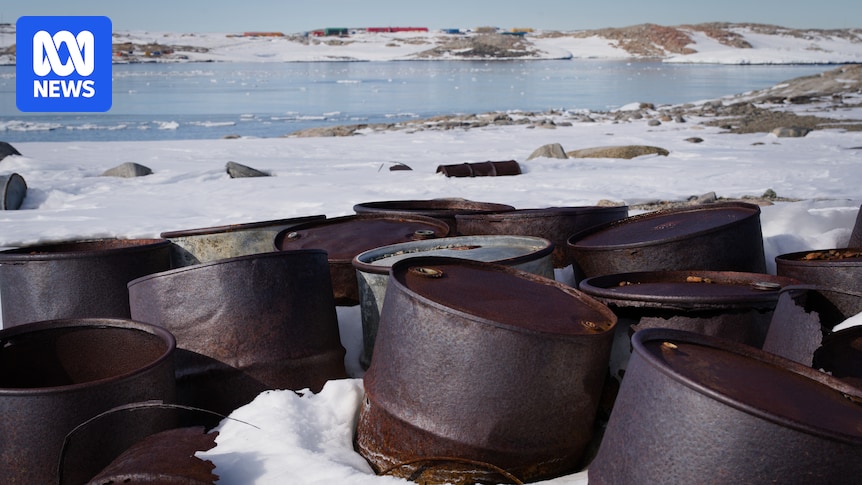
Antarctica is often considered the last pristine wilderness on the planet.
But an Australian base abandoned almost six decades ago continues to pose a major pollution threat to the ecosystem.
Planning is underway to remediate Wilkes Station, but there’s still no time frame or funding to complete the clean-up.
Antarctica is a vast, icy wilderness, largely untouched by human impacts.
But on the coastal fringe of Australia’s Antarctic Territory is a toxic legacy from a bygone era.
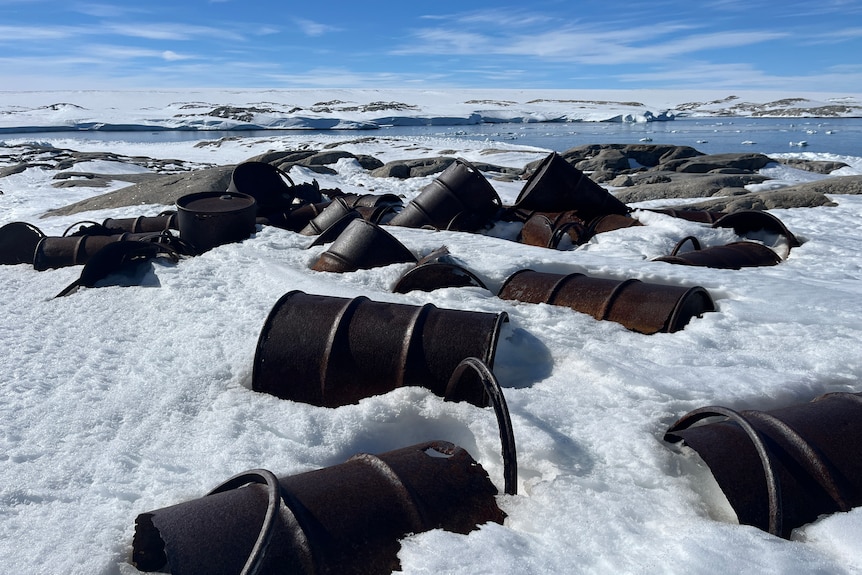 Thousands of rusting fuel barrels are buried in the ice at Wilkes Station.(ABC News: Jano Gibson)
“It is pretty startling to come here,” says Dr Rebecca McWatters, as she looks across the abandoned Wilkes Station.
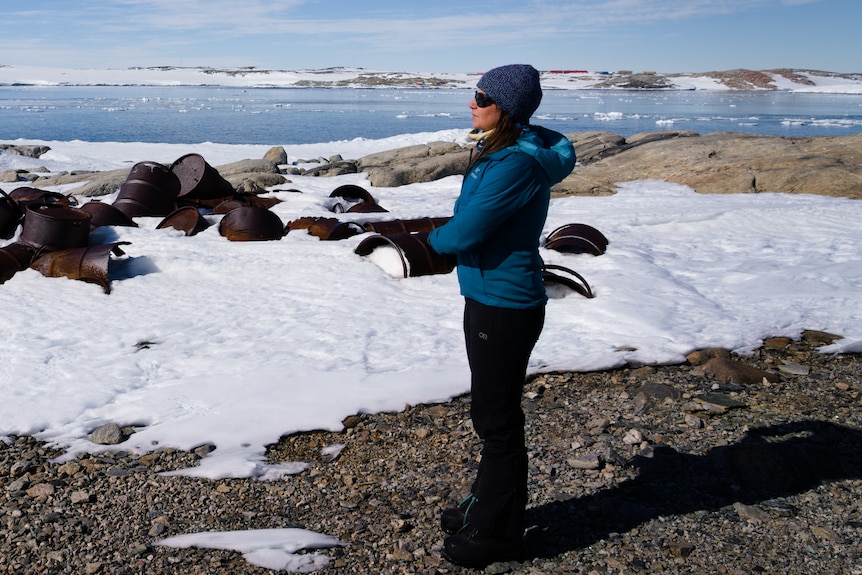 Rebecca McWatters at the old dump site at Wilkes Station.(ABC News: Jano Gibson)
The remediation lead for the Australian Antarctic Division (AAD) says legacy sites are an “enduring environmental problem”.
Wilkes Station was once a thriving facility, home to about 25 expeditioners and their huskies throughout the year.
But the base now resembles a frozen ghost town where only the tops of old buildings can be seen jutting through metres of snow.
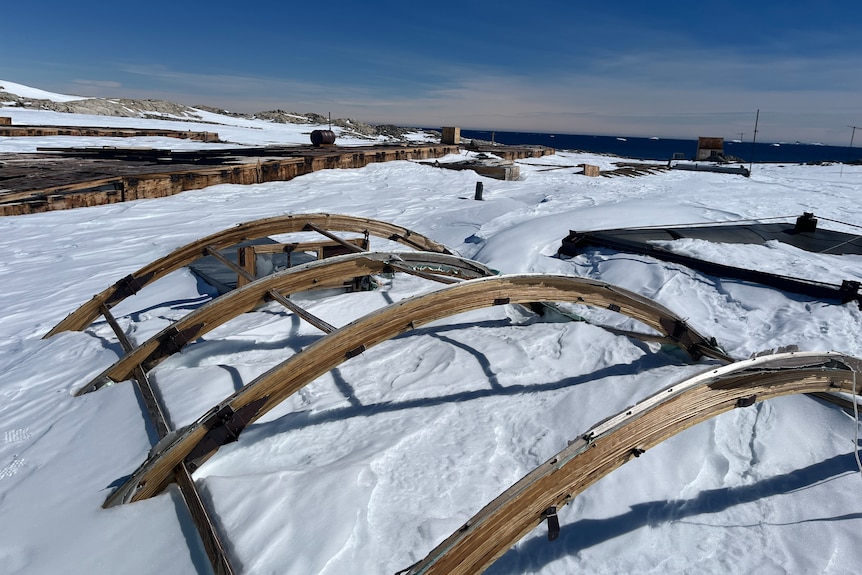 Roofing and part buried buildings at Wilkes Station in 2025.(ABC News: Jano Gibson)
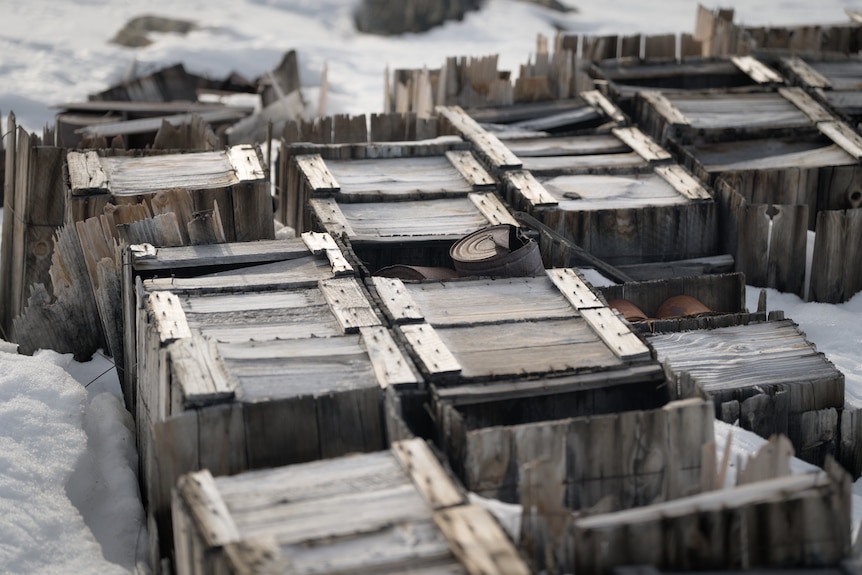 Wooden storage boxes containing cans are still on site.(ABC News: Owain Stia-James)
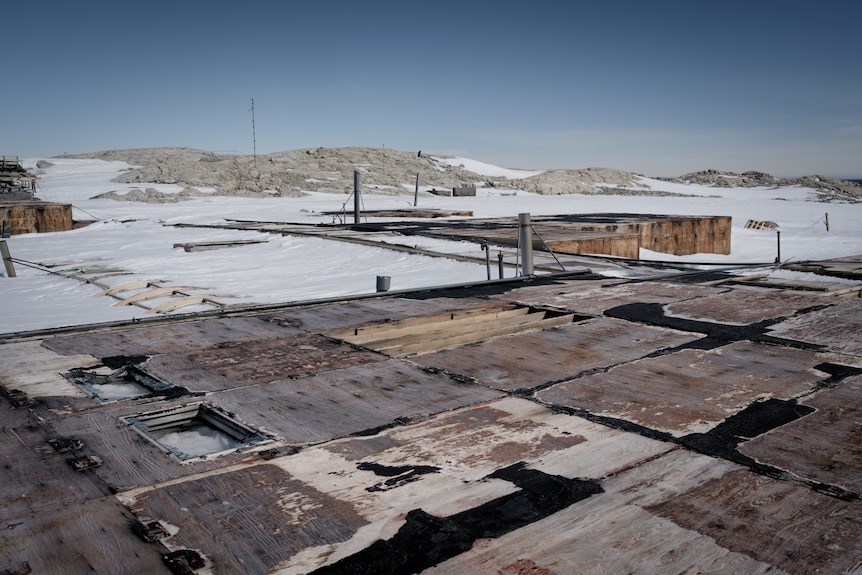 Abandoned Wilkes Station in Antarctica.(ABC News: Jano Gibson)US station becomes Australia’s problem
Wilkes didn’t start as Australia’s responsibility.
It was built in 1957 by the US Navy before being handed over to Australia’s Antarctic program two years later.
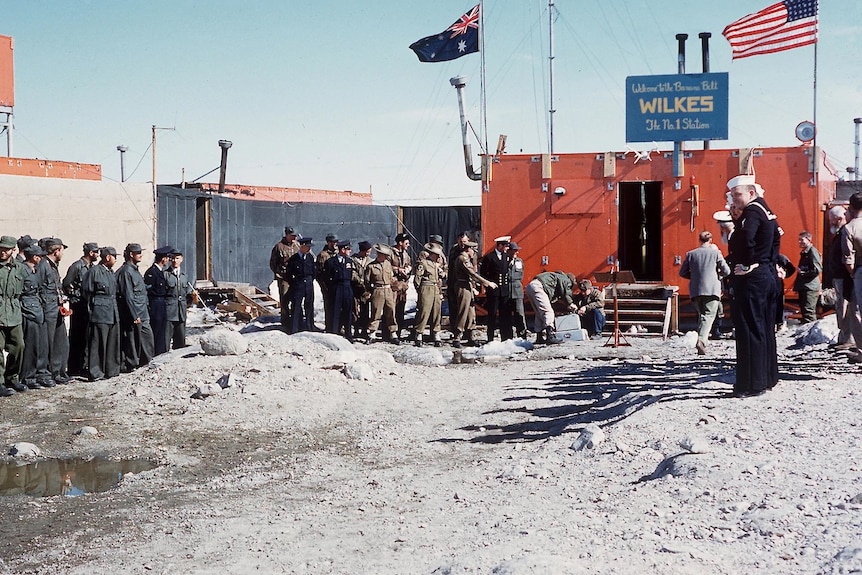 The US handed Wilkes Station to Australia at a ceremony in 1959.( Supplied: Alan Campbell-Drury)
But the station had a problem.
When the US built it the ground was bare and it was thought to be in a sheltered position.
But expeditioners soon learnt the location was unsuitable.
Loading…
The station kept getting buried in snow and ice.
Loading…
A decade later, Australia made the decision to abandon the facility.
Back then, cleaning up wasn’t a requirement, let alone a consideration.
Melanie Borup, a terrestrial ecologist from UTAS, is part of the AAD’s science team within the A Cleaner Antarctica program.
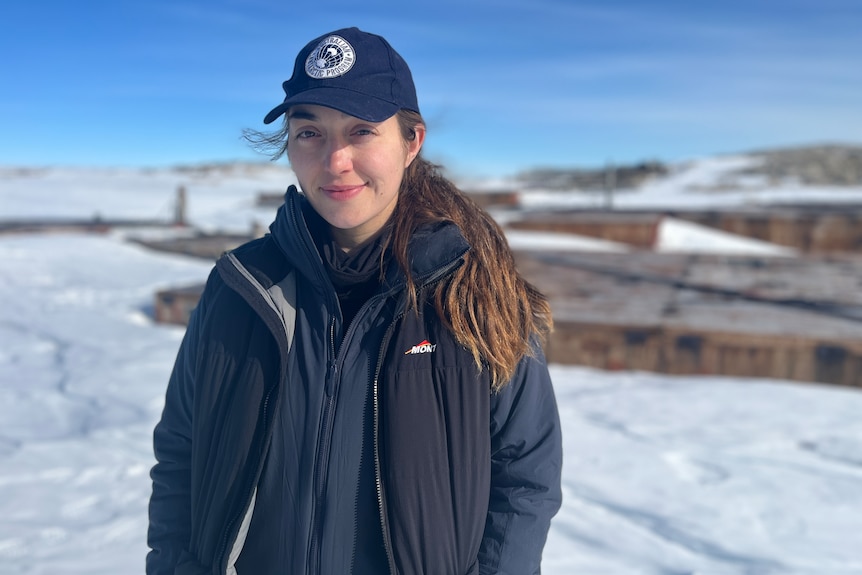 University of Tasmania’s Melanie Borup visits Wilkes Station.(ABC News: Jano Gibson)
“We all think that Antarctica is a completely pristine environment,” she says.
“But it has a long history of human presence here in Antarctica.
“And with that, localised contamination to the environment.”
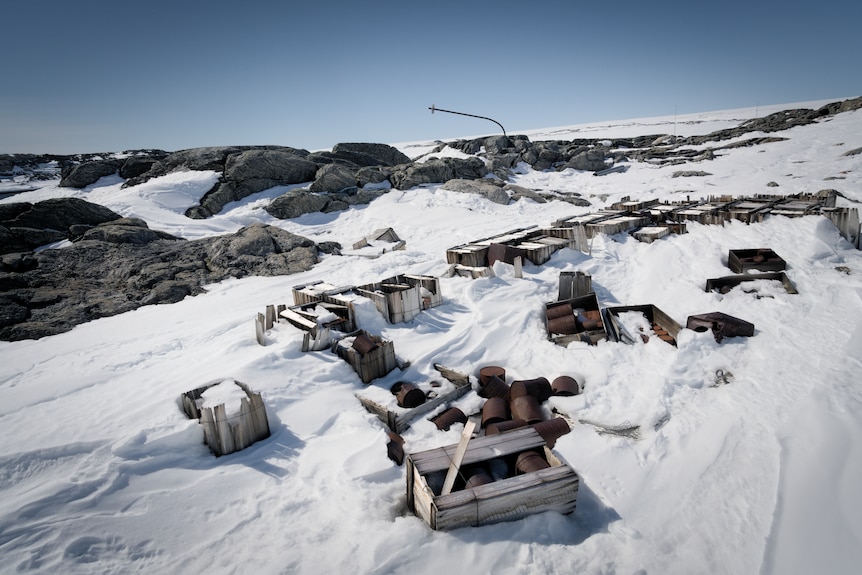 In the 1960s there was no requirement to clean up abandoned sites.(ABC News: Jano Gibson)
Remnants of the station’s past can still be seen littered across the surface.
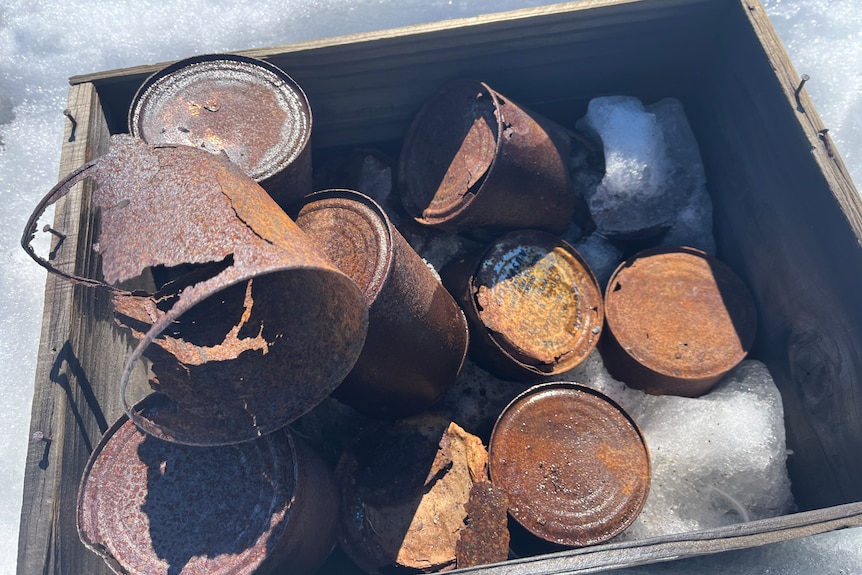 Old tins of food can still be seen lying in the snow. (ABC News: Jano Gibson)
There are rusting tins of fruit, condensed milk and processed meat.
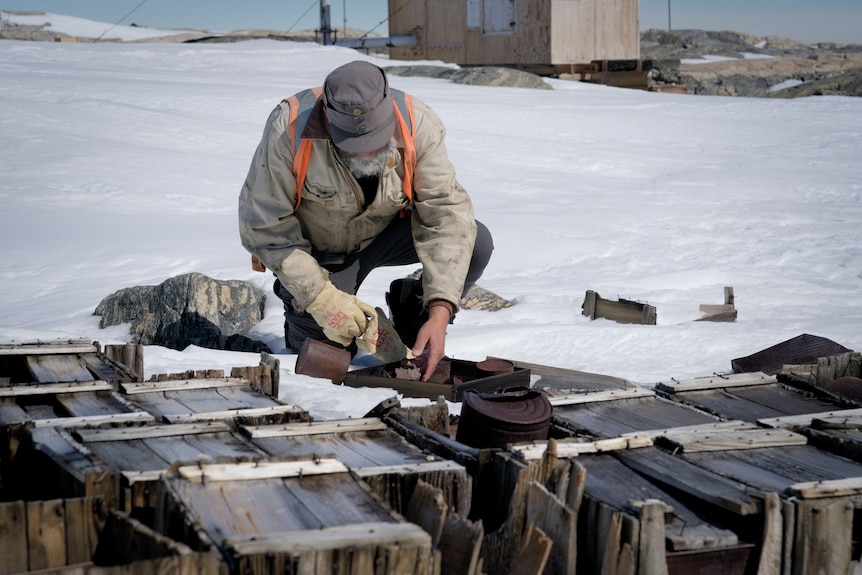 Johan Mets examines rubbish at Wilkes Station.(ABC News: Jano Gibson)
“In the 1960s they were using this for their food,” says Johan Mets, who develops clean-up techniques for the AAD’s remediation team.
“But today it’s all rubbish for us.”
The old tins of food are just a small part of the contamination.
Many of the dilapidated buildings at Wilkes were fabricated with dangerous asbestos while metal objects are corroding on the surface, causing lichen and mosses to die off.
Black tar has also seeped into the cracks of rocks close to where birds bathe in the meltwater.
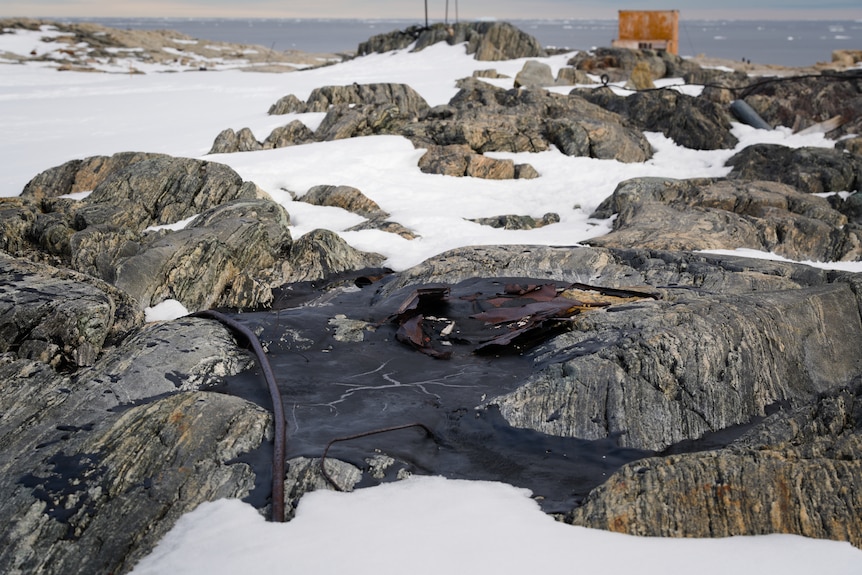 Melted tar has seeped into the landscape.(ABC News: Jano Gibson)Loading…The hidden problem
But what’s visible above the surface is only a tiny fraction of the problem.
An enormous cache of waste is hidden under the ice.
“We can probably only see about 3 to 5 per cent of what exists at this site,” Dr McWatters says.
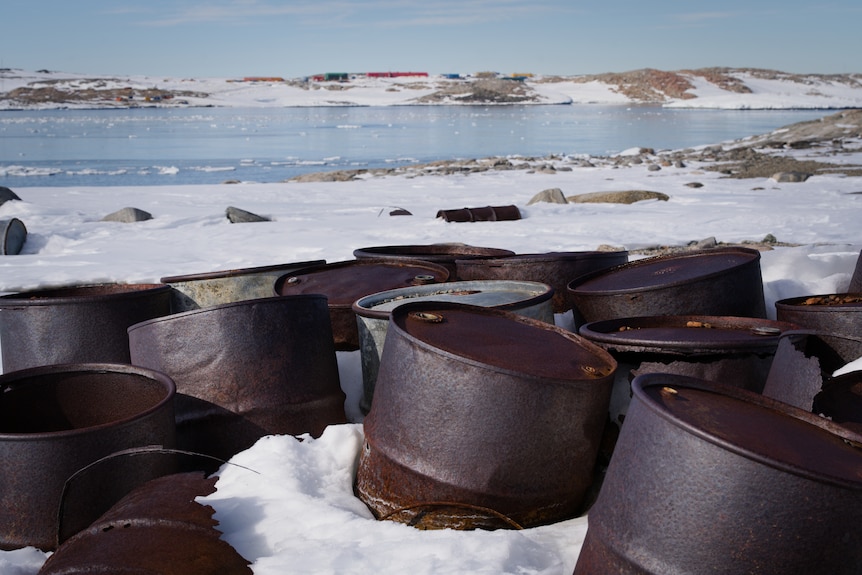 The fuel cache is located near the surrounding bay. (ABC News: Jano Gibson)
The station’s snow-covered dump, positioned next to the ocean, contains several thousand fuel barrels — most of which are buried beneath the surface.
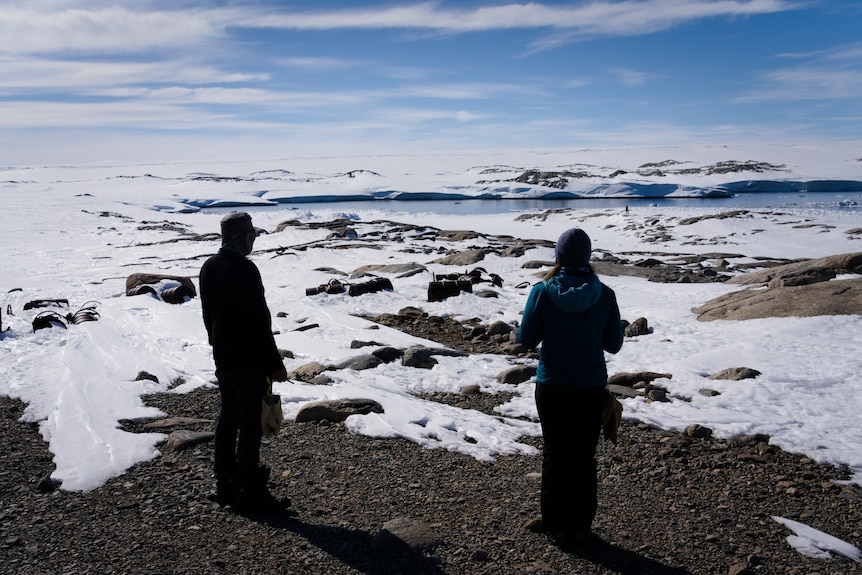 An estimated 20 Olympic-sized swimming pools of waste and contaminated soil is buried at Wilkes.(ABC News: Jano Gibson)
“It’s possible that anywhere there was a large fuel cache there’s still fuel present in those barrels,” Dr McWatters says.
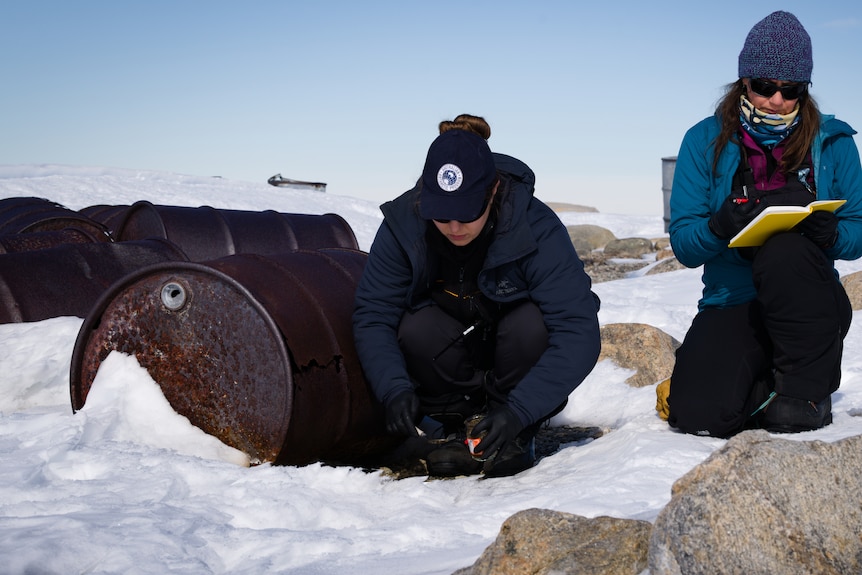 Melanie Borup and Rebecca McWatters catalogue samples at Wilkes Station.(ABC News: Jano Gibson)
“That fuel could either be diesel, it could be petroleum, or it could be another type of solvent or gas.”
While it’s unclear exactly how much fuel remains in the barrels, some has leaked into the soil.
And there have been signs over the years of seepage into the nearby bay which is only a few kilometres from large penguin colonies.
“Sometimes we have seen fuel slicks come off that tip site to the ocean, so that’s not a very good look,” Dr McWatters says.
But there are concerns the situation could get much worse.
A photo from 1992 show what’s hidden underneath.
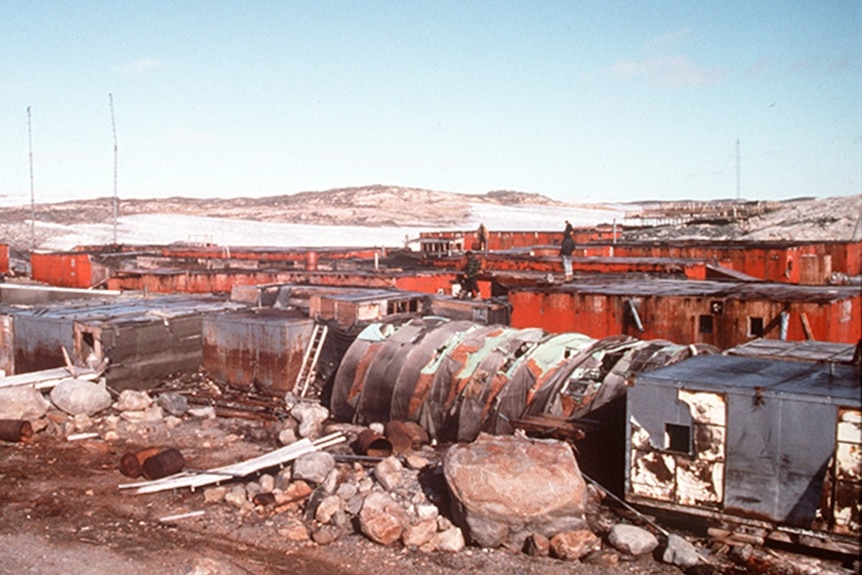 A significant summer melt occurred in 1992 exposing the old buildings.(Supplied: Graeme Snow)
That’s when the last major melt, due to unusually warm conditions, exposed the entire station, including its buildings and fuel caches.
A photo from the 1960s also shows the fuel cache which is now buried in ice.
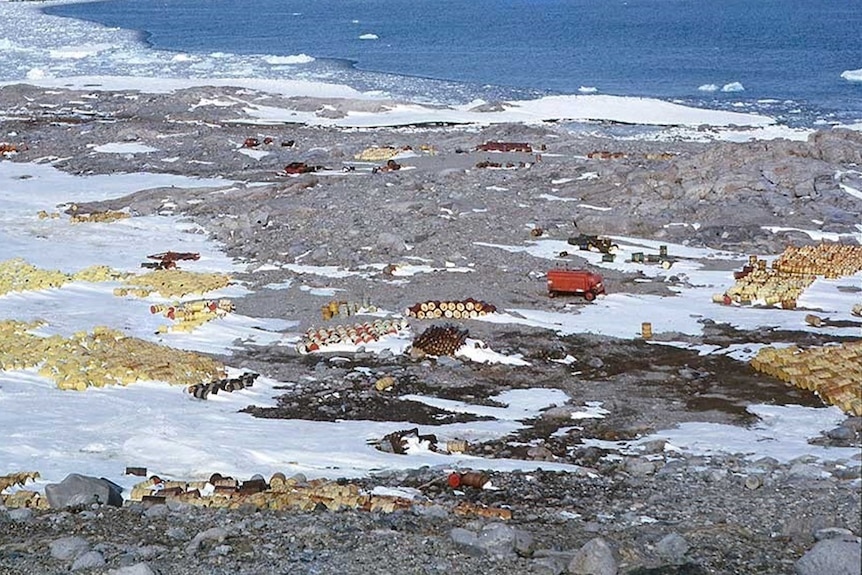 A fuel cache, seen here in the 1960s, is now buried under the ice.(Supplied: K Budnick)
As the climate continues to warm a similar melt could have dire consequences if further exposure triggers more fuel and chemicals to leak into the environment.
“That wouldn’t be good because obviously you would have a lot of contaminants start moving,” Mr Mets says.
“And, from our point of view that would be a disaster.”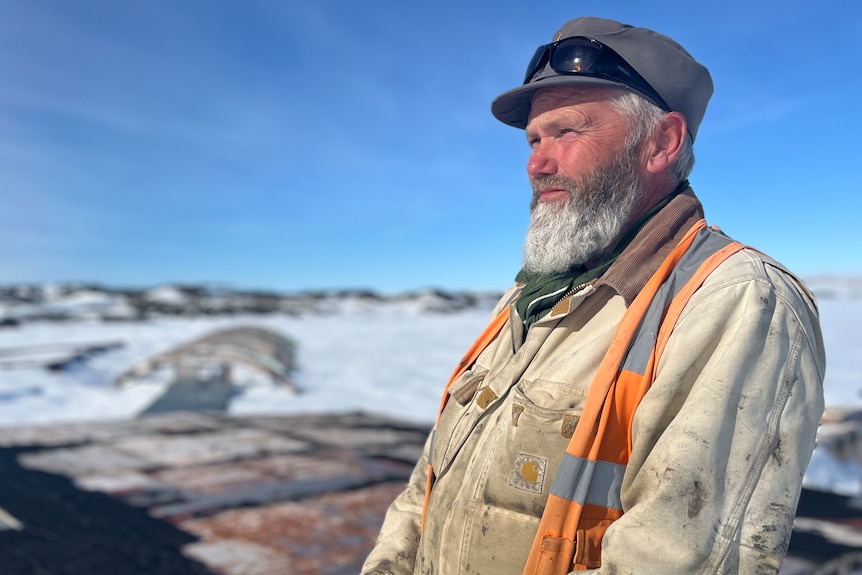 Johan Mets is a heavy machine operator with the AAD’s A Cleaner Antarctica science team.(ABC News: Jano Gibson)
Mr Mets says it would be far better to deal with the issue sooner rather than later.
Preparations for future clean-ups
Remediating Wilkes station is not a new idea — Australia has been promising to do it since the late 1980s.
In the years since there’ve been some surface-level clean-ups, as well as the removal of some of the fuel stockpile.
But much of it still remains.
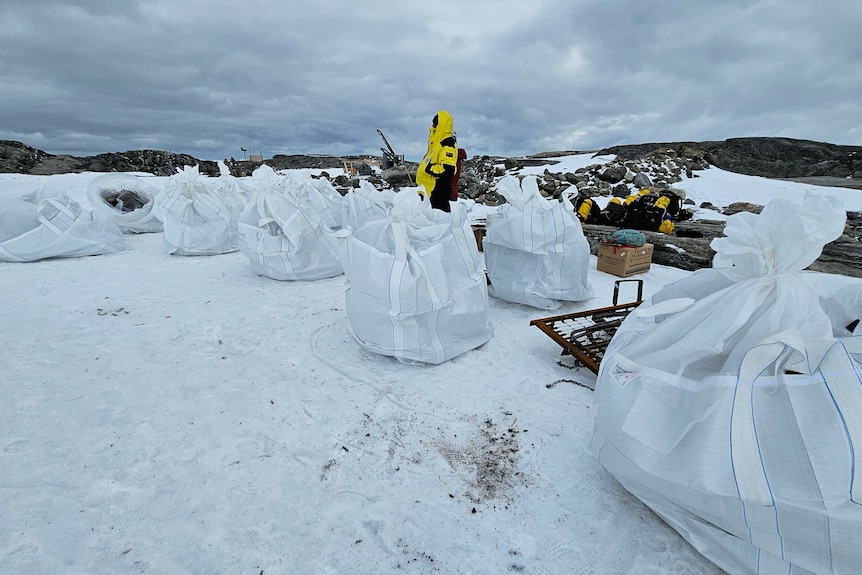 Bags of waste from Wilkes about to be hauled out by helicopter in 2025.(Supplied: Australian Antarctic Division/Rebecca McWatters)
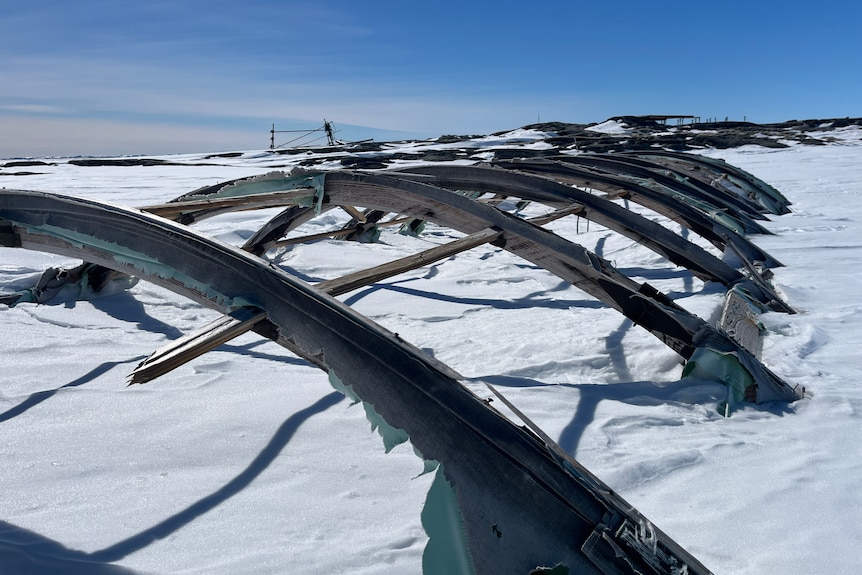 It’s been almost six decades since Wilkes Station was abandoned.(ABC News: Jano Gibson)
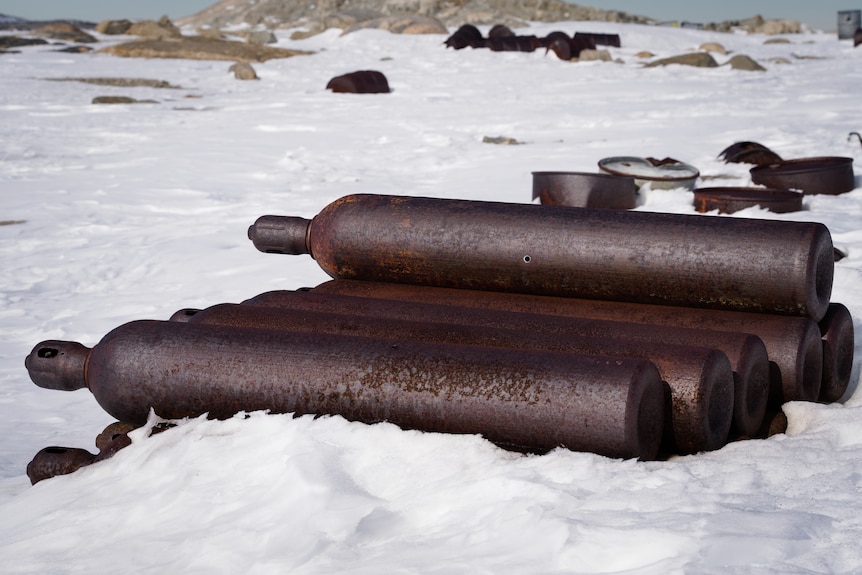 Rusting gas bottles are stacked at the old tip site.(ABC News: Jano Gibson)
“In total on the site we’re looking at around 20 Olympic-sized swimming pools of rubbish and contaminated soil,” Dr McWatters says.
Two years ago a French inspection team warned that Wilkes posed a “clear risk” to the environment.
And last year a parliamentary inquiry chaired by Labor called for the station’s full remediation by 2030.
International conservationists say action needs to be taken before it’s too late.
Loading…
“The issue, especially in Antarctica, is it’s hard to get to,” says Claire Christian from the Antarctica and Southern Ocean Coalition.
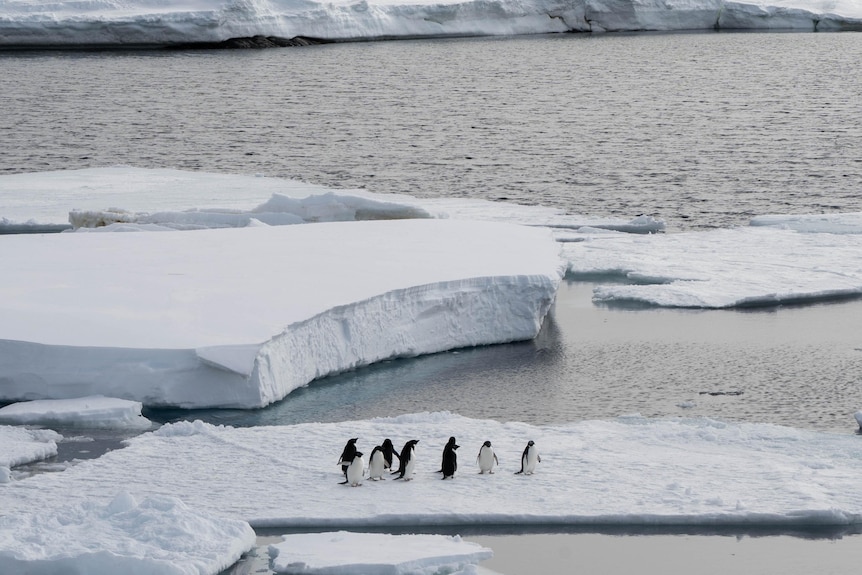 Penguins make themselves at home on the sea ice.(ABC News: Jano Gibson)
“If something does happen, if there is an emergency, it’s hard to clean it up.
Loading…
“So even though it’s expensive to do it on a proactive basis it’s going to be a lot easier to do it than waiting for something.”
The AAD says work in Antarctica takes far more time than in Australia due to its remoteness, complex logistics, extreme conditions and long planning lead times.
And while the Antarctic Treaty System calls for the removal of historical waste, it stipulates this should only be done if it doesn’t cause additional pollution.
“We need to consider the activities we undertake, even with cleaning up, to make sure that we aren’t going to make things worse during our remediation activities,” Dr McWatters says.
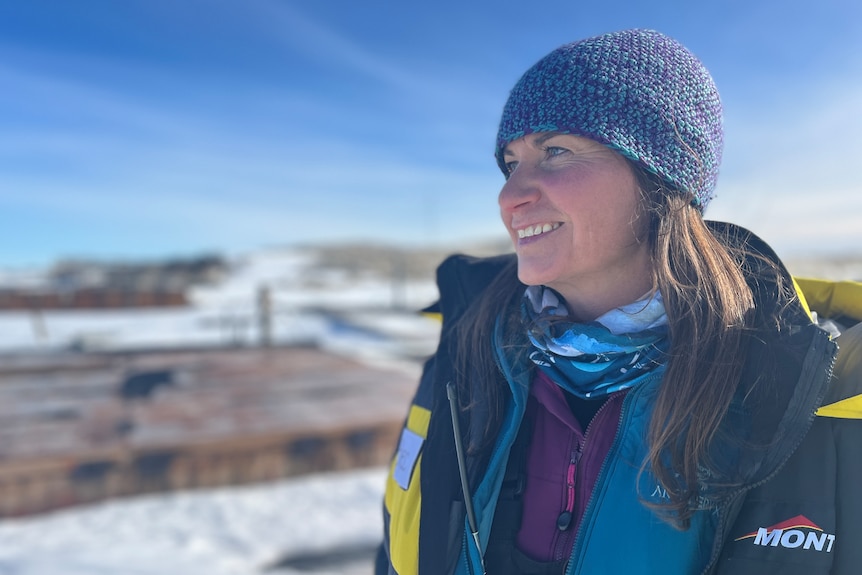 Rebecca McWatters is the environmental remediation and restoration lead at the Australian Antarctic Division.(ABC News: Jano Gibson)
In 2022 the federal government committed $14 million towards A Cleaner Antarctica, which covers remediation efforts at all of Australia’s stations and field sites.
At Wilkes a comprehensive risk assessment has been underway for several years to develop a “prioritised, costed and actionable remediation strategy”.
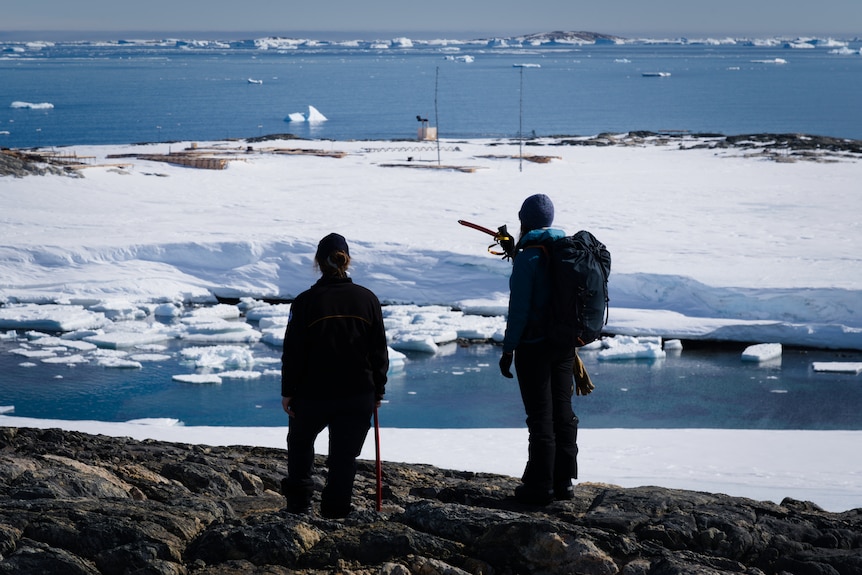 Rebecca McWatters and Melanie Borup look towards Wilkes Station.(ABC News: Jano Gibson)
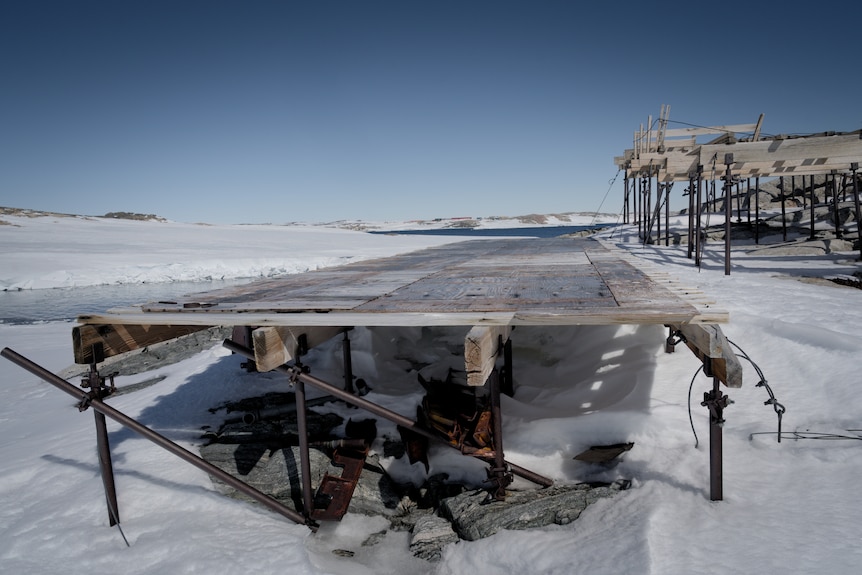 Some structures haven’t been consumed by the snow.(ABC News: Jano Gibson)
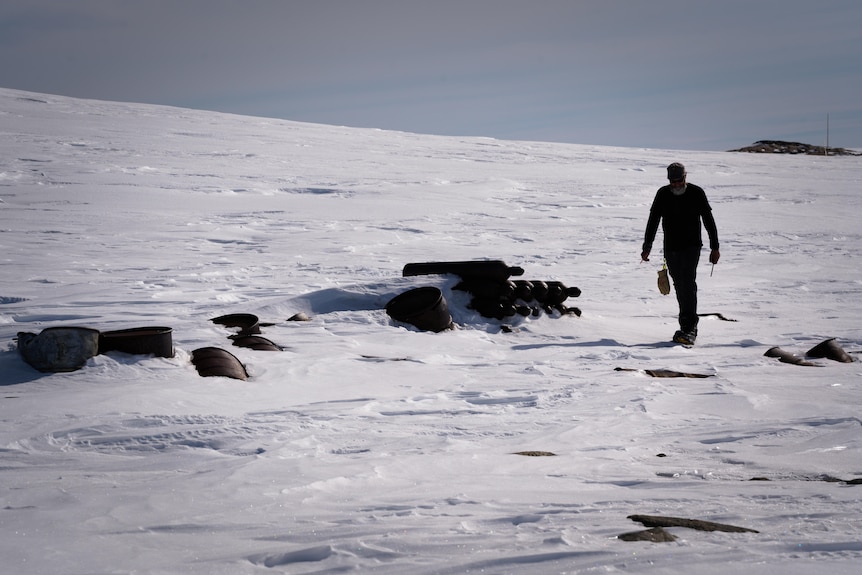 A member of the remediation team walks around the site.(ABC News: Jano Gibson)
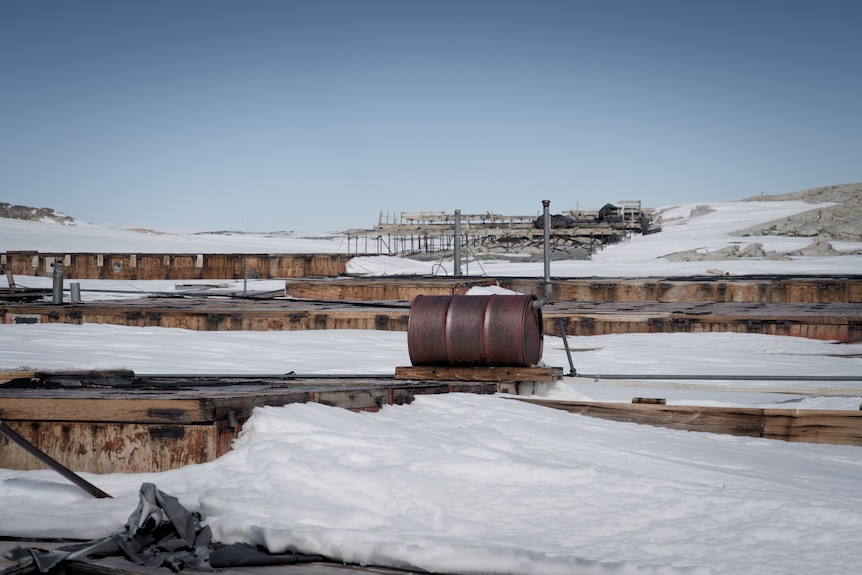 The majority of buildings are buried under the ice.(ABC News: Jano Gibson)
The assessment has included a range of technologies including drone-mounted, ground-penetrating radar to get a clearer picture of the contamination beneath the surface.
Laboratory testing has also been used to find out the types of microbes that live in the area and their tolerance for different levels of contamination.
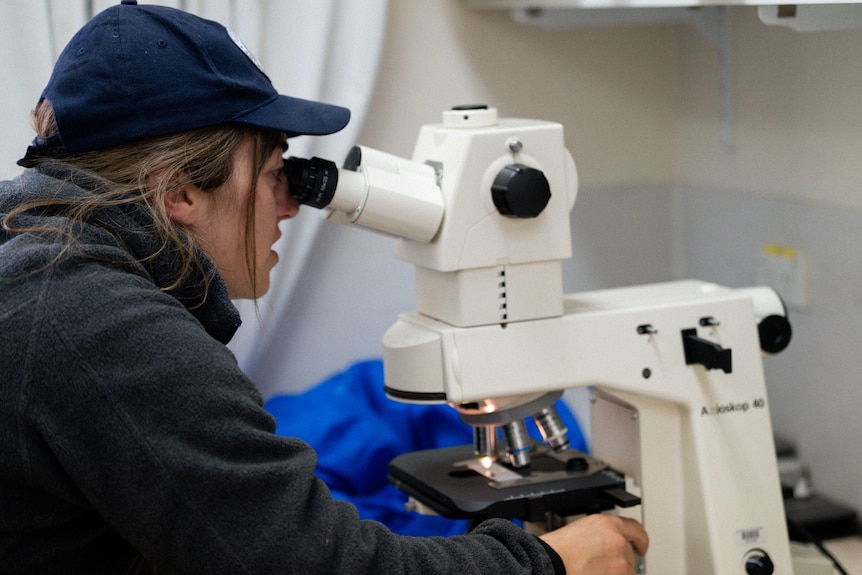 Melanie Borup examines samples as part of determining the level of contamination happening at Wilkes.(ABC News: Jano Gibson)
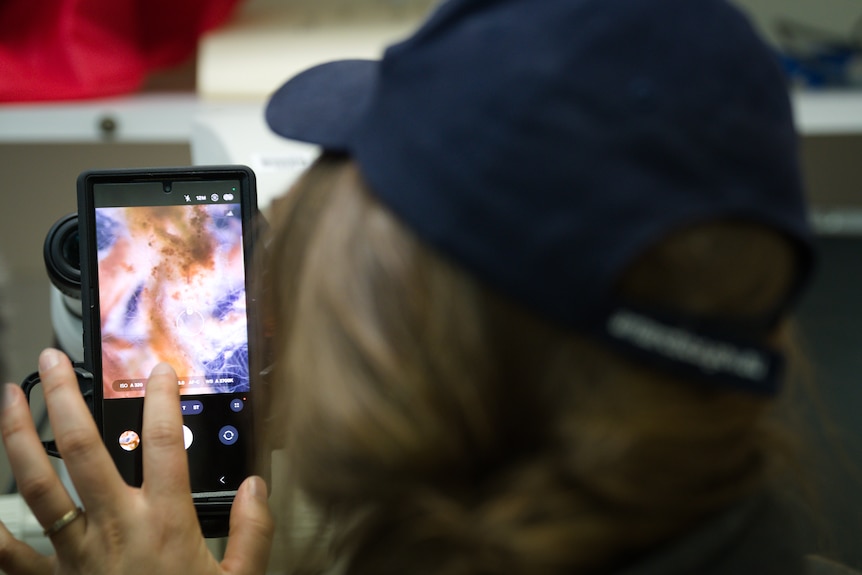 Melanie Borup uses a microscope to examine samples of microbiota.(ABC News: Jano Gibson)
“The species that are found especially in East Antarctica aren’t found anywhere else in the world,” Ms Borup says.
“They can be susceptible to exposure from these contaminants in their environment.”
Once completed, the risk assessment will be used to identify the areas at Wilkes that are in most urgent need of remediation.
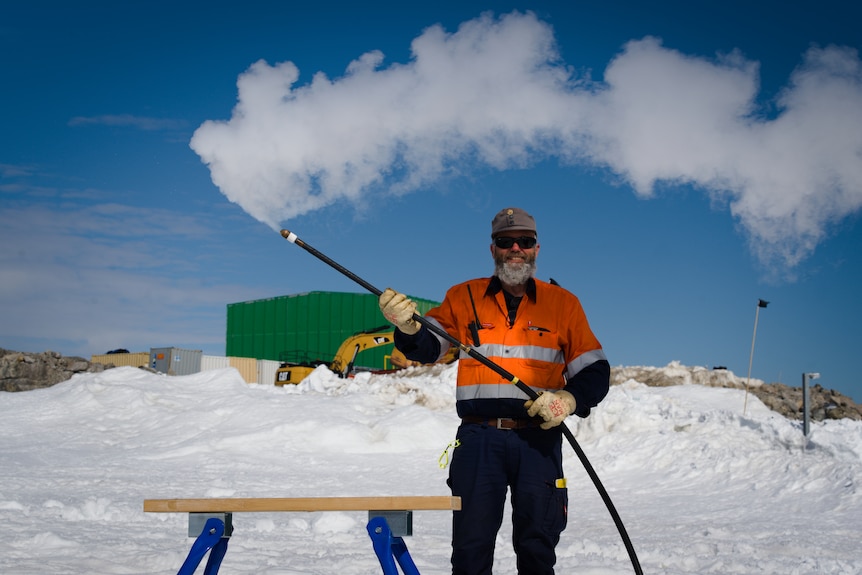 The team plans to use steam drills to safely access contaminated objects below the ice.(ABC News: Jano Gibson)
It will also inform the development of safe clean-up techniques, such as steam drills, which can cut through the ice without the risk of puncturing fuel containers.
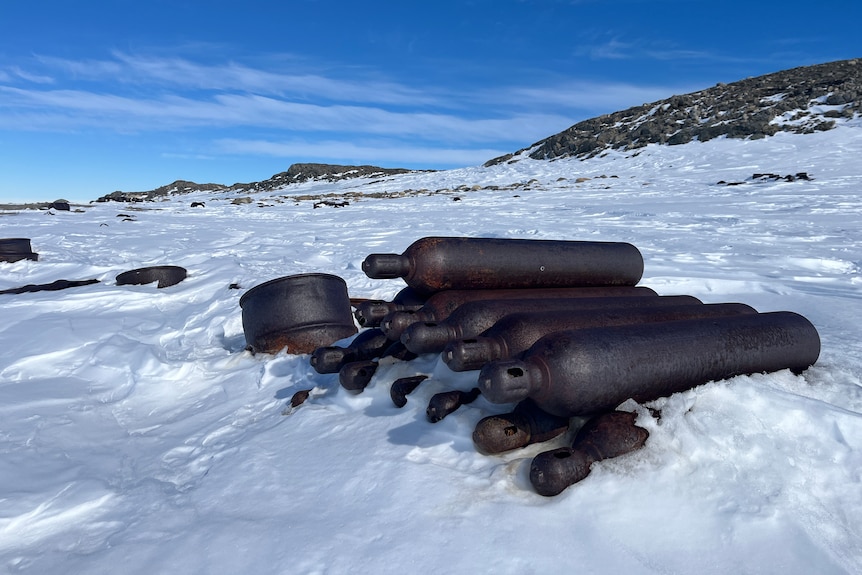 Only a small portion of the waste dump is visible above the surface.(ABC News: Jano Gibson)
“What we are trying to do is try to be as delicate as possible so that way we’re not making a greater mess while we are cleaning up,” Dr McWatters says.
Tallying the clean-up bill
Over the past few decades Australia has successfully remediated several other smaller contaminated sites in Antarctica, including old rubbish tips and fuel spills.
“Australia is a world leader in the environmental space in Antarctica,” Dr McWatters says.
“We continue to apply that learning to new sites or larger sites that we are tackling, for example, Wilkes Station.”
But a key issue will be the cost of the clean-up.
Loading…
In 2014 a government-commissioned report estimated it would cost $136 million to remediate Wilkes, as well as several other smaller abandoned sites in Antarctica.
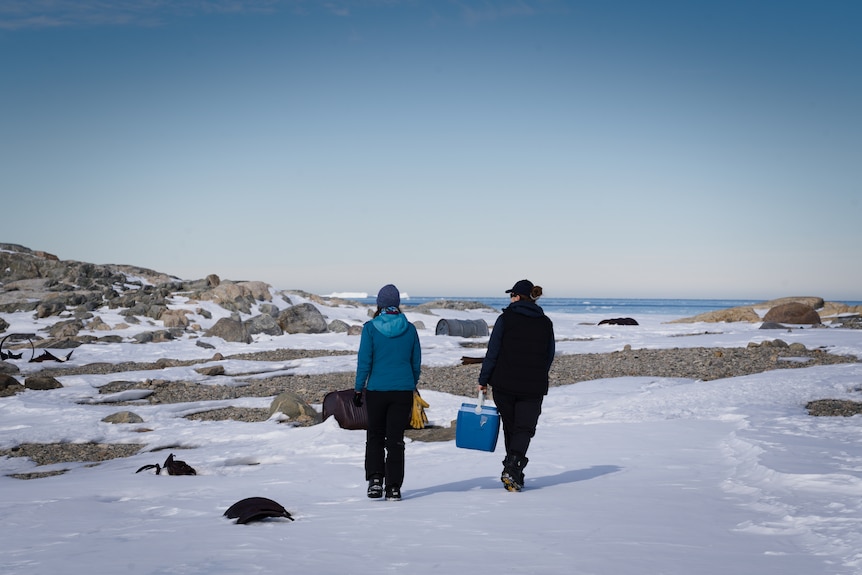 Scientists prepare to sample the area for contamination.(ABC News: Jano Gibson)
Until the risk assessment is completed at Wilkes the current remediation cost remains unclear.
“[The] program will develop a cost estimate that reflects feasible clean-up and remediation options, including new on-ground remediation techniques developed by the Australian Antarctic Division,” the AAD said in a statement.
It said the “timing and scale” of the clean-up would depend on substantial planning, resourcing and long-term access to the site.
“It’s really important that we spend the time now and do the risk assessment well,” Dr McWatters added.
“That way we have a really accurate estimate of what we’re dealing with.”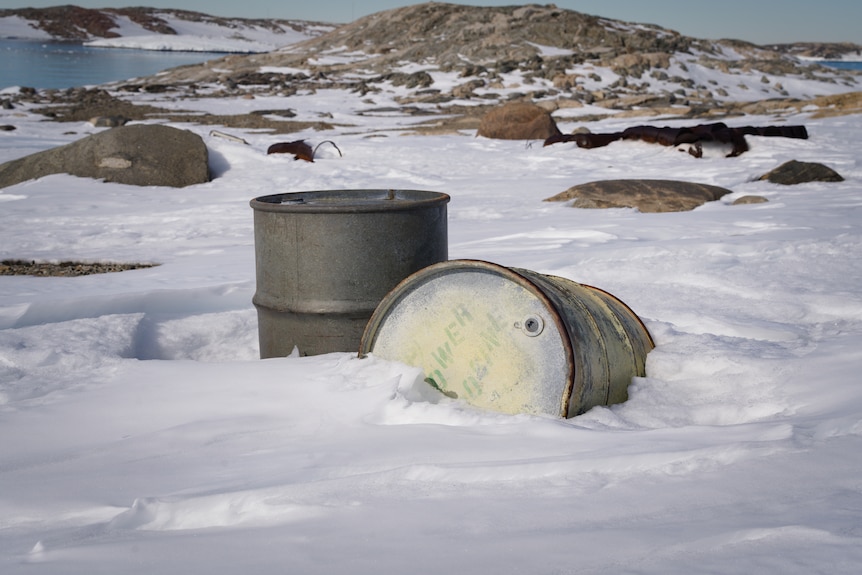 It’s not known how much fuel remains in the old barrels.(ABC News: Jano Gibson)
The ABC travelled to Wilkes Station with the support of the Australian Antarctic Program.
CreditsReporting: Jano GibsonPhotography: Jano Gibson and Owain Stia-JamesVideography: Owain Stia-JamesArchive footage: Australian Antarctic DivisionVideo production: Owain Stia-JamesDigital production: James Dunlevie and Daniel MillerDigital editor: Daniel Miller