
Researchers led by Beijing”s Changping Laboratory have identified a specific brain network whose dysfunction appears central to Parkinson’s disease, a finding that helps explain how existing treatments work and points to more precise, less invasive therapies.
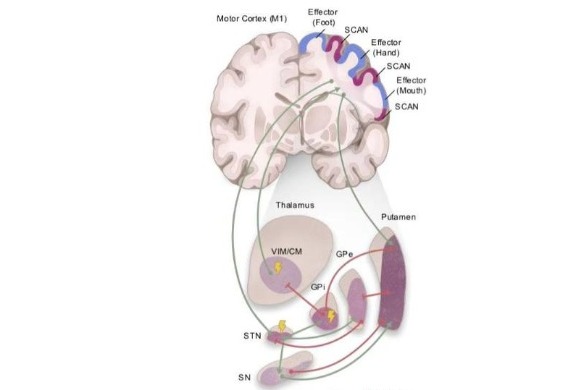
The study, published in Nature on Thursday, identifies the somatocognitive action network, or SCAN — a system that coordinates whole-body movement — as critically impaired in Parkinson’s patients. Among those with the disease, SCAN becomes abnormally hyperconnected to several deep-brain structures.
Parkinson’s disease is a progressive neurological disorder that affects movement, sleep, mood and overall quality of life. There is no cure, and current treatments focus on symptomatic relief. China has more than five million Parkinson’s patients, accounting for more than 43 percent of the global total.
An international team led by Changping Laboratory, in collaboration with Peking University, Tsinghua University, Washington University in St. Louis and Harvard University, analyzed imaging data from 863 individuals.
The researchers found that in Parkinson’s patients, SCAN shows excessive connectivity to subcortical regions, including the substantia nigra — where dopamine-producing neurons degenerate — as well as to all known targets for deep brain stimulation.
The study found that existing Parkinson’s treatments — from oral medications to surgical interventions — share a common mechanism: reducing this pathological hyperconnectivity. As connectivity normalizes, patients’ symptoms tend to improve.
“SCAN hyperconnectivity appears central to Parkinson’s pathophysiology, and its reduction is a hallmark of successful neuromodulation,” the study said. It added that precisely targeting SCAN nodes could enhance current therapies and pave the way for novel, minimally invasive treatments.
Building on the findings, Chinese researchers developed a noninvasive brain circuit modulator designed to target the SCAN network. Results from a clinical trial involving 36 patients showed the approach was twice as effective as traditional motor region stimulation, achieving a response rate of 55.5 percent.
Liu Hesheng, a professor at Changping Laboratory and senior author of the study, said as of late November, more than 100 patients in China and overseas had been treated with the device.
One patient, an elderly woman surnamed Hu, experienced fewer falls and improvements in independent walking, swallowing and speech after one course of treatment. After three years of biannual sessions, she reduced her medication by more than half, significantly lowered her risk of motor complications and regained the ability to manage daily activities independently. She is now considering traveling abroad.
Liu stressed the importance of early intervention efforts in neurodegenerative diseases, before extensive neuron loss makes recovery unlikely.
“While patients may hesitate to undergo invasive surgery in the early stages, this noninvasive therapy offers a viable option to intervene earlier and more precisely,” he said.
Ren Jianxun, a scientist at Changping Laboratory and first author of the study, said the device has received a Class 2 medical device registration license. “We aim to obtain the highest Class 3 certification by conducting further clinical trials in the coming years,” he said.