
In the midst of a snowy, frigid winter, MUNA has decided to turn the temperature up. After the release of their third album in 2022, MUNA spent their years ratcheting up accomplishments: opening up for some of the biggest pop acts, releasing solo ventures, and recording a podcast. Aside from an errant single that some (me) might say is their best song ever, new music from the band has been kept under lock and key — until this month.
MUNA, finally, has answered the desperate calls of sapphics: May 8 will be the release date of their fourth album Dancing On The Wall, with the title track and music video already accessible to the rapturous applause of loyal lesbians.
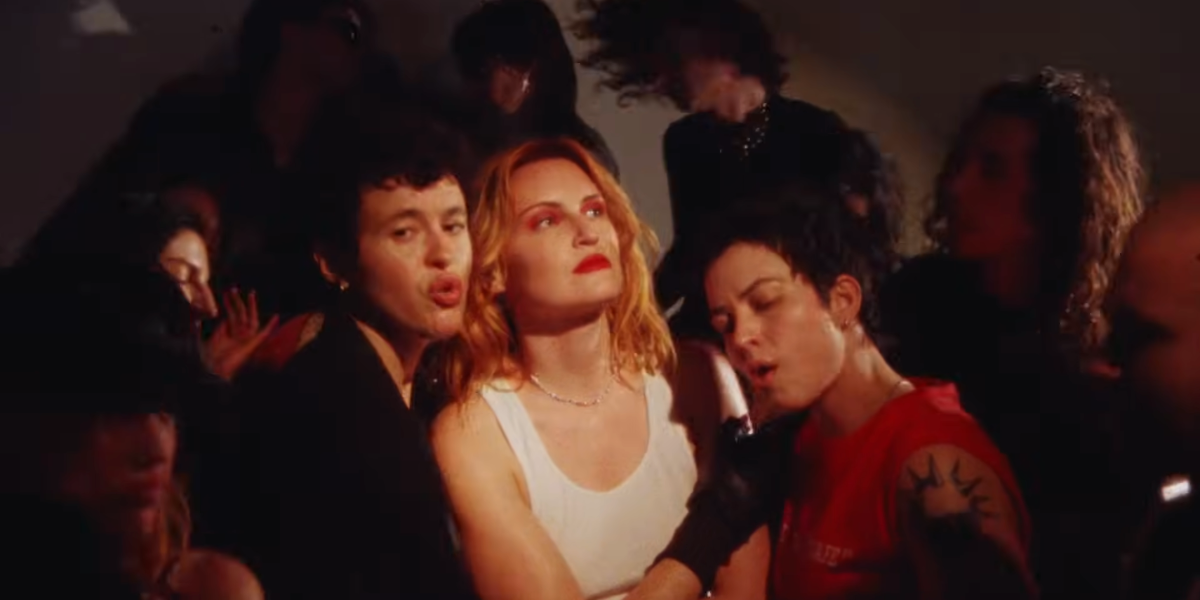
The music video for “Dancing On The Wall” features a slick and sexy color scheme of black leather and red latex. Some scenes feature each member alone in abandoned red-painted rooms that are not unlike a Saw set. In other scenes, a warehouse party of sweaty silver-chained bodies writhes around them. Josette Maskin and Naomi McPherson mouth along to Katie Gavin’s singing, creating a cohesion of the band’s participation in every layer of the song regardless of Gavin’s vocal leadership.
As the bridge hits three minutes into the video, the abrasive red is replaced by barren, broken stone walls that Gavin, no longer in her latex ensemble but similarly pared down, throws herself against. The lyrics are transparent that these walls are the stand-in for the lover, “the wall that I keep banging my head against,” an unreliable partner who, despite their broken promises and unavailability, remains a steadfast fixture in Gavin’s mind.
The bridge’s turn from the sexy red paint to broken stone suggests Gavin’s lyrical realization that the fantasy is broken: This lover will never be able to give her the stability she needs. Alas, their magnetism is too strong to resist. Rather than breaking the wall down, Gavin dances on it, bangs her head against it: incapable of bringing it down, incapable of moving through it, she acquiesces to that toxic reality with her head thrown back and an exposed throat.
Following immediately is the entire band sitting in the back of a truck bed, as a powerful rain douses them, interspersed with shots of the band running together down an empty Los Angeles street. It suggests that, even in this terrifying personal devastation, there is a unity between the three that will bring some sense of freedom. A cleansing from the rain, a home to run toward.
One of MUNA’s strengths as a trio, aside from their artistry, is their activism. Amid this album rollout, none of the members have forgotten to use their platform for promoting GoFundMes of Palestinian families in need or providing mutual aid resources for their Los Angeles neighbors. In a time when speaking out is more crucial than ever, MUNA has never wavered in their ability to put their money where their mouth is: You can’t put out a song like “I Know A Place” without doing your damndest to give directions to that place.
The end of the music video sees McPherson open their MP3 player to another song, “It Gets So Hot,” the first track on their album that briefly existed solely on their website but has disappeared…for now. This track is reminiscent of “Runner’s High,” a held-breath, beating pulse of a song whose tension hovers among the more salacious bangers. This double-release proves not only MUNA’s continuing versatility, but their own excitement to share this fresh chapter of their discography.
In true MUNA fashion, the devastating toxicity of this relationship is laid bare against a euphoric dance track, easily tricking the listener into foregoing the warning screaming at them in large red lettering. There is fear in the joy, and there joy in the rot: This duality marks a MUNA album better than perhaps anything else. Queer joy cannot exist without personal heartbreak, and we cannot pursue that joy without the involvement of others, whether it be at a sweaty warehouse party or marching in the streets.
The production, led as usual by McPherson, is a fresh revitalization of classic MUNA sound: dark synth marked by well-honed drumbeats and sharpened vocals, this track beckons the pop-punch of About U, the lyrical introspection of Saves the World, and the confident coherence of their self-titled. It suggests the best of MUNA is yet to come.
Favorite