
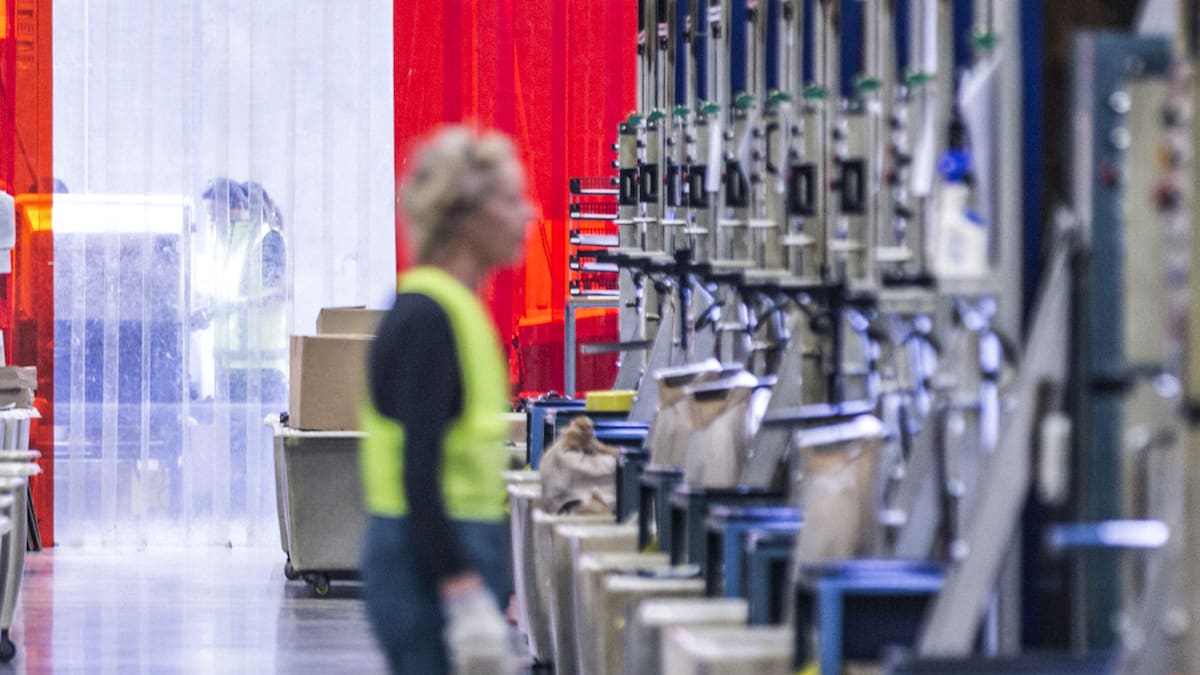
Skellerup’s US-bound products are made in three locations, New Zealand, China and Vietnam.
Most of the New Zealand-made product is in dairy consumables and falls under a long-established tariff exemption.
“The more difficult ones for us to overcome are the tariffs imposed on Vietnam and China and we’ve made pretty significant inroads in overcoming those with a combination of working on our costs, and being able to pass on price increases to our customers,” Leaming said.
“Obviously there was a lot of volatility around tariffs about eight or nine months ago, but when that settled down and the daily escalation stopped, we settled around where it is now,” he said.
Before Trump’s inauguration in January 2025, Skellerup had increased its inventory holdings into the US, which provided the company with time.
Skellerup had estimated the tariff impact at $5m for the current financial year.
“We’ve halved the impact on ourselves already and we think we can continue to reduce that in the years ahead, assuming things stay as they are,” Leaming said.
In its result, revenue in the half-year to December 31 was $183.5m, up 11%.
Earnings before interest and tax (ebit) came in at $40.6m, up 16% on the previous comparable period, and also a record.
Net debt was $17.5m, a $2.9m reduction on the previous half-year.
Leaming said the company had made an “excellent” start to the 2026 financial year.
“The growth in revenue and earnings was broad-based with the most notable contributions coming from the key dairy, potable and wastewater applications.
“Our team across the world has done an excellent job in meeting increased demand, delivering capacity improvements and navigating the impact of fluctuating tariff rates.”
The industrial division’s ebit of $25.1m was up 12% on the previous corresponding period.
The division’s revenue was up 6%, mainly because of growth in sales into potable and wastewater applications, most notably in the United States but also in Australia.
Sales to the roofing and construction sector in Australia and the United Kingdom were up, and sales to marine foam applications in the US continued to improve.
Skellerup’s agri division’s ebit was $18.5 million, up 20%.
Agri’s revenue was up 21%, primarily because of increased market share for dairy rubberware consumables, principally in global markets.
Revenue was also boosted by a change in customer delivery terms. Adjusting to exclude this, revenue increased by 18%.
Footwear sales to domestic and international markets were also up.
The most notable impact came from increasing sales and market share for specialist footwear in the US utilities sector.
Inventory levels are being maintained above historical levels to mitigate the risks of supply-chain interruptions and changes in tariffs.
Leaming said global geopolitical uncertainty persisted, which continued to make forecasting future results difficult.
Global markets represented 82% of revenue in the first half.
Skellerup declared an interim dividend of 10.0 cents per share (an increase of 1.0cps), imputed at 40%.
In the 2025 financial year, Skellerup reported a net profit after tax of $54.5m – also a record – up 9% on the previous year.
Jamie Gray is an Auckland-based journalist, covering the financial markets, the primary sector and energy. He joined the Herald in 2011.
Stay ahead with the latest market moves, corporate updates, and economic insights by subscribing to our Business newsletter – your essential weekly round-up of all the business news you need.