
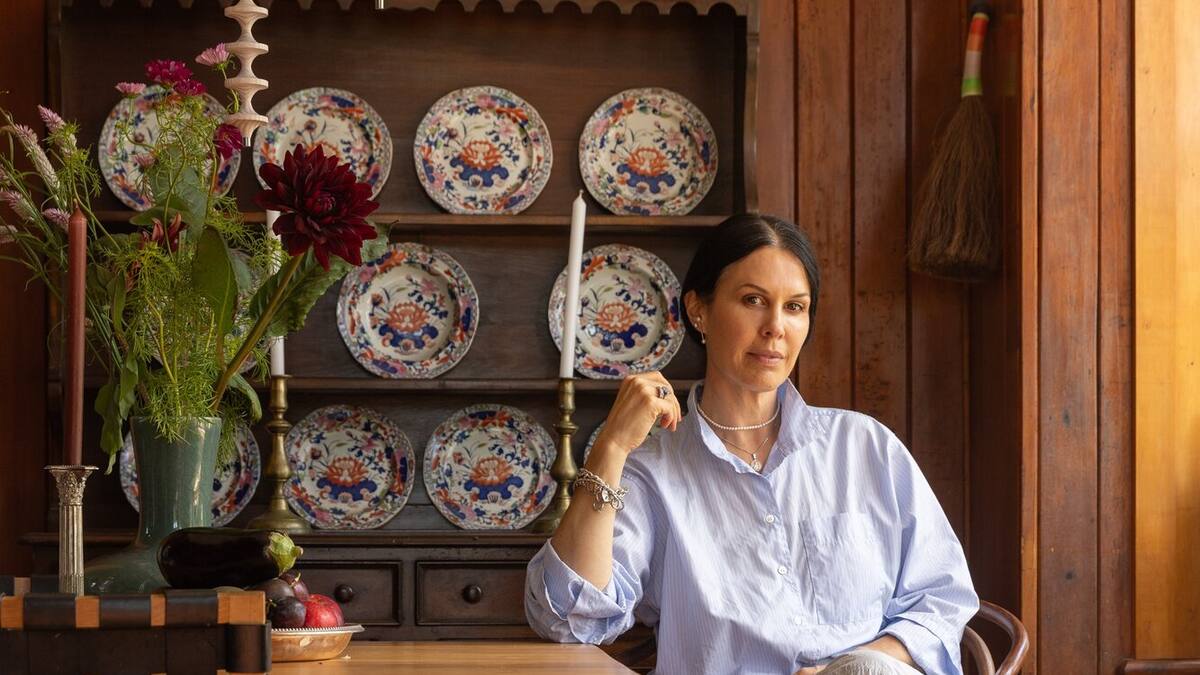
Snelling Studio’s Bec Snelling on how to choose objects that you’ll love forever.
Bec Snelling is an Auckland-based fine artist and designer, and the head of Snelling Studio, a lighting, furniture and objects company she established in 2007 with her father, Douglas. Their pieces are produced in collaboration with local
craftspeople, using both traditional and contemporary manufacturing techniques.
She has recently completed a Master of Fine Arts (Sculpture) at Auckland’s Ilam School of Fine Arts, is a keynote speaker at the upcoming NZ Design Week (March 2-10), and will be exhibiting at Melbourne Design Week.
Snelling shares with Viva her best advice on how to choose objects for your home that will last the test of time.
Bec Snelling in her studio at home in Mt Eden. Photo / Jason Dorday
Find purpose
Start by asking yourself what is this room’s purpose? Then cull. Strip it right back to what you actually need and love, and how that fits with that purpose.
The living room, for example. I intend for it to be for wakeful relaxation, reading, research or even my ‘best of room’. There is quite a lot of stimulus. It houses my collection of books, special artifacts, ceramics, and critical art – so if something makes it to the living room in my house, it’s really something special in my eyes.
This space is more communal so it’s not an extra dumping ground for the off spill. Side tables are great. I like a soft chair and ottoman. As much as a couch is essential, they are very big.
My new trick, because I loathe the TV being pride of place, is that it is now on a mobile pedestal and is peddled out on demand.
My bedroom’s purpose is more restful, solitary and meditative. Therefore, it’s minimal, subdued in colour with dim light and soothing bed linen. I think having these clear purposes sets the stage for each space and keeps it intentional and discerning.
Invest in a great dining table
Mine is the heart of my home. It is where all the activity takes place. We sit and share kai, have hui, draw, make art and lots of cups of tea – laughs, debates, contemplation and tears. The dogs are full and important participants, circling for an opportunity not just for food but for attention.
Bec Snelling’s kauri dining table. Photo / Jason Dorday
I love all that happens around my table. The old saying of “if these walls could talk …” – well, more applicable for me would be “if this table could talk …” I just now had a flashback of a staff party where we raucously danced on it. In fact, Dad used to say when we first started making furniture, “I make tables that you can dance on”.
Mine is solid kauri and is not too wide. It can sit up to 10-12 by slotting in a few stools, but it’s not so big and formal that it lacks intimacy.
Round or oval is lovely, and fold-up or removable leaves is super if space is at a premium. When the table is empty, I love using it to curate still life – gathered foliage from my walks, flowers, candlesticks and interesting fruit on plates. I quite love using a tablecloth and that gives ‘the still life‘ extra beauty – like a living painting.
The chairs and stools do not need to match. A bench seat is great too – but make sure it is comfortable. There needs to be the right chair-to-table ratio, otherwise you will not sit at it.
There’s an abundance of local furniture makers who will make you a custom-sized table, including Daniel Streicker, Grant Bailey, Josephine Jelich, Emile Dresher, Ted Synott. You may even find a glorious, talented maker at your local community hall market. Have conversations – usually makers are really keen to help, and it is something that you will not regret.
A collection of ceramic animals designer Bec Snelling inherited from her mother. Photo / Jason Dorday
Display your collections – object and art
I have many, from rocks, through to art, baskets and candlesticks. I inherited my mother’s ceramic animals – she started collecting them in South America and I adore them; they’re one of my most prized possessions.
Start your own collection from markets or, my favourite is to go to any graduate shows – this applies to wall art also.
Bec Snelling’s dressing table. Photo / Jason Dorday
There are so many galleries I’d recommend – Anna Miles, Season, Grace. Start following them on social media, get to the art fairs – Auckland now has two and many ‘offsites’. The best thing is that you learn so much.
Yes, you may like a work visually, which is key if it’s coming into your home, but there is so much more fascination about art and alternative perceptions. I love to learn about artists. Ask questions – gallerists and artists love talking about the work.
Bec Snelling’s Briar floor mirror. Photo / Jason Dorday
Mirrors make a space larger
I love mirrors as a playful lens, as they reflect and frame, and they optically allude. A beautiful mirror in an entrance is classic. I have designed many in my oeuvre, the latest Hour Briar Mirror (named after my mother) is oval and adorned with turned wooden beads.
The Briar Floor Mirror in my bedroom is so romantic and very feminine. I’d also recommend French Country for classics and Kiosk for clever.
Designer Bec Snelling at home in Mt Eden. Photo / Jason Dorday
Lighting creates mood
I‘ve been designing lighting for 20 years and I believe it’s critical. My home is my safe place where I replenish. I need the lights to be dim at night and use task lighting at my desk. Lamps are great if you’re renting, as you can take them with you, and wall lighting is like art. Snelling lighting is designed with all of this in mind.
Lighting creates mood. Photo / Jason Dorday
There are many divine lighting options in New Zealand, especially via Webbs for antiques, Flotsam and Jetsam, Kiosk and Frangere.
Add some magical extras
We always had bedspread covers growing up – Granny used a lot of Liberty print and we had matching drapes. My room feels special and considered, as they are the thing I love the most. I have curated the bedroom around the Liberty pattern and designed a bedhead (watch this space – Snelling will be releasing it in 2026) to complement the tones of cornflower blue and ochre.
Bec Snelling designed a headboard to complement the colours and patterns in her liberty print bedspread. Photo / Jason Dorday
A nice hand towel is so simple. Baina’s are gorgeous, or just a crisp, beautiful white one. Klay has great considered and local pieces. I also recommend Henry Wilson.
All in all, home curation is an extension of your identity and voice – a tapestry, layered, deeply personal – to be cherished and treasured.
Be brave, yet discerning – it all does not need to be from the same period or store, copied identically from a noted publication, or so pared back that one dirty dish on the bench spoils the aesthetic.
My number one advice would be to please support local artists and makers. Yes, there are incredible, unbeatable droolworthy pieces out there – you can’t compete with Italian or Scandinavian right?! But I love a human story, and it has a ripple effect – not only the hand-me-down factor but lovely interesting talking points – which is what we need more in our lives.
More home design