
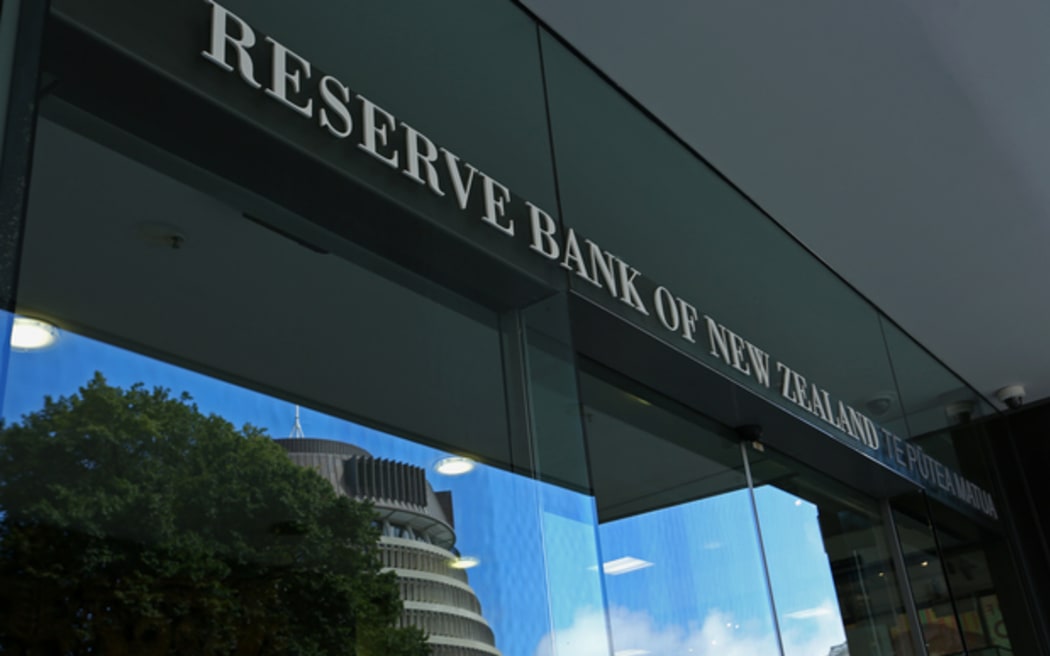
The independent review will look at the Reserve Bank’s response to the pandemic.
Photo: RNZ / Alexander Robertson
A review into the Reserve Bank’s monetary policy decisions during the Covid-19 pandemic was originally intended to be completed by March.
The Finance Minister says the delay was due to how long it took to appoint the right people to lead the review.
On Wednesday, Nicola Willis confirmed she had commissioned an independent review into the Reserve Bank’s response to the pandemic, including cuts to the Official Cash Rate, and the Large Scale Asset Purchase programme.
The opposition has criticised the government for the timing of the review, given it is set to be published in September, just weeks before the election.
The review will be led by monetary policy experts Athanasios Orphanides and David Archer.
Orphanides was a former governor of the Central Bank of Cyprus, and member of the Governing Council of the European Central Bank.
Archer was a former Reserve Bank assistant governor and former head of the Central Banking Studies Unit at the Bank for International Settlements in Basel, Switzerland.
On Thursday, the Treasury released a series of documents related to the review’s establishment, which show Willis first informed the Reserve Bank in July 2025 she was considering a review, and took the matter to Cabinet for sign-off in August 2025.
At the time, Willis expected the review would be completed by March 2026.
The documents also show parts of the review’s terms of reference were changed to factor in the benefits of its decisions, after a suggestion from the Reserve Bank.
Why the delay?
Willis told RNZ the hold-up was due to the appointment of the international reviewer.
She said following the Cabinet mandate, it was her job to find the appropriate reviewers, with Treasury making recommendations.
“First, people we approached weren’t available in the appropriate timeframe. We then had a challenge where one reviewer we proposed was available in the timeframe, but another wasn’t. And so we were both trying to balance getting a balance of someone with domestic perspective and international perspective, the appropriate international credentials, and being available for their time period,” she said.
“So there was a bit of a back and forth on finding appropriate reviewers. And at all times, I was very mindful of Treasury advice on the credentials that they needed to fulfil.”
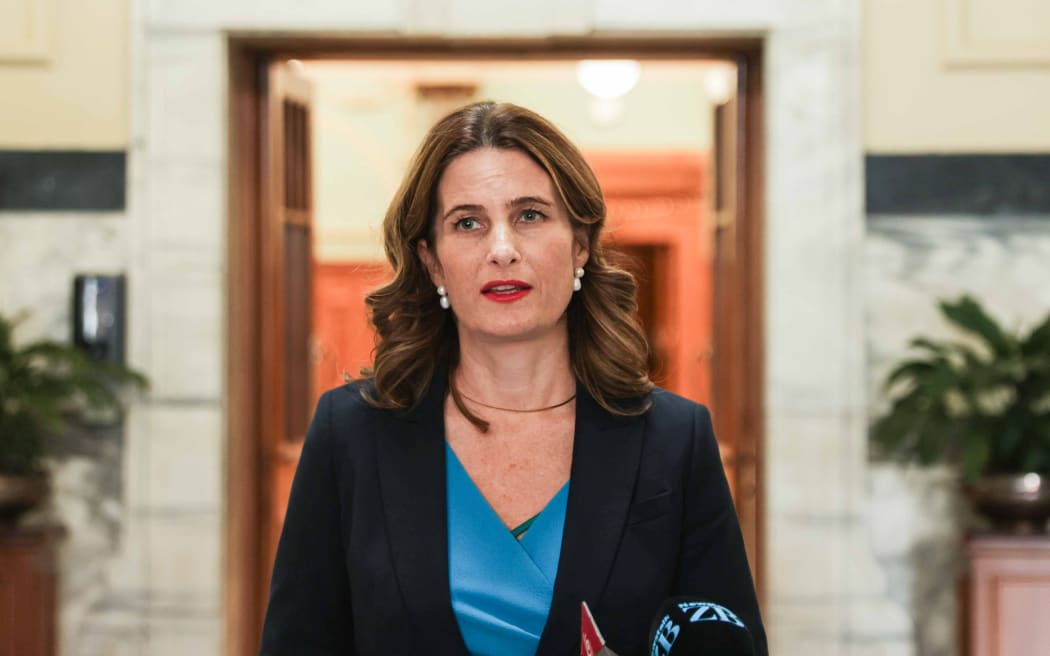
Finance Minister Nicola Willis says the delay was due to the appointment of the international reviewer.
Photo: RNZ / Samuel Rillstone
Willis said it was “frustrating,” but ultimately felt the most important thing for the credibility of the review was the quality of the reviewers.
“I’m satisfied that we’ve landed on very credible reviewers. No one’s questioning their authority, their credibility. Clearly, these are people who are independent. There’s not a political bone about them.”
The Cabinet minute shows Willis had the authorisation to approve the selection of the experts and make changes to the terms of reference, in consultation with the associate finance ministers.
What do the documents say?
In a letter dated 10 July 2025 and sent to then-Reserve Bank chair Neil Quigley and Governor Christian Hawkesby, Willis said the Monetary Policy Committee took “unprecedented” actions in response to the “significant economic challenges” caused by the pandemic.
She acknowledged the Bank’s review and assessment of its monetary policy performance between 2020 and 2022, which commissioned independent experts to provide peer review but was not independent of the Bank.
“As such, I am considering an external review to provide the Government with an independent perspective on the MPC’s performance during 2020 to 2022. This will ensure there is appropriate transparency over the MPC’s performance during a period of significant economic challenges, and will help identify lessons for future episodes of instability,” she wrote.

Feedback from then Governor Christian Hawkesby about changing the terms of reference were taken on board.
Photo: RNZ / Dom Thomas
In response, Hawkesby said the Bank had made “significant progress” in implementing the recommendations of the 2022 review, but would fully cooperate with the external review if Willis chose to proceed with it.
Hawkesby had suggested the draft terms of reference be amended, particularly a section on whether the “stimulus” provided by the Large Scale Asset Purchase and Funding for Lending programmes “justified the risks to the public balance sheet and other costs”.
“We note that this frames the benefits and costs associated with these tools in narrow terms and should be widened to capture the impact LSAPs played in stabilising markets, and their broader fiscal benefits through lowering Crown borrowing costs and increasing tax revenue,” he wrote.
This feedback was taken onboard, with the final terms of reference changed to reviewing whether the “benefits” provided by the programmes “justified the risks and costs”.
Hawkesby also raised another section which referred to the review making “recommendations to improve the monetary policy response to future shocks, including commentary around potential changes to the frameworks, having regard to the benefits of hindsight”.
He said the Monetary Policy Committee’s remit was an important part of the policy framework, and while it could be reviewed at any time there were benefits to stability in the objectives of monetary policy.
“We suggest that any recommendations related to the objectives of monetary policy would be best addressed as part of the 5-yearly formal review of the MPC Remit, which is due by mid-2028.”
This was not changed.
On 9 February she told the new chair Rodger Findlay and new Governor Anna Breman that the government had finalised the establishment of the review, with the final terms of reference showing the new expected completion date of August.
“Independent monetary policy is a central pillar of New Zealand’s macroeconomic frameworks. The review strengthens this by supporting accountability and public confidence in the operational independence of monetary policy and informing its ongoing effectiveness,” Willis wrote.
She told Findlay and Breman she had adopted the Bank’s suggestion to broaden the review’s assessment of the costs and benefits of alternative monetary policy.
Willis told RNZ she thought it was important to engage with the Bank about how to get the best lessons out of the review.
“I think the final terms of reference allow for a full and penetrating review. So the questions will be asked, the information will be furnished, and those reviewers will be able to reach conclusions.”
She said it was up to former governor Adrian Orr and former chair Neil Quigley to decided if they wanted to front up to the inquiry, but said “if they’re wise, they will.”
Sign up for Ngā Pitopito Kōrero, a daily newsletter curated by our editors and delivered straight to your inbox every weekday.