
For three years, 23-year-old Vinh H. has lived quietly with HIV.
Once a computer science major, he dropped out of university and now survives on temporary jobs to afford his medication.
Instead of going to HIV/AIDS centers, he buys medicines at local pharmacies, fearful a staff member or neighbor might recognize him.
Vinh was infected by a male partner. He describes the circle he once belonged to — young men who socialize, use synthetic drugs and have multiple sexual partners — as one of the fastest-growing groups in Vietnam’s rapidly shifting HIV/AIDS epidemic.
“I rarely visit my family now, and I avoid friends back home in Quang Nam province,” he told GSR. “If they knew I had HIV, they would be shocked and insult me terribly. I’m terrified of anyone knowing.”
Vinh kept his diagnosis secret until last year, when chronic coughing, sinus infections and sleeplessness left him so weak that he finally sought help — from someone he believed would not condemn him.
“I trust in her,” he said of St. Paul de Chartres Sr. Josephine Huynh Thi Ly, who has spent 26 years caring for HIV/AIDS patients at Hue Central Hospital.
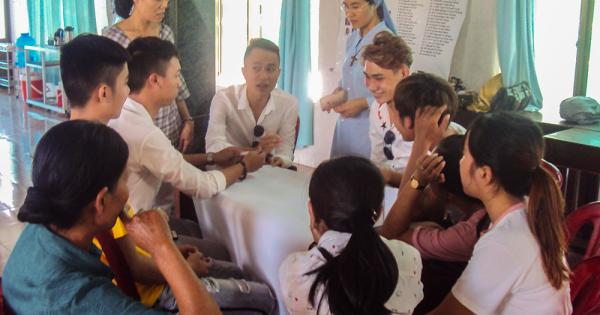
Ly and some other sisters volunteer as nurses, counselors and emotional anchors for HIV/AIDS patients — many of whom arrive frightened, ashamed and utterly alone.
“After learning they are HIV-positive, many collapse emotionally,” Ly told GSR. “They fear abandonment, stigma, losing their jobs, and having their whole family looked down upon.”
At a November press conference given by Vietnam’s Ministry of Health, Dr. Nguyen Luong Tam, deputy director of the Preventive Medicine Department, said that the country’s HIV landscape has changed dramatically.
Tam said that over 80% of newly detected HIV cases are now male, with sexual transmission far surpassing injection drug use.
Infections among gay men and transgender people are rising sharply — by 7.2% over the last year, he said at the press conference. Synthetic drug use, drug use during sex, and group sexual activities further intensify risks.
Over the past five years, Vietnam has detected, on average, more than 13,000 new HIV cases each year.
From the first recorded HIV case in 1990 through 2024, the Southeast Asian country has reported 245,762 people still living with HIV and 116,004 deaths.
The sisters face these realities every day.
When Vinh arrived, Ly helped him navigate hospital procedures, access HIV treatment, and manage other illnesses that had worsened under stress. She provided food when he couldn’t afford it, and comfort when fear overwhelmed him.
“Now my health is stable,” Vinh said.
He earns a living decorating weddings and, in gratitude, collaborates informally with the sisters by identifying other young men with HIV who need the care he once hesitated to seek.
“I bring them to the sisters,” he said. “Many won’t go on their own.”
Public health experts insist stigma remains the greatest obstacle.
Dr. Doan Thi Thuy Linh, deputy of the National HIV and Chronic Infectious Diseases Division, said at the November Ministry of Health press conference that stigma and discrimination are “one of the biggest challenges” to Vietnam’s goal of ending AIDS by 2030.
She said many people avoid HIV services due to fear. Expanded testing is hampered by lack of staff, limited outreach groups, and reduced availability of free test kits.
Funding is also shrinking. Nearly half of the country’s HIV-prevention budget depends on international aid, which is rapidly declining. “Financial difficulties limit service access for high-risk groups, who often have low incomes and cannot afford care,” Linh said.
Ly said most new cases among her patients are age 25-29 — mostly gay men, drug users or sex workers. Her ministry focuses on restoring dignity.
The sisters’ approach is simple: be present, listen deeply and treat each person with dignity.
“We stay close to them, counsel them and help them remove their shame,” she said. “We patiently listen to their private struggles so they can heal and no longer feel abandoned.”
St. Paul de Chartres Sr. Marie Nguyen Thi Hoa leads the Niem Tin (“Faith”) group, a volunteer network of 15 people living with HIV who were once supported by the sisters.
They now reach others who are at risk.
“We explain the disease, care for them, bring them to detox centers, and prevent transmission in the community,” said Hoa, who also cares for HIV/AIDS patients at the hospital. The sisters assist about 20 newly infected people each year.
Their ministry extends beyond clinical care. The nuns and volunteers visit patients at home, teach self-care, and prevent onward transmission. They help patients without relatives manage medication, eat and bathe.
They also assist those who can work with starting microbusinesses — small retail shops, vocational training, raising poultry — to rebuild livelihoods.
“These activities give patients joy and lessen the psychological shock,” Hoa told GSR.
For 24-year-old Kien N. from Quang Tri, stigma pushed him to leave home.
He contracted HIV after having sex with multiple male partners. When he sought treatment for a throat infection, health workers made him wait until every other patient had been seen.
“That’s why I moved to Hue,” he told GSR. “Here I can work as a delivery driver, get treatment, and keep people from knowing my illness.”
His health has stabilized through the care of the St. Paul de Chartres nuns. He also attends monthly support sessions at Kim Long Charity Clinic, run by the Daughters of Mary of the Immaculate Conception.
Sr. Marie Magdalene Duong Thi Nguyet, who works at the clinic, said emotional trauma often outweighs physical illness for HIV-positive people.
“We meet them individually every month, give food and medicine, and visit them long-term,” Nguyet said. The sisters provide financial support for rent, microbusinesses, and raising poultry.
Nguyet said a team of 17 volunteers — Catholic, Protestant, Buddhist and other faith backgrounds — helps reduce stigma through home visits and community outreach.
Together, the sisters and volunteers care for 178 out of 587 HIV patients in Hue. Weekly home care includes cleaning, bathing patients, cutting nails, and even preparing bodies for burial.
Nguyet said that despite post-pandemic funding cuts, overseas partners continue supporting the sisters’ HIV ministry.
Among the patients who rely on the sisters is Ho Thi C., who has lived with HIV for years.
“Whenever we are seriously ill, volunteers come immediately to take us to the hospital,” she told GSR.
“They talk with us, listen to us, and understand things we’ve never been able to tell anyone. They are the only ones who come when no one else will.”
As Vietnam’s HIV epidemic shifts into a new and more complex phase, the sisters remain, quietly walking beside those who fear rejection most. Their presence, patients say, is more than medical — it is the difference between despair and hope.
“They help us, who are seen as invisible numbers, believe our lives are still worthy,” Ho Thi said.