
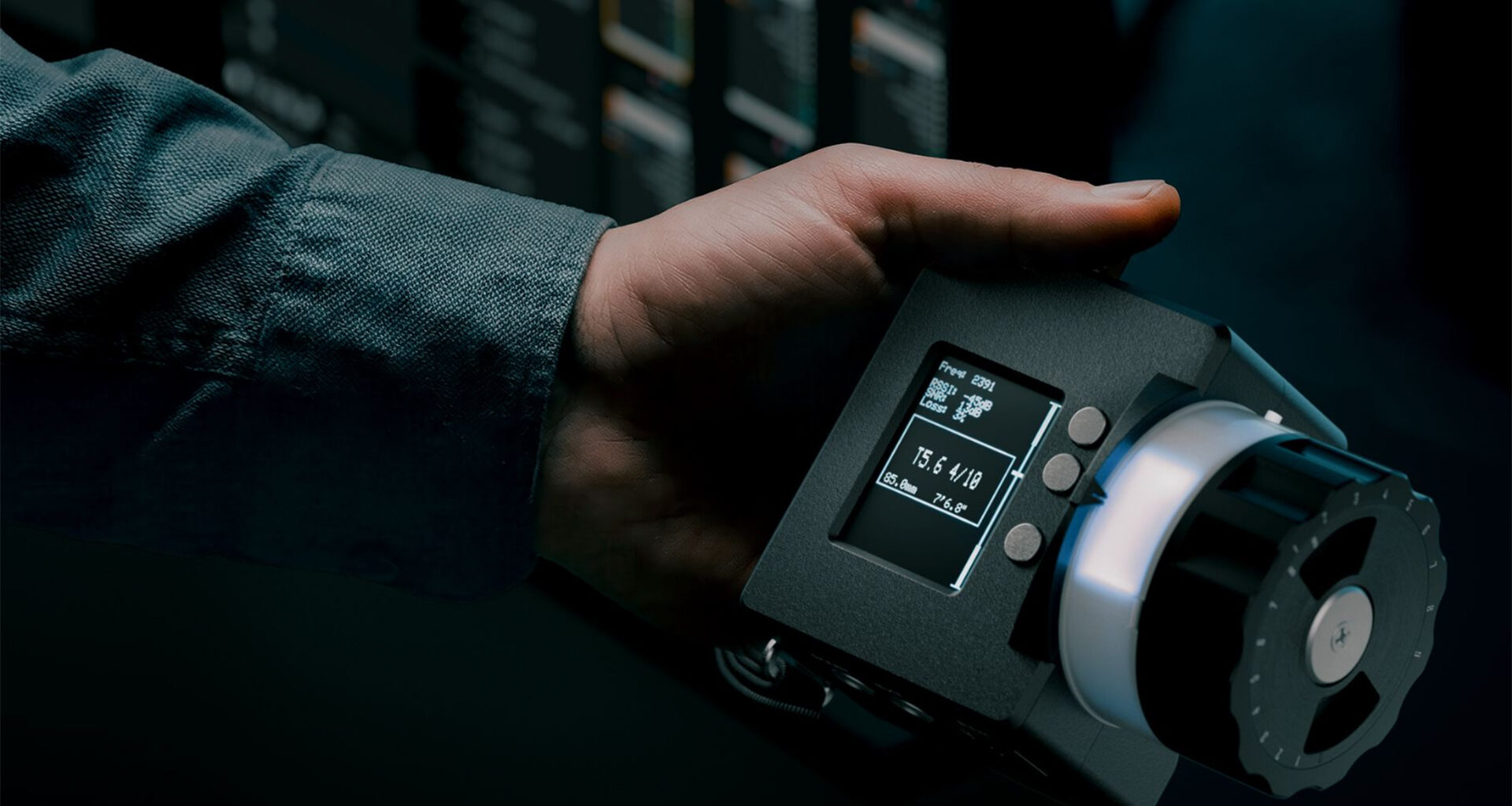
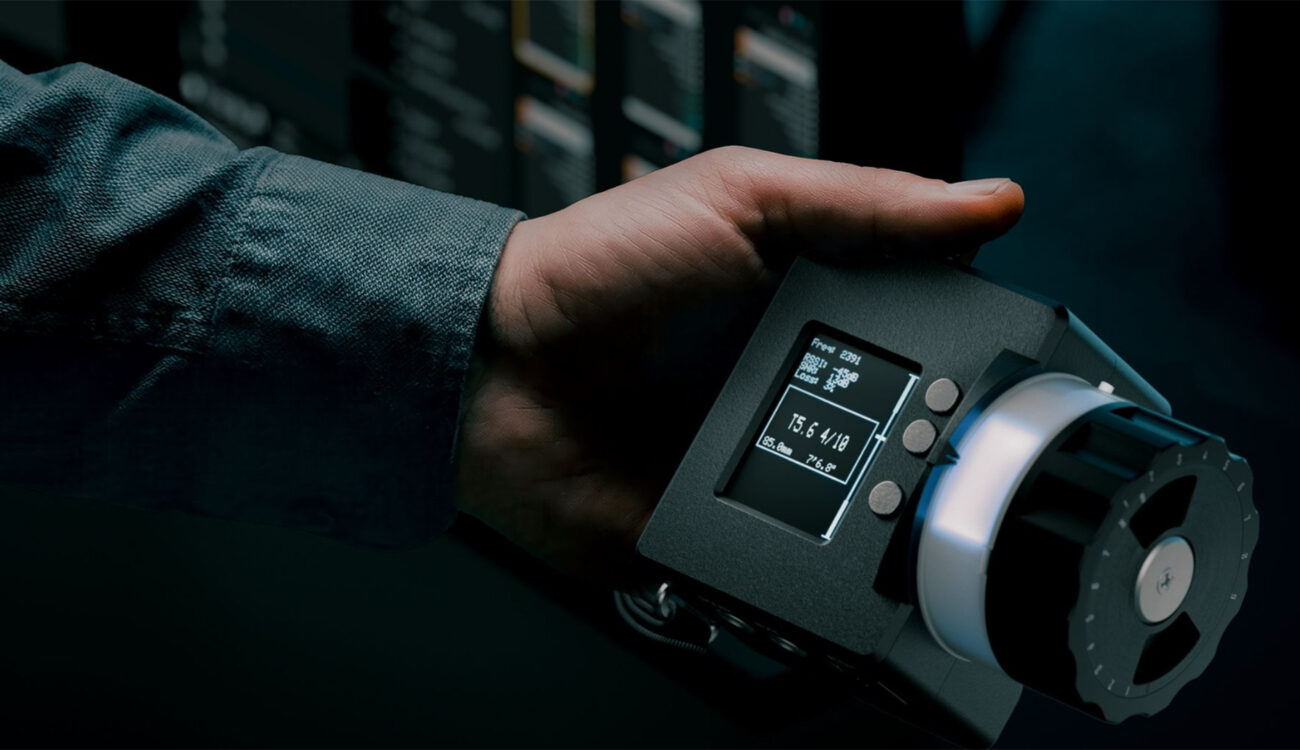
Digital Camera Systems has introduced Lens Link, a handset designed to extend the operating distance of existing Preston lens control systems. The handset supports wireless control up to 2km (1.24 miles) in clear line-of-sight conditions, and when paired with DCS’s LDT-RX1 Network Bridge over Ethernet, operating distance becomes effectively unlimited while maintaining a short wireless hop near the camera. It doesn’t replace motors or require crews to rethink their setup. Instead, Lens Link sits alongside Preston MDR systems, addressing a familiar issue on larger productions: keeping lens control stable as the distance between crew and camera increases. Let’s take a closer look.
Founded in 2017, DCS develops tools for capturing and managing frame-accurate lens metadata, focusing on infrastructure that supports existing camera systems. Its tools, such as the LDT-F1 lens data recorder, are typically designed to integrate into established workflows rather than replace them, and Lens Link continues that approach by extending control range while keeping Preston systems at the center.
 Lens Link – Image credit: DCSHow it works
On larger productions, lens control range can become the limiting factor once crews are positioned further from the camera. Lens Link addresses that by extending an existing Preston setup rather than replacing it.
Lens Link is built as a two-part system. The handset communicates with an on-camera receiver, either the DCS Bridge or the LDT-V2, which then connects to a compatible Preston MDR3, MDR4, or MDR5 for motor control. Rather than driving motors directly, the handset extends the control layer of an existing Preston setup.
The system operates in two modes. In True Wireless mode, the handset connects directly to the on-camera receiver using dedicated sub-WiFi frequencies in the 2,200–2,500MHz range. DCS specifies a range of up to 2km (1.24 miles) in ideal line-of-sight conditions.
For longer or more complex setups, Remote mode shifts part of the link onto a wired network. In this configuration, the handset connects via Ethernet to the LDT-RX1 Network Bridge positioned closer to the camera. The RX1 then maintains a short wireless hop to the on-camera receiver. This keeps the most sensitive wireless portion of the system near the camera while extending overall operating distance across standard Ethernet or fiber infrastructure.
 Lens Link – Image credit: DCSControl and metadata workflows
Lens Link connects to either the DCS Bridge or the LDT-V2 on camera. While both function as receivers for motor control, the LDT-V2 also records frame-accurate lens metadata, allowing productions to extend control range without sacrificing data capture. For teams already integrating lens data into their pipeline, this keeps range extension aligned with metadata continuity.
At launch, Lens Link is built around the Preston ecosystem, with support for ARRI LCS and Tilta systems announced as forthcoming.
 Lens Link – Image credit: DCSKey featuresWireless range up to 2km (1.24 miles) in ideal line-of-sight conditionsRemote mode extension over Ethernet or fiber via LDT-RX1 Network BridgeOperation on sub-WiFi frequencies (2,200–2,500MHz)Compatibility with Preston MDR3, MDR4, and MDR5ARRI LCS and Tilta support announced as forthcomingLive lens data display for focus, iris, and zoomCustom axis mapping and in/out point configurationHandset dimensions: 110 × 55 × 90mm (4.33 × 2.17 × 3.54in)Handset weight: 500g (1.1 lbs)
 Lens Link – Image credit: DCSPrice and availability
According to the company, a full Lens Link package, including the handset, DCS Bridge, LDT-RX1 Network Bridge, and required cables and accessories, is priced at £6,000 + VAT (approximately €7.000 / $7,600 based on current exchange rates). The system is available to purchase directly from DCS and will also be offered for rental through CineArk. The first 25 units are being introduced with a 25% discount.
If you are planning on going to BSC in London this week, make sure to stop by DCS’s booth to get a look at the Lens Link. For more information, please visit the DCS website.
How often does lens control range become a limiting factor on your sets? Would Ethernet-based range extension change how you position video village? Let us know in the comments below.