
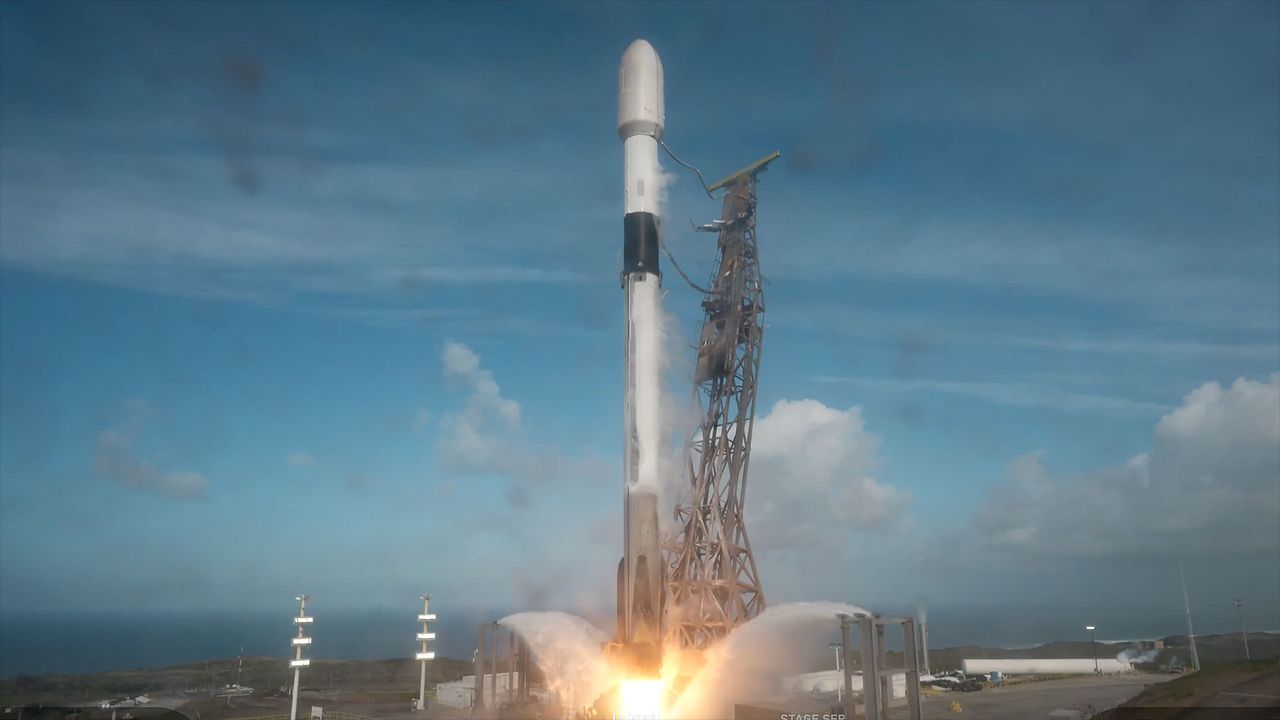
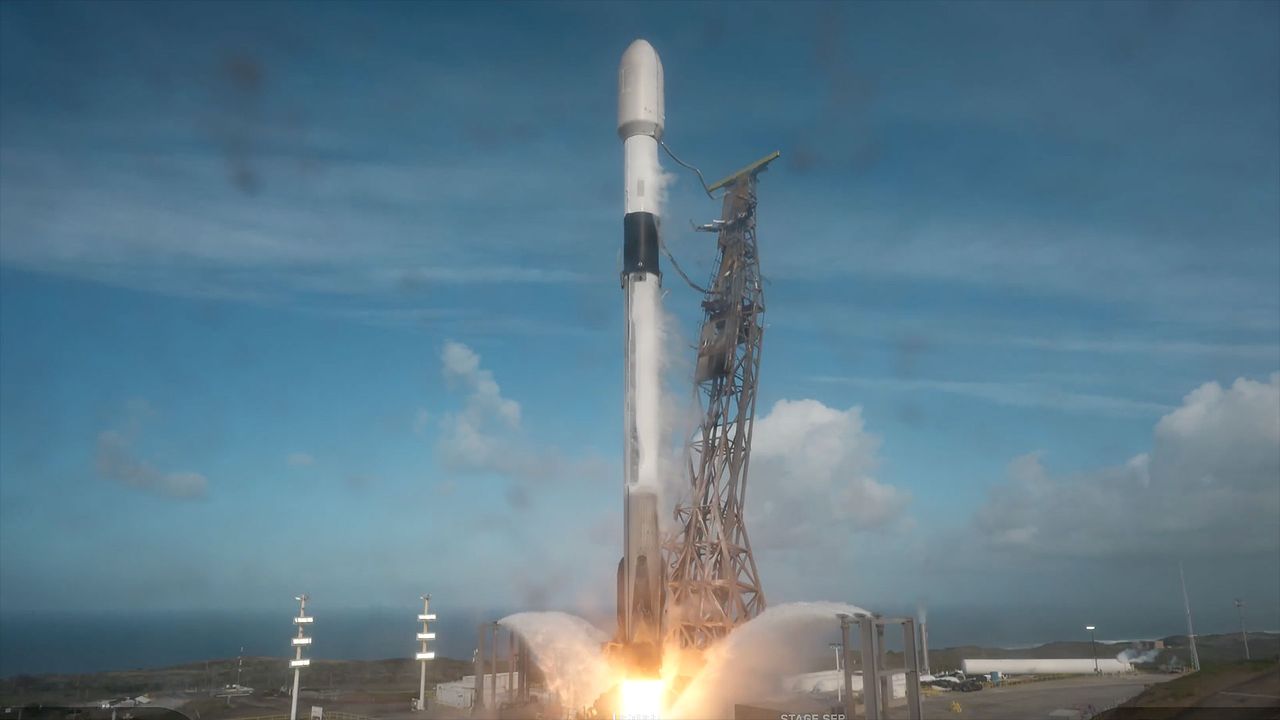
 A white and black rocket lifts off from its launch pad into a partially cloudy blue sky.
For the third time this month and 12th time since the start of the year, SpaceX has expanded its Starlink network with a new batch of low Earth orbit satellites.
On Wednesday (Feb. 11), the commercial spaceflight company sent 24 more of its broadband internet relay units into space. The launch, on a Falcon 9 rocket, began at 12:11 p.m. EST (1711 GMT or 9:11 a.m. PDT local time) from Space Launch Complex 4 East (SLC-4E) at Vandenberg Space Force Base in California.
About an hour later, SpaceX confirmed the latest additions (Group 17-34) to its 9,600+ megaconstellation had been successfully deployed.
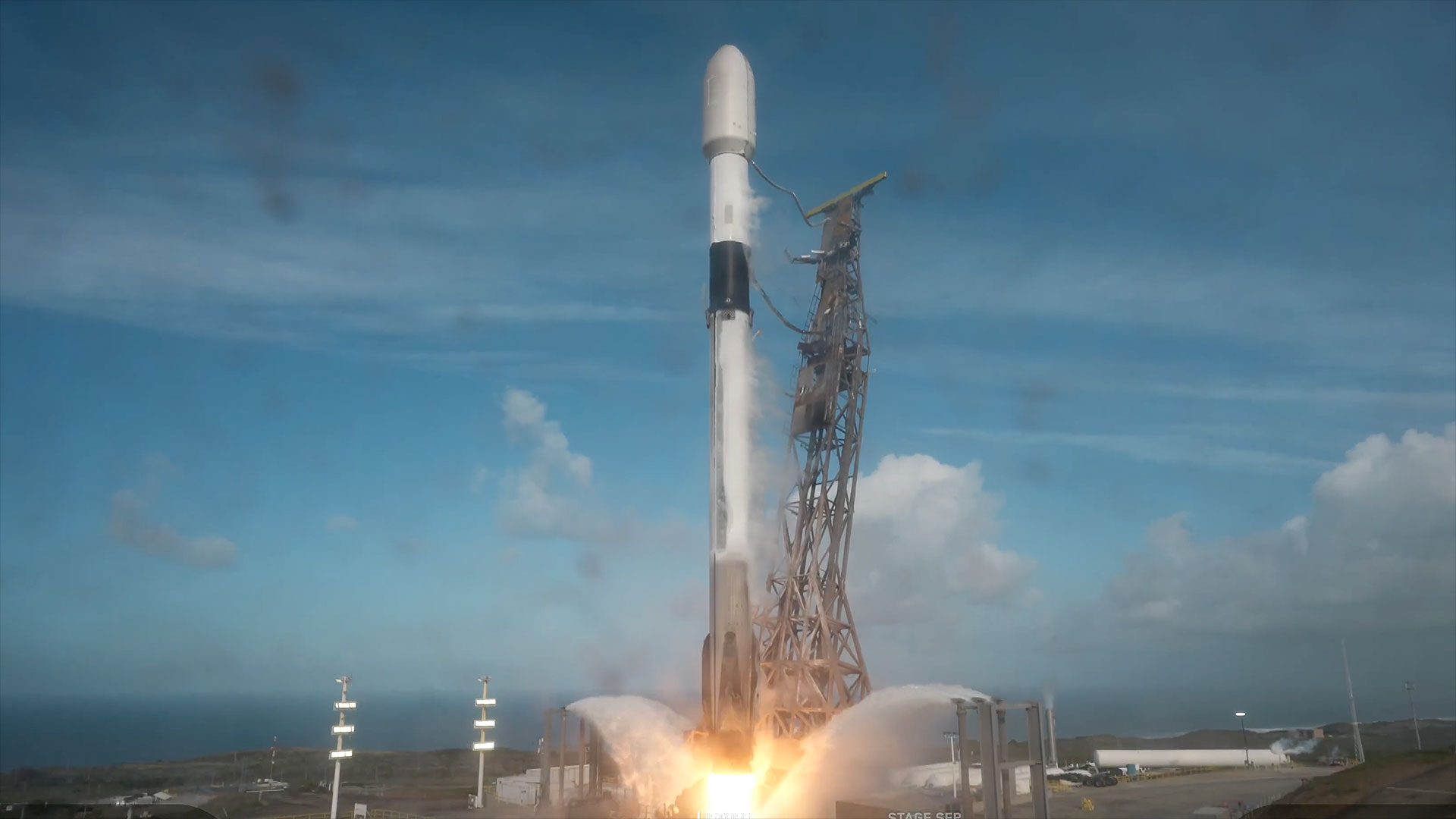 A SpaceX Falcon 9 rocket carrying 24 Starlink satellites launches from Vandenberg Space Force Base in California on Wednesday, Feb. 11, 2026. (Image credit: SpaceX)
Previous Booster B1100 launches
NROL-105 | 1 Starlink mission
The flight’s first-stage booster, B1100, performed as expected. It completed its third launch with a propulsive landing on the droneship “Of Course I Still Love You” positioned in the Pacific Ocean.
The Starlink service offers access to internet where connectively is sparse or nonexistent. It also powers direct cell-to-satellite calls on select providers and in-flight wifi on some airlines, including United, which advertised the offering during this past Sunday’s Super Bowl LX.
Editor’s note: The original version of this story reported that today’s launch lofted 25 Starlink satellites. The correct number is 24, according to SpaceX.