
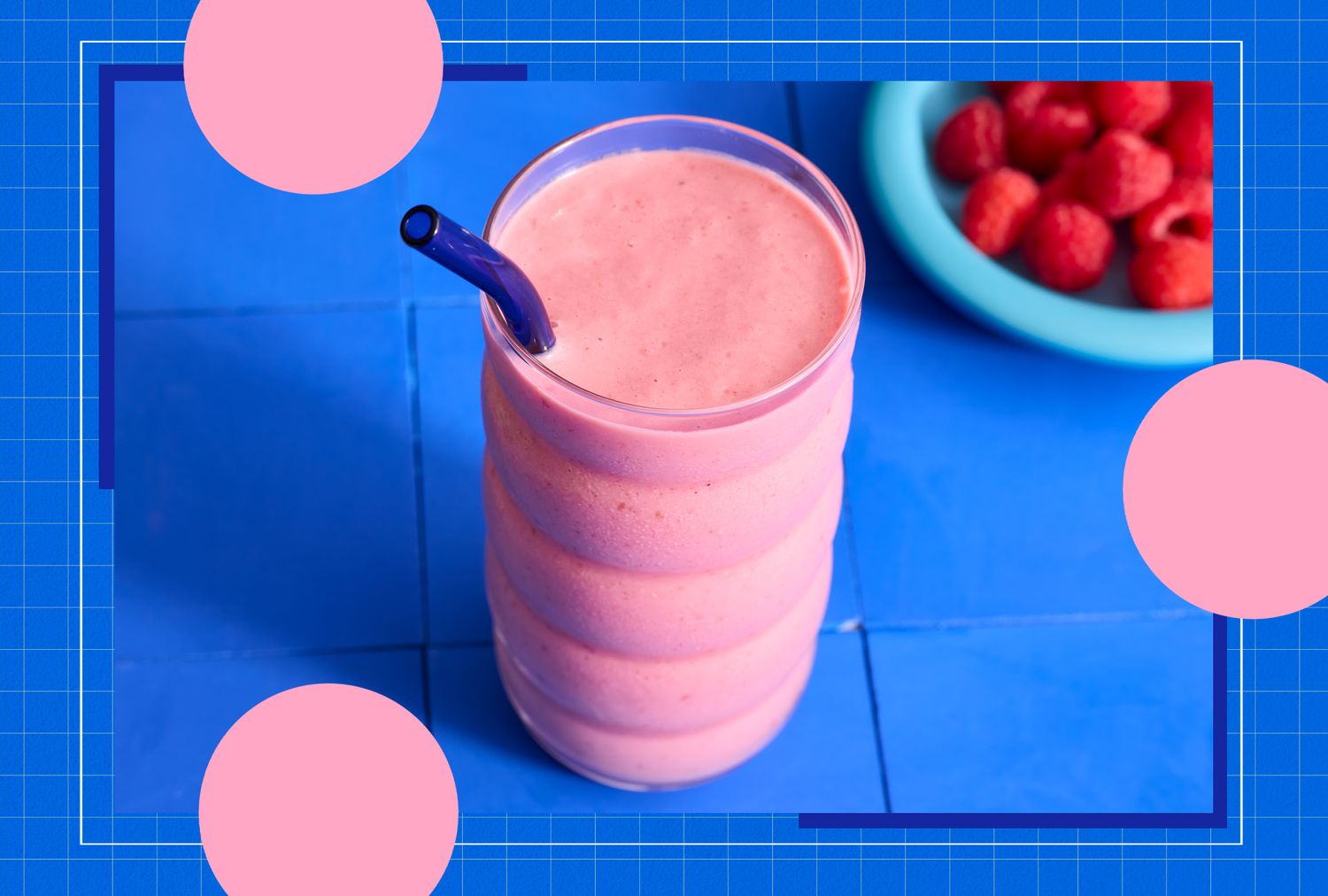
Kefir is a gut-healthy ingredient for protein shakes, providing probiotics that support digestion.It also provides a protein boost and contains glutamine, which helps support the gut barrier.Choose plain over flavored, and if you don’t consume dairy, plant-based varieties are available.
Protein shakes are typically known for their post-gym, muscle-preserving benefits, but with a few tweaks, they can also support your digestive health. According to Adiana Castro, M.S., RDN, the next time you’re blending up a protein shake or smoothie, there’s one gut-friendly ingredient you should consider adding: kefir.
Kefir is a beverage made by fermenting milk with kefir grains. Its tart, tangy taste is reminiscent of Greek-style yogurt, which pairs well with the various flavors you typically find in a protein shake, like chocolate and fruit. Its consistency falls somewhere between milk and yogurt, making it an ideal liquid to add to shakes and smoothies. Opt for plain versions, as flavored options often have lots of added sugar. And if you don’t consume dairy, plant-based kefir varieties are also available.
Read on to learn how kefir can nourish your gut, plus get expert tips for building meals that support digestive health.
Why You Should Add Kefir for Better Gut Health
Rich in Probiotics
The fermentation required to make kefir creates a wealth of probiotics. “Kefir is a probiotic powerhouse. It contains beneficial bacteria that support gut diversity, digestion and immune function,” shares Castro. Research has shown that probiotics can have a positive influence on other gut bacteria. They may be able to counteract dysbiosis, an imbalance of good and bad bacteria in the gut microbiome that can occur after digestive disruptions like diarrhea. Castro also shared that probiotics can help break down food, thus improving digestion. Their benefits can extend beyond the gut as well by supporting a healthy immune system and even exerting a cholesterol-lowering effect.
Gentle on the Gut
What kefir lacks may actually benefit the gut. “Kefir does not contain fiber and is naturally lower in lactose due to fermentation, so it can be gentle for those people who are sensitive to bloating, gas or loose stools,” Castro says. While fiber is no doubt essential for a healthy digestive system, some people may have digestive discomfort if they eat too much at once. With kefir, you can leave the fiber for your other meals and snacks, and still nourish your gut without the unwanted stomach upset.
Additional Protein
Kefir contains about 9 grams of protein and 130 calories per cup. This extra boost of protein doesn’t just get you closer to your intake goals, it can also benefit your gut. “[Protein] helps with supporting the gut lining and enzyme production, both of which contribute to strong digestive health,” explains Castro.
Contains Glutamine
Glutamine is an amino acid, one of the building blocks of protein. It is naturally found in foods like yogurt, silken tofu, soy milk—and yes, kefir, says Paige Needles, M.S., RDN. “Glutamine is fuel for the cells that line the gut, specifically in the small intestine, where we absorb the nutrients from our food,” she explains. This helps support a healthy gut barrier, especially for those who consume a fiber-rich diet that includes glutamine.
Tips for Building Gut Healthy Meals
Maintaining a healthy gut requires more than just a protein shake. Here are some tips to help you support your digestive wellbeing during all your meals and snacks:
Try other fermented foods. Yogurt, kimchi, miso, beet kvass and tempeh are some examples of fermented foods that you can add to your meals, says Castro. “I would go low and slow with fermented foods. Start with one to two tablespoons per day and work your way up to a half-cup per day,” she advises.
Eat a range of plants. Eating a variety of plant foods allows you to consume adequate amounts of fiber. “Remember plants include beans, lentils, nuts, seeds, vegetables, fruits, herbs, spices, starchy vegetables and whole grains,” Castro adds.
Eat the rainbow. When picking out various plant foods at the supermarket, be sure to select produce in a variety of colors. Castro explains that each color provides “different phytonutrients, and these compounds help feed the microbiome in different ways.” Benefits of phytonutrients include anti-inflammatory properties, immune support and protection against damaging oxidative stress.
Practice mindful eating. Needles points out that “It’s not always what you eat that supports your gut health; it’s also how you eat.” She advises starting each meal with three deep breaths, which activates your “rest and digest” parasympathetic nervous system. Then, as you eat, chew food thoroughly, which aids in the rest of the digestive process.
Our Expert Take
A protein shake can be good for your gut health, especially when you add kefir to the blender. This fermented drink is rich in probiotics and protein (especially an amino acid called glutamine) and is easy to digest. To add it to your shake, look for plain versions made from dairy or plant-based milks. To further support your gut health, eat a variety of plant foods, make your plate colorful and incorporate other delicious fermented options like kimchi and miso.