
The man who helped write the highest-grossing R-rated movie of all time just publicly conceded that artificial intelligence might end his career.
On February 10, Irish filmmaker Ruairi Robinson posted a video on X that quickly got people talking.
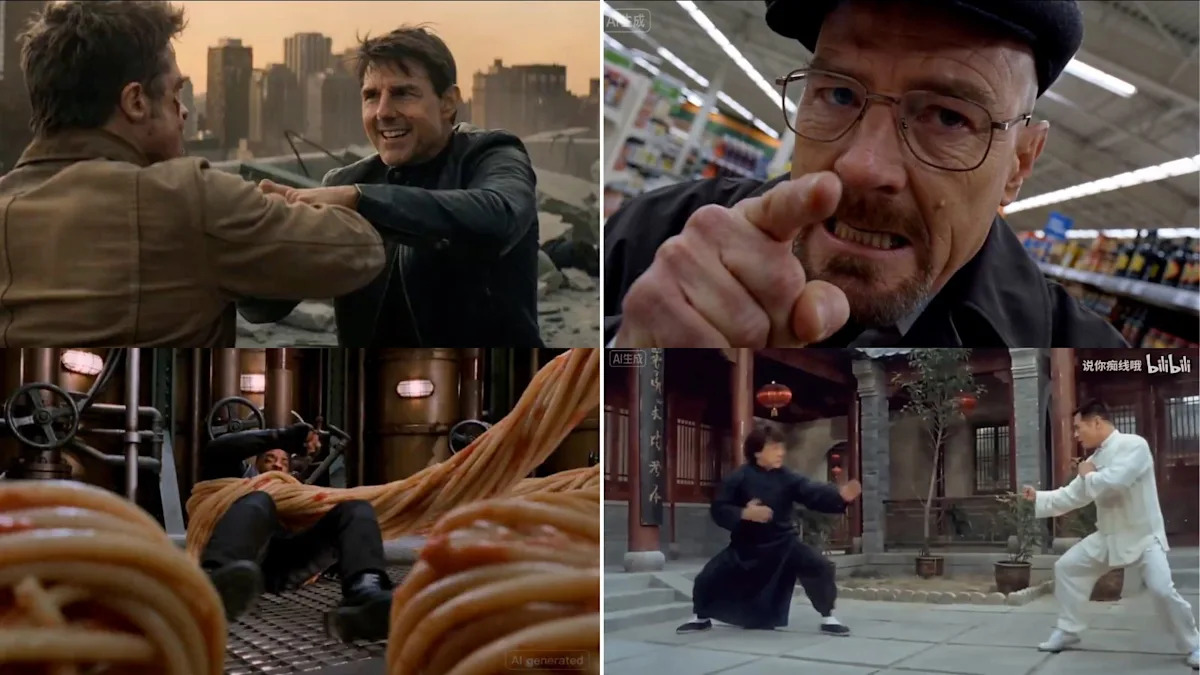
It was a short video — maybe 14 seconds — of what appeared to be Tom Cruise and Brad Pitt locked in a rooftop brawl above a devastated city skyline. The punches landed with weight. The camera moved like a professional DP was behind it. The sound design was layered and believable.
None of it was real.
Robinson, an Oscar-nominated short film director who was once attached to direct the live-action Akira for Warner Bros., had generated the entire sequence using Seedance 2.0, a new AI video tool from ByteDance, the Chinese tech giant behind TikTok. The tool takes a few lines of text and turns them into cinematic video clips that look disturbingly close to the real thing.
His caption was casual, almost bewildered: “This was a 2 line prompt in seedance 2. If the hollywood is cooked guys are right maybe the hollywood is cooked guys are cooked too idk.”
The post took off. As of this writing, it’s pulled in over 1.3 million views.
Robinson didn’t stop there. Over the next several hours, he posted variation after variation from the same destroyed rooftop — Brad Pitt fighting a zombie ninja (44K views), Cruise and Pitt teaming up against a robot (63K views), and one captioned simply “Jeffrey Epstein knew too much” (2.4 million views). Same tool, same rooftop, different fever dreams. Each one looked like a scene from a movie that doesn’t exist.
“I Hate to Say It. It’s Likely Over for Us.”
Then came the response that turned a viral video into an industry alarm bell.
Rhett Reese — the screenwriter behind the Deadpool trilogy, Zombieland, and Deadpool & Wolverine, which grossed $1.338 billion worldwide last year — quote-tweeted Robinson’s clip with seven words that landed like a grenade in Hollywood group chats everywhere:
“I hate to say it. It’s likely over for us.”
This isn’t some random tech influencer doing the “Hollywood is cooked” routine. This is one of the most commercially successful screenwriters alive. A man whose last film shattered box office records and revived an entire franchise. And he’s publicly saying the game might already be lost.
Reese doubled down the next day, writing that “in next to no time, one person is going to be able to sit at a computer and create a movie” that’s virtually indistinguishable from a studio production.
Nobody Asked Tom Cruise or Brad Pitt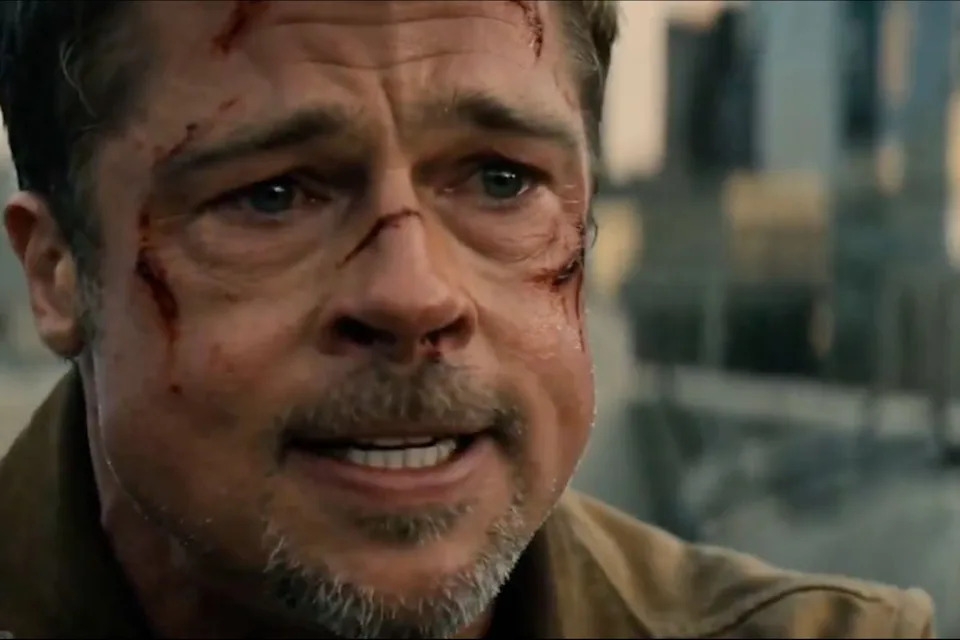
100% AI generated. Image credit: @RuairiRobinson/X
Here’s the part of this story that should make every celebrity pay attention.
Neither Tom Cruise nor Brad Pitt gave permission for their faces to be used. Neither was consulted. Neither was compensated. A filmmaker typed two lines into a text box, and an AI tool built by a Chinese tech company generated a hyper-realistic video of two of the most recognizable actors on the planet throwing punches on a rooftop.
And it doesn’t stop at Cruise and Pitt.
Within days, users were generating AI videos featuring Dragon Ball characters in live action, One Piece scenes in photorealistic settings, and a Will Smith spaghetti monster fight that became a meme benchmark. Entire fictional universes — owned by studios that spent billions building them — were being recreated by strangers on the internet with a few words and a free tool.
ByteDance had to step in almost immediately. After users discovered the tool could generate photorealistic clones of real people — complete with synthesized voices that matched their actual speech — the company moved to block users from uploading real human faces as source material. The company issued a statement saying it would “not allow real-human-like photos or videos to be used as reference subjects.”
The ban came after the damage was already done. The Cruise and Pitt video had already gone viral. The conversation had already shifted.
The Internet Is Already Picking Sides
The comments under Robinson’s posts and Reese’s response tell you everything about where this is headed.
One camp sees this as the end of a gatekept industry — the idea that anyone with a story in their head can now put it on screen without needing a studio, a budget, or permission. The other camp sees something darker: an industry full of actors, animators, VFX artists, and writers watching a machine do a rough approximation of their life’s work for free.
What’s different this time is who’s sounding the alarm. The “Hollywood is cooked” crowd has been saying this for years. But when the guy who wrote Deadpool — a franchise built on irreverence, on not taking anything too seriously — posts “it’s likely over for us” without a hint of irony, the conversation changes.
Seedance 2.0 is currently in beta, accessible through ByteDance’s platforms with a Douyin account — but a full global rollout is expected around February 24.
Whatever Hollywood’s response is going to be, the clock is ticking.