
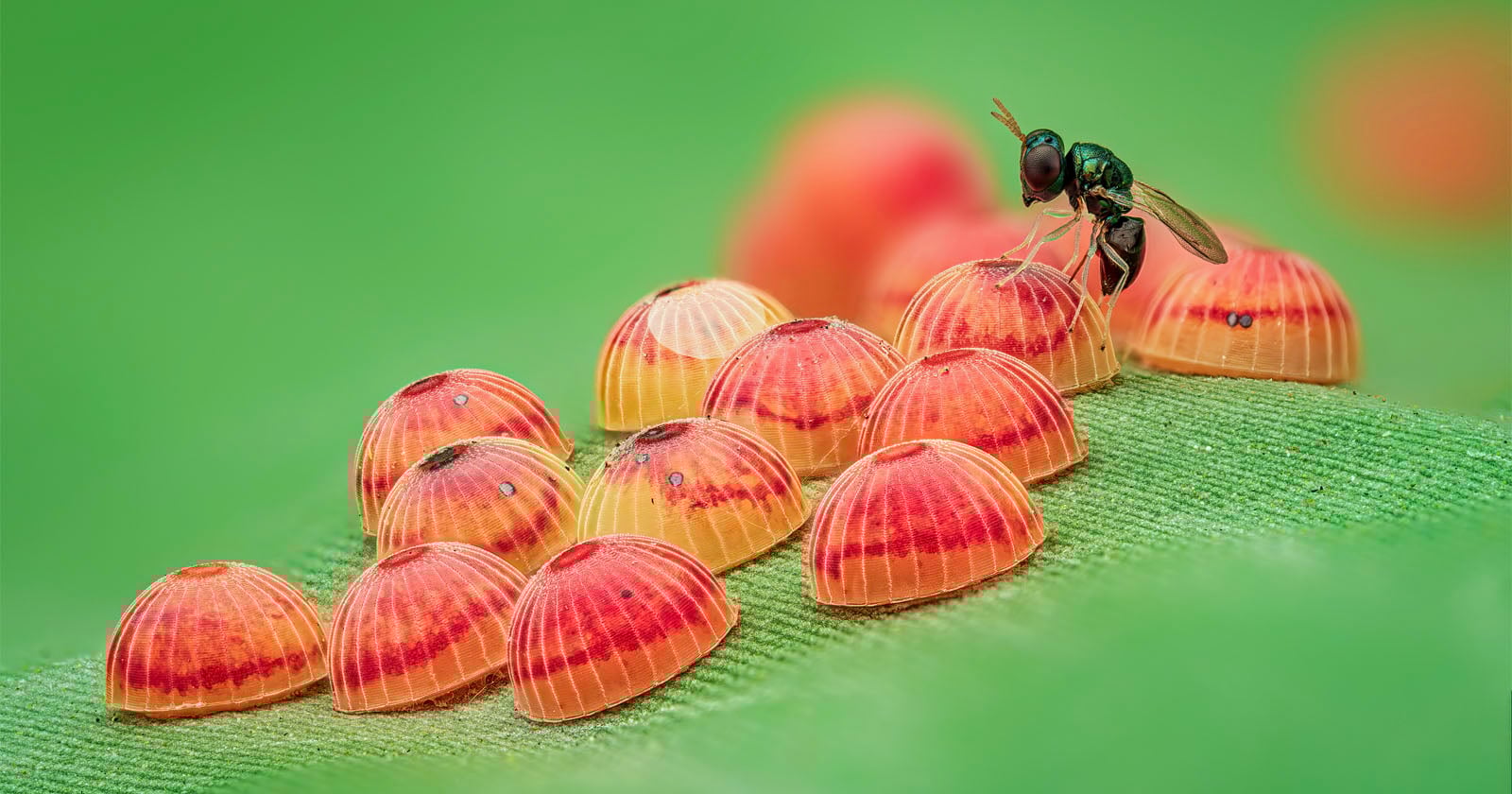
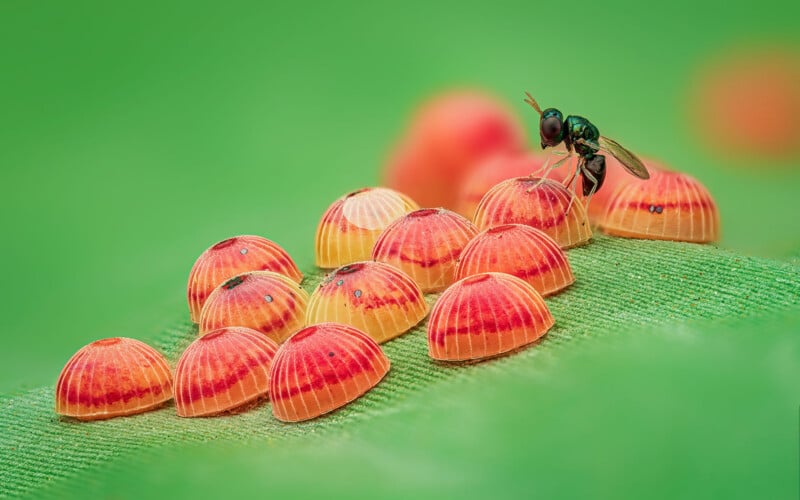
 Banana skipper eggs being parasitized by a wasp. Overall winner in the ’18 and over’ category. | Photo by Raghuram Annadana
The Royal Entomological Society has unveiled the winners of its annual photography competition, showcasing a stunning series of close-up images that reveal the hidden beauty and fascinating lives of insects.
The overall winner in the ’18 and over’ category is Raghuram Annadana for his photo Parasitic Play showing the eggs of a Banana Skipper butterfly taken in India. He captured a parasitic wasp in the act of laying its own eggs inside the butterfly eggs.
“I spotted Banana Skipper eggs on a banana leaf while out on a macro walk,” Annadana says. “Through the lens, the scene turned dramatic — a tiny parasitic wasp was laying its eggs inside the butterfly eggs. To give a sense of its size, each butterfly egg is just 1.8mm and the wasp is even tinier.”
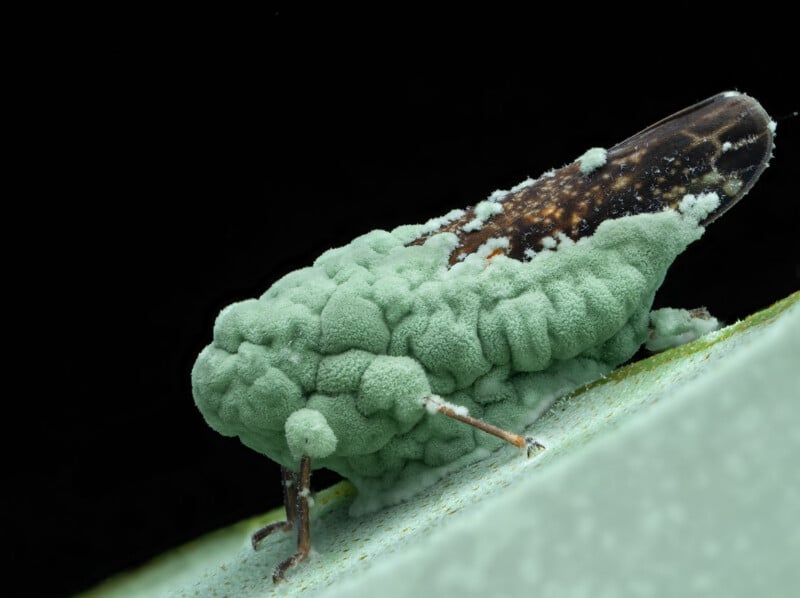 A leafhopper overtaken by vivid green parasitic fungus. Second place overall. | Photo by Dara Ojo
 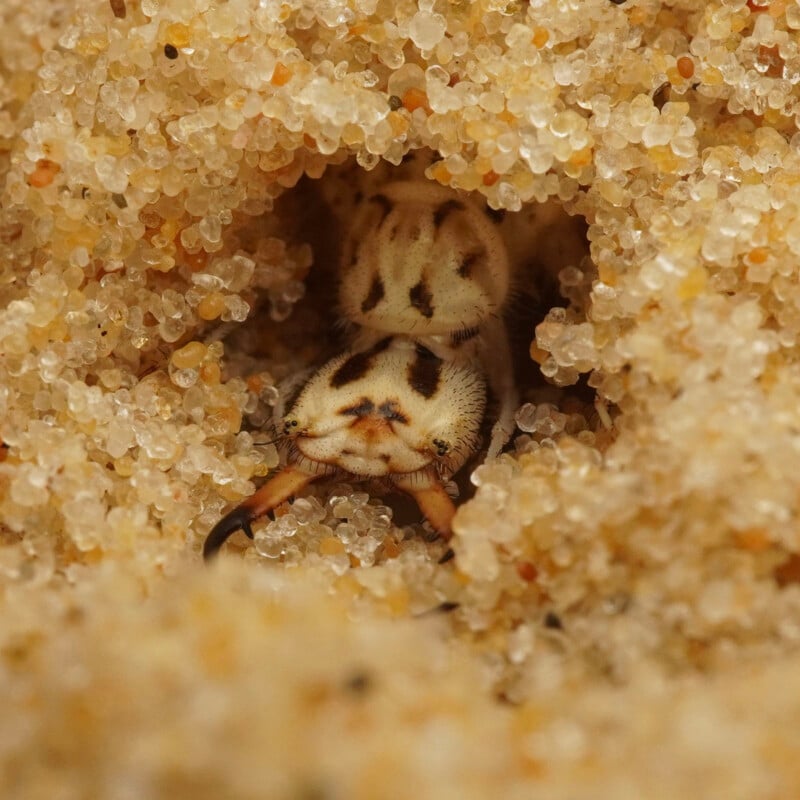 Antlion larvae dig craters in the sand and lie in wait at the bottom of the pit, perfectly camouflaged, ready to ambush their unsuspecting prey. When an unlucky ant falls in, they spring into action with lightning speed, seizing their prey with ferocious jaws. Winner of the ‘Under 18’ category. | Photo by Benji Cook
Run by the UK’s leading insect science charity, the annual competition celebrates the growing community of amateur insect photographers. The Royal Entomological Society’s Photography Competition 2025 drew over 3,000 entries received from around the world, the largest ever number of entries ever compiled by the Society with photos taken in more than 110 different countries, highlighting both the rising popularity of macro photography and a shared passion for exploring nature through the lens.
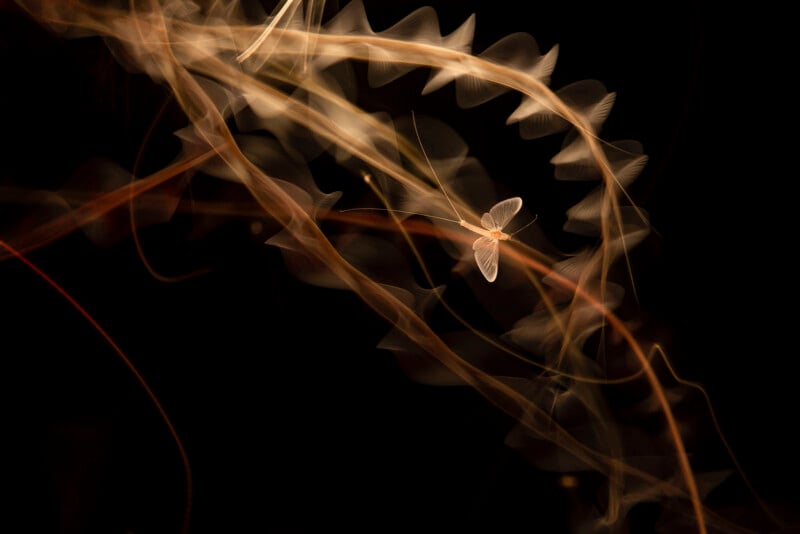 Photographed one September night by the river, using an extremely slow shutter speed. Continuous light and second-curtain sync were used to capture the luminous trail of the mayfly’s flight. Highly Commended in the Behavior category. | Photo by Julian Fernandez Quilez
 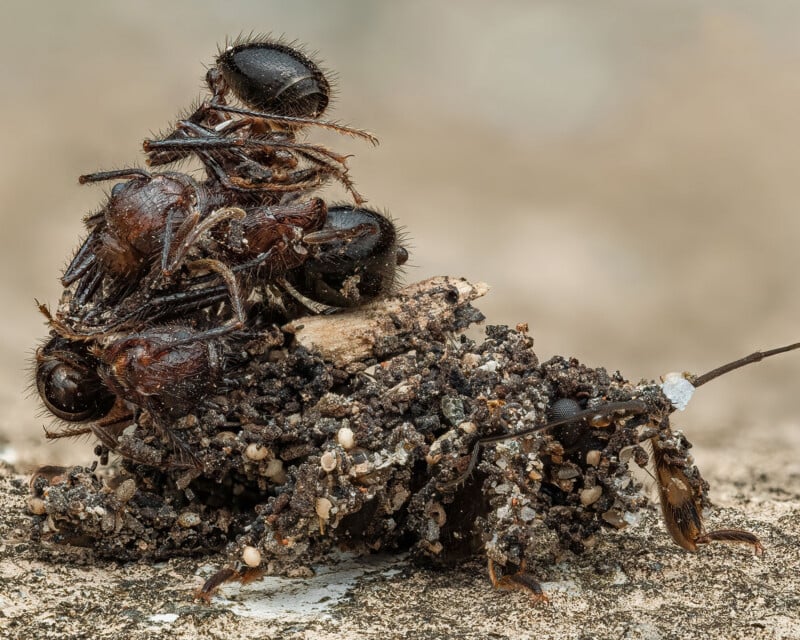 What looks like a pile of trash is actually the Ant Stacking Nymph of an Assassin Bug. These young predators use ant carcasses as camouflage and armour – turning their victims into a gruesome disguise that hides them from both prey and predators. Highly Commended in the Behavior category. | Photo by Raghuram Annadana
 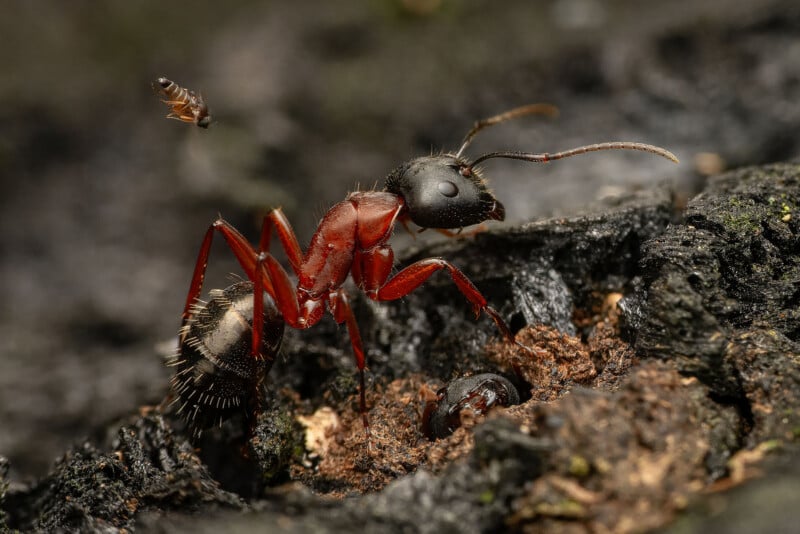 An ant-decapitating Phorid fly dives towards a sugar ant. Its goal is to inject an egg in the ant’s head. A grub will ultimately emerge from its pupa, which can decapitate the ant, thus giving the fly their macabre name. Highly Commended in the Behavior category. | Photo by Francois Brassard
 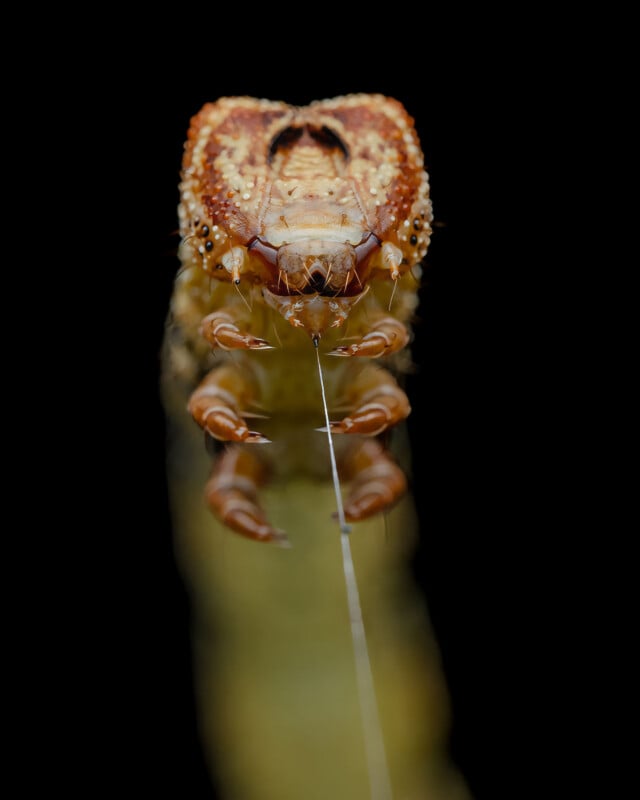 This caterpillar was actively spinning a thin stand of silk from its mouth. After taking few of the side macro shots I moved my position and took front profile shots which shows the origin of the silk thread, also the front legs appear almost claw-like. Highly Commended in the Behavior category. | Photo by Hardeep Solanki
 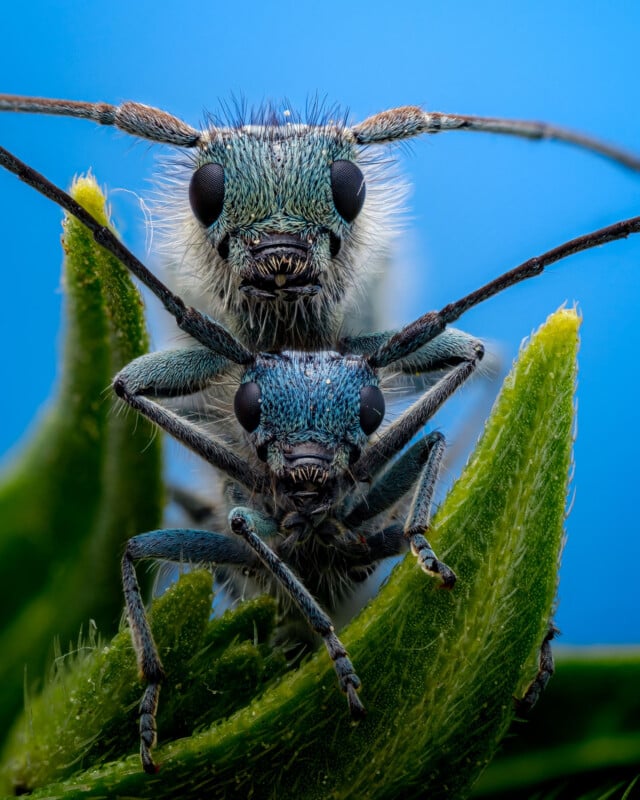 A mating pair of blue longhorn beetles. Highly Commended in the Portrait category. | Photo by Alexis Tinker-Tsavalas
 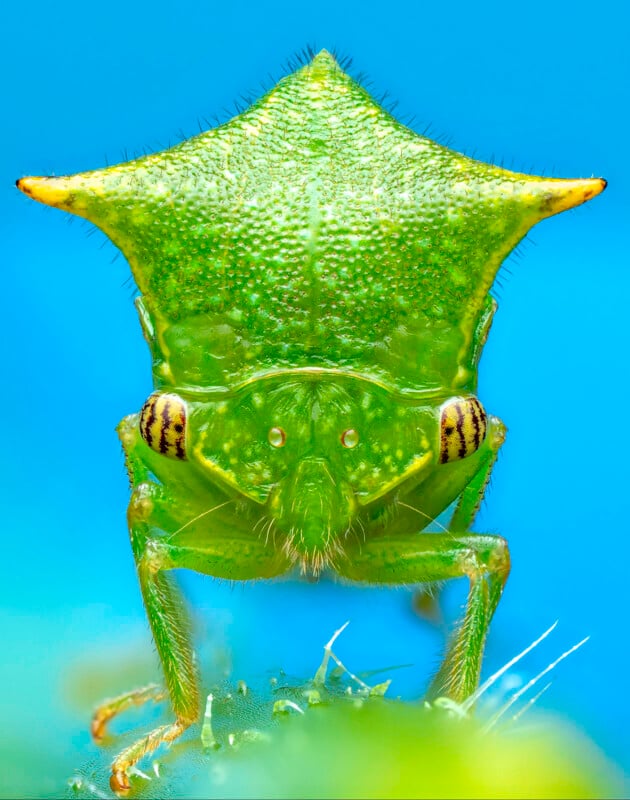 A portrait of a Buffalo treehopper. Highly Commended in the Portrait category. | Photo by Jeremiah Winden
 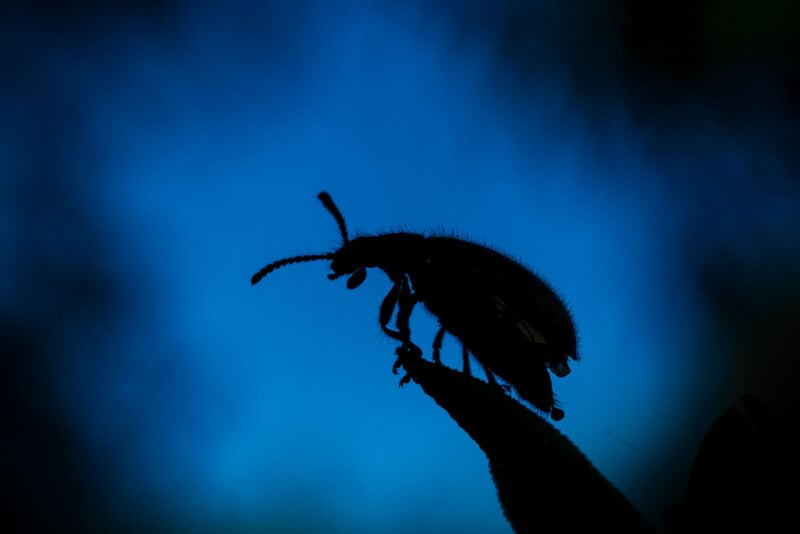 I saw this little shiny long-jointed beetle, Lagriinae, insect sitting on the edge of a twig in a botanical garden one morning while doing some macro photography. I got down flat on my back, shooting upwards towards the sky. Highly Commended in the Portrait category. | Photo by Willem Kruger
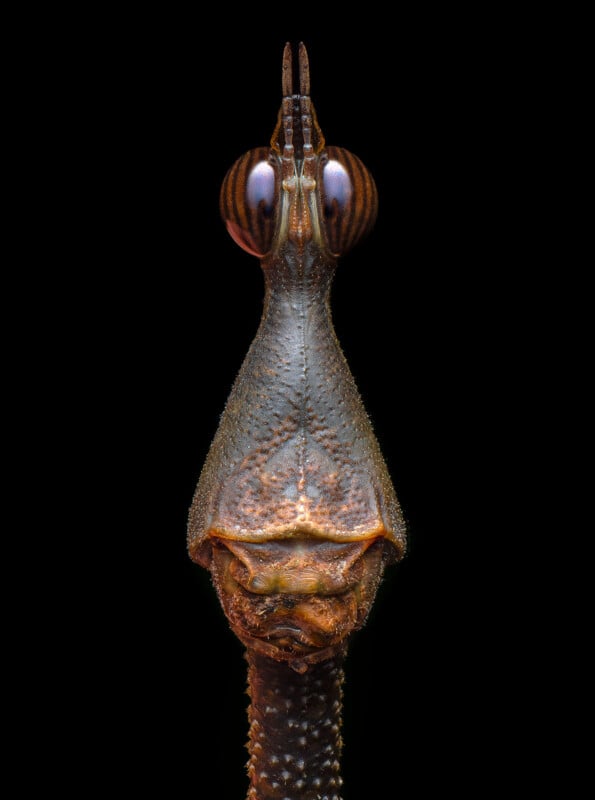 A detailed portrait of a horsehead grasshopper, shot in the Amazon jungle of Ecuador. Highly Commended in the Portrait category. | Photo by Jeremiah Winden
 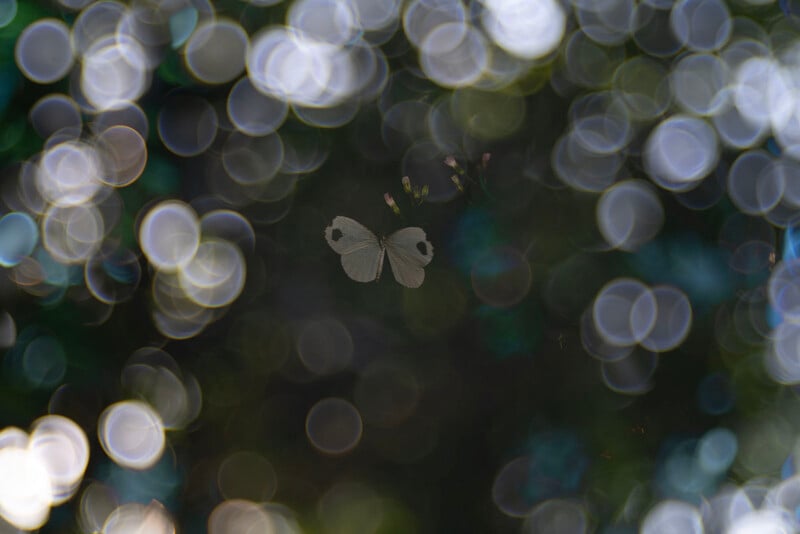 A delicate Psyche butterfly from my garden. Its rhythmic flight and sunlight bokeh made a dreamy scene, captured using multiple exposure to show nature’s poetry in motion. Highly Commended in the Environment category. | Photo by Swastika Mukherjee
 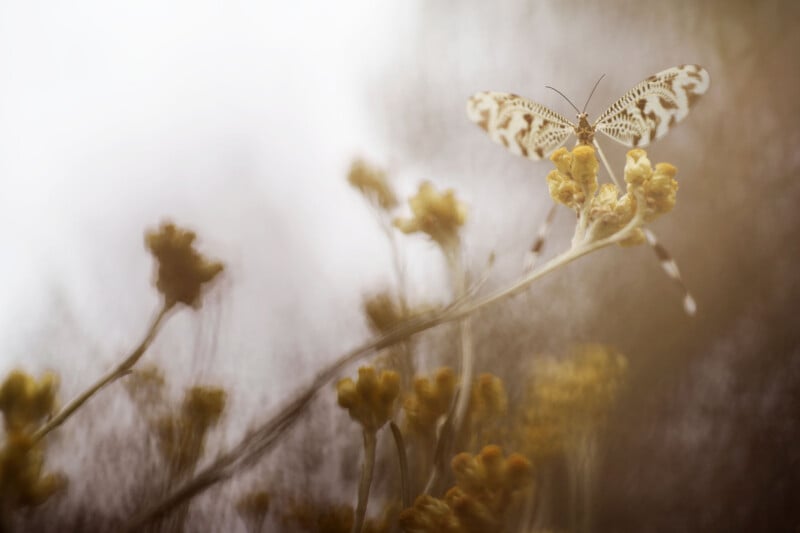 A low angle shot of an antlion. Highly Commended in the Environment category. | Photo by Panagiotis Dalagiorgo
 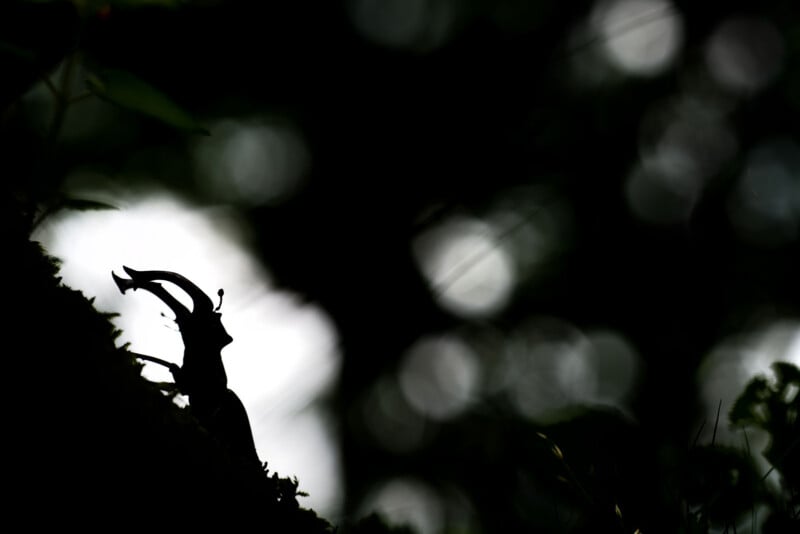 Emergence of a male Stag Beetle in the heart of a century-old forest, at the foot of an old oak tree, on a stormy June evening. Highly Commended in the Environment category. | Photo by Bertrand Bascoules
 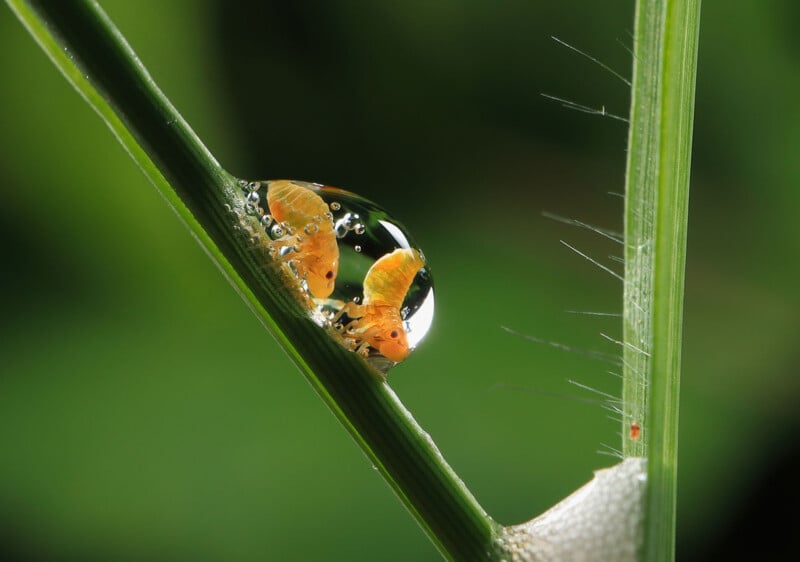 The nymph of the froghopper secretes mucus through its abdominal glands and mixes it with the air to form foam to wrap itself and prevent dryness and natural enemies. There are two froghoppers living in this foam. Highly Commended in the Environment category. | Photo by Jianguo Mao
The 2026 RES Photography Competition is now open for entries from all amateur insect photographers. The deadline for entries is 31 October, 2026. Visit the website for full details.