

For the first time in more than 100 years, a juvenile great white shark was accidentally caught off the coast of Spain, reigniting scientific interest in the Mediterranean Sea as a potential breeding ground for this vulnerable apex predator.
On April 20, 2023, local fishermen operating within Spain’s Exclusive Economic Zone pulled in an unexpected catch: a young Carcharodon carcharias measuring 210 centimeters and weighing between 80 and 90 kilograms. The rare event has prompted researchers to reexamine historical records and reassess the role of Mediterranean waters in the species’ life cycle.
A Century-Old Surprise
According to Dr. José Carlos Báez, lead researcher of the study published in Acta Ichthyologica et Piscatoria, the capture has triggered a comprehensive review of records spanning from 1862 to 2023.
Historical data show that sightings, strandings, and captures of great white sharks in the Mediterranean have been sporadic. Yet they have never completely disappeared. The new finding suggests the species’ presence in the region may be more complex than previously assumed.
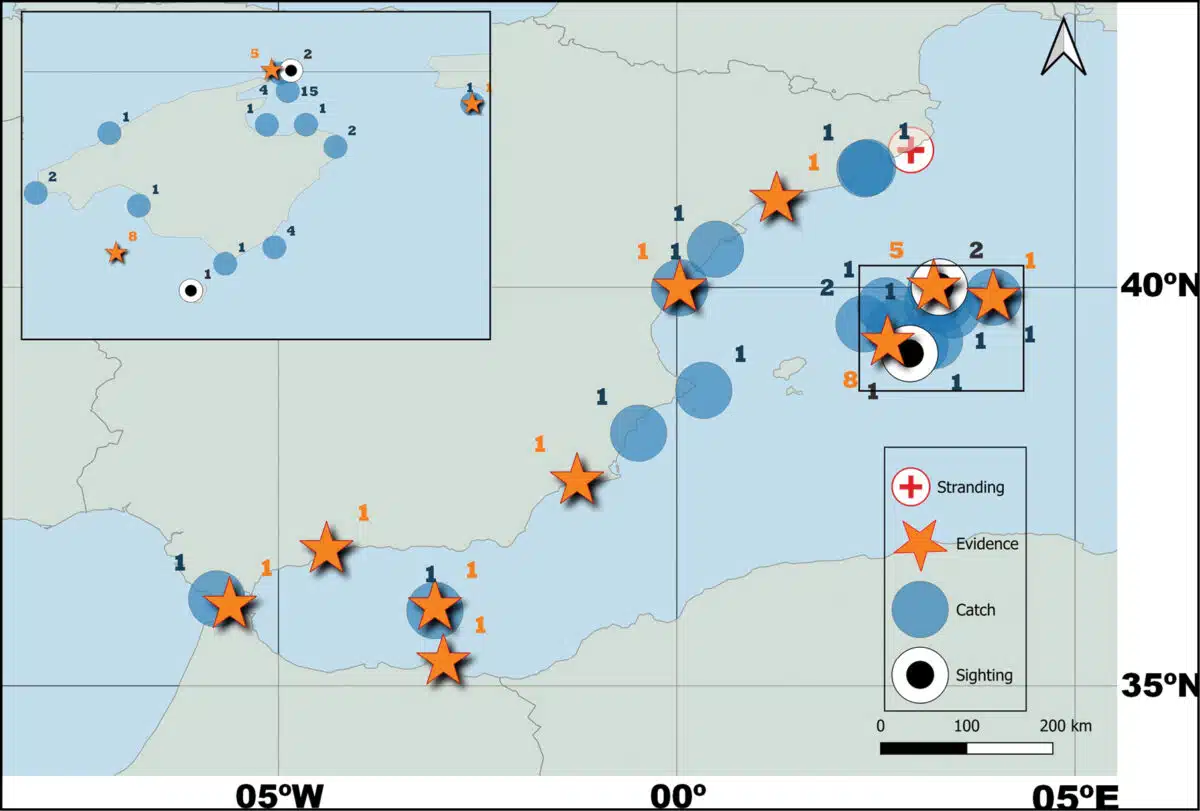 Map showing the distribution of great white shark sightings, strandings, catches, and evidence in the Mediterranean Sea. Credit: Acta Ichthyologica et Piscatoria
Great white sharks are commonly associated with regions such as the coasts of South Africa, Australia, or California. The Mediterranean, by contrast, has long been considered an uncertain and underdocumented habitat for the species. The confirmed capture of a juvenile individual introduces a new layer to that narrative.
Can Juvenile Sharks Reproduce?
The fact that the shark was a juvenile is drawing particular attention.
“Determining the presence of juvenile individuals is of particular importance,” explained Dr. José Carlos Báez. “The occurrence of juvenile specimens raises the question whether active reproduction may be occurring in the region.”
Juvenile sharks are widely viewed as potential indicators of nearby breeding activity. If young individuals are present in Mediterranean waters, it could mean that parts of the basin serve as nursery or pupping areas.
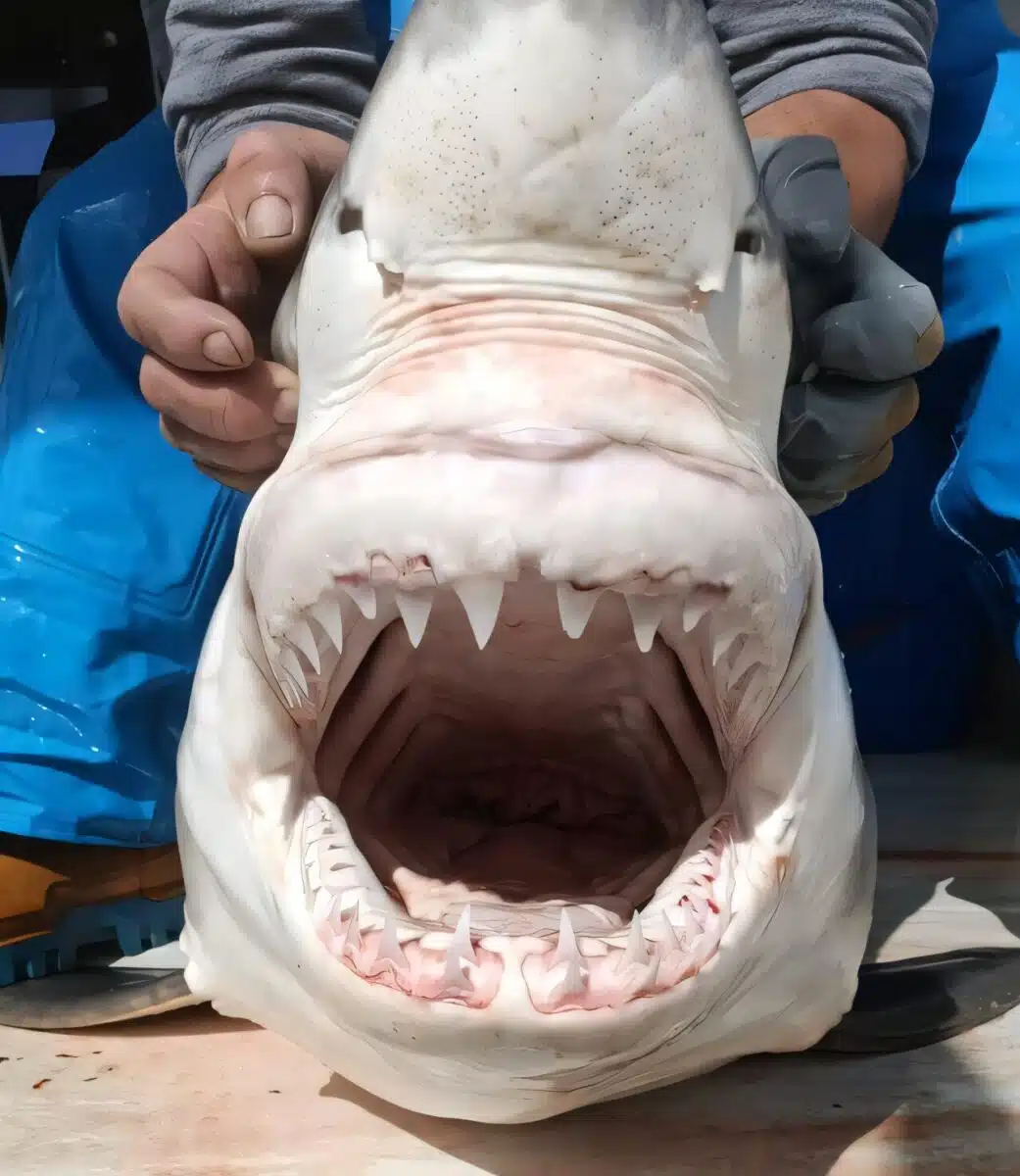 Detailed view of a juvenile great white shark. Credit: Dr. José Carlos Báez
Researchers remain cautious. A single specimen cannot confirm sustained breeding activity. Still, the finding strengthens the case for intensified monitoring.
A Vulnerable Predator With An Outsized Role
Classified as “vulnerable” on the IUCN Red List, great white sharks face declining populations in several parts of the world. Overfishing, bycatch, and habitat pressures have contributed to long-term reductions.
Nueva cita de tiburón blanco en aguas españolas 10.3897/aiep.56.173786 @IEOoceanografia @Pensoft #shark #sharks #NaturePhotography #NatureLover #sea #MARINESSTUDIO pic.twitter.com/5Qvemh1vTP
— Jose Carlos Baez Barrionuevo (@BaezBarrionuevo) February 10, 2026
In marine ecosystems, these apex predators regulate prey populations, scavenge carcasses, and redistribute nutrients across vast distances. As highly migratory pelagic species, they connect ecosystems that would otherwise remain isolated.
“The main idea I want to convey to the public is that these large marine animals have a fundamental role in marine ecosystems,” Dr. Báez said. “As highly migratory pelagic species, they redistribute energy and nutrients across vast distances.”