
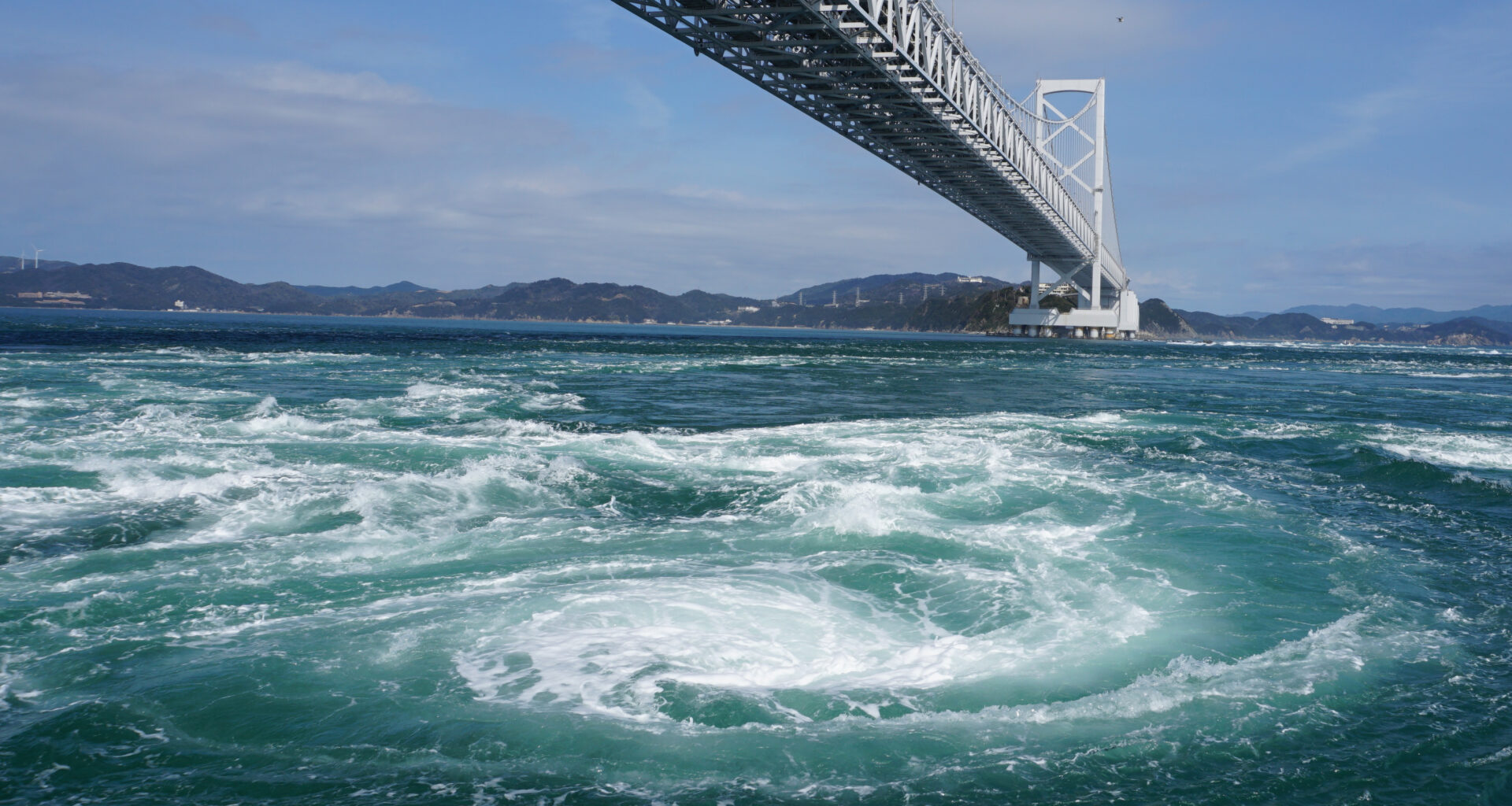
The currents of the oceans, the roiling surface of the sun and the clouds of smoke billowing off a forest fire—all are governed by the same laws of physics, and give rise to a complex phenomenon known as turbulence. But precisely modeling this chaotic motion of fluids, encompassing many scales of time and space, has remained out of reach of scientists for more than a century.
Research by scientists with the University of Chicago has a new strategy for cracking this stubborn question, by combining fundamentals of human knowledge with the power of artificial intelligence (AI).
“In this approach, AI is not doing all of the discovering, but it is accelerating it,” said Pedram Hassanzadeh, associate professor of geophysical sciences and computational and applied mathematics at UChicago and senior author on the paper.
The team used an AI method known as equation discovery to develop a model to simulate the interactions between small eddies—circular, vortex-like currents—and large-scale ones. These interactions are critical in the workings of the atmosphere, ocean and the mantle of the Earth, among others.
When the resulting equations were close but not quite accurate, the scientists dug into the physics and math to understand what was lacking. Then they asked the AI algorithm to incorporate certain missing laws of physics into its discovery.
The result is an equation that provides a more efficient way to compute these interactions, which could potentially boost our modeling of everything from the global climate to the flows inside the sun.
The researchers also hope their approach could serve as a blueprint for how to successfully integrate AI for scientific discovery into other research applications.
The results are published Feb. 10 in Physical Review Letters.
Why turbulence is so complicated
Turbulence governs our world in ways large and small. Understanding it is vitally important for modeling everything from the motions of air around wind turbines to the behavior of atmospheric and ocean currents as climate change proceeds.
But even as many other physics problems have been solved, turbulence has been stubbornly resistant.
“Turbulence remains one of the main unsolved problems from classical physics,” Hassanzadeh said.
One of the main issues is scale. Turbulence features both small and large eddies, and the motions feed back on each other in a way that makes it difficult to keep up with.
For example, the physics problems you may remember solving at school will have the same end over and over again: A ball thrown into the air will come down in a predictable arc. But turbulence varies wildly, and the motions of small eddies at the beginning have huge ramifications for how the fluid behaves at various scales later on.
This makes it extremely difficult to summarize simply. Without a simple equation to solve, the computer model must slog through computing every individual tiny interaction—and that sucks up processing power very quickly.
The UChicago team wondered if AI could help. Hassanzadeh worked with former visiting PhD student Karan Jakhar, the paper’s first author, and postdoctoral researcher Yifei Guan, now at Union College, to explore a new approach.
‘Throwing data at AI may not be enough’
The team asked an AI model to create its own equations to model the relationship between the large- and small-scale eddies—a technique known as “equation discovery.”
The AI’s answer was close, but not perfect. Digging deeper into the physics and mathematics of turbulence, the team realized it wasn’t accounting for the way energy flows between small and large eddies. So they asked the AI to incorporate this piece of physics into its discovery.
This iteration was considerably better. It was able to correctly simulate complex movements and mimic weather patterns—including predicting extreme events like strong cyclones—and did so using much less computational power than a traditional computational model.
Many of the popularly known AI chatbots are notorious for sucking up outsize amounts of water and energy. But the promise of AI in scientific research is that it may be actually able to simulate certain types of problems using less energy than classical computing.
“With our model, we can get accurate simulations of atmospheric and oceanic turbulence, including of rare, extreme events, at a practical computational cost,” said Jakhar, who now helps run an AI-powered energy startup. “It generalizes well and doesn’t have many parameters.”
The team also managed to show how the same equation could be derived with a pen-and-paper approach. “The AI discovery guided our mathematics, and also gave us confidence that pages and pages of calculations are worth trying,” said Hassanzadeh.
The scientists are working with other teams to test how well their model applies to simulations of ocean currents and other real-world situations.
But they also see value in the approach itself.
“Our results show AI can accelerate breakthroughs, but just throwing data at an algorithm may not be enough,” said Hassanzadeh. “You also need that fundamental understanding of what lies behind it.”
Citation: “An Analytical and AI-discovered Stable, Accurate, and Generalizable Subgrid-scale Closure for Geophysical Turbulence.” Jakhar, Guan, and Hassanzadeh, Physical Review Letters, Feb. 10, 2026.
Funding: National Science Foundation, Schmidt Sciences.