
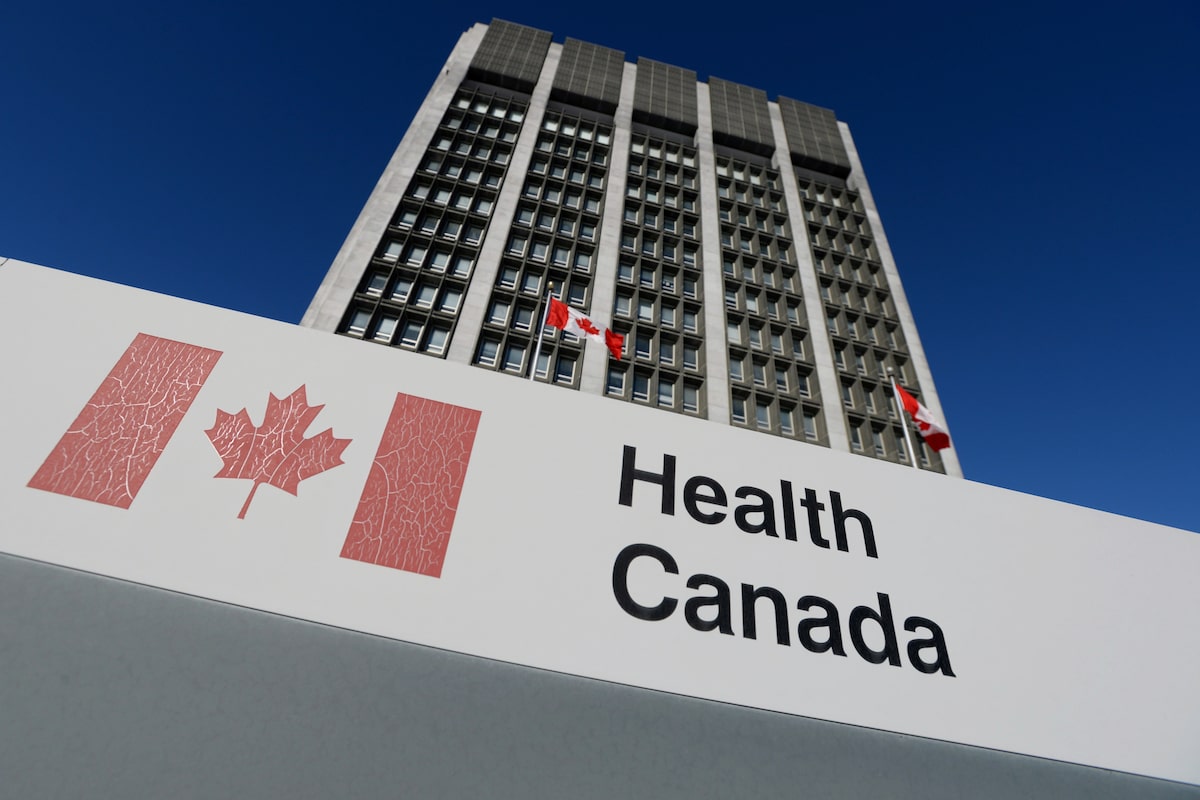
The Health Canada headquarters in Ottawa in January, 2014. Public Health officials were called before the House of Commons health committee this week to explain the incident.Sean Kilpatrick/The Canadian Press
Federal public-health officials say an open freezer door caused the loss of medication worth $20-million at the national emergency stockpile in December, 2024, and the Conservative health critic says a briefing on the incident has raised serious national-security questions.
Officials from the Public Health Agency of Canada were called before the House of Commons health committee this week to explain what happened.
Part of the briefing was held behind closed doors because of national-security concerns linked to the stockpile, which is maintained to prepare for disease outbreaks and other emergencies.
The 2024 incident was first reported on by The Canadian Press in November after the loss was revealed through the annual public accounts, the audited financial statements of the federal government.
While officials did not say exactly what was destroyed or how much, PHAC has said previously that a quantity of one type of therapeutic drug was lost as a result of temperature fluctuations that it said were “caused by several factors.”
During the meeting, Liberal MP Doug Eyolfson said they learned during the closed-door briefing that a freezer door was pushed open very slightly after a box inside it shifted and expanded in the cold.
Conservative MP Burton Bailey noted the vials of medication that were lost cost about $2,000 each and asked whether the stockpile was secure.
“It is restricted. There are certain security requirements that are required to be able to enter the facility,” said Nancy Hamzawi, president of the Public Health Agency of Canada.
Conservative health critic Dan Mazier asked whether PHAC was aware of any “hostile foreign actors” who tried to access the national emergency stockpile after the incident.
“We are aware, through a vendor that we work closely with, that there was interest from a foreign national in obtaining access to our warehouse location. They did not,” said Stacey Mantha, the director-general of PHAC’s emergency management branch.
Mantha said she was not able to tell the committee which country the person was from – because she didn’t have the information – but promised to report it to the committee. She did not say when this incident happened or whether the person knew about the December, 2024, loss of medication.
In an interview, Mazier said the committee wants more details.
“It does honestly raise a whole bunch of security concerns as well for Canadians,” he said. “We do rely on the emergency stockpile in lots of different ways.”
The national stockpile is a network of warehouses across the country where the government stores medical supplies, vaccines and emergency response equipment.
First established during the Cold War, the stockpile was initially intended to respond to a nuclear emergency.
Since then, it has been adapted to respond to outbreaks of diseases – including SARS and COVID-19 – natural disasters such as hurricanes and floods, bioterror attacks and other emergencies.
PHAC has not responded to written questions about the security concerns.
Mazier said he’s frustrated that no one has been held accountable for the errors that led to a $20-million loss.
Mantha said the internal investigation determined there was “a system error with our quality management system” that involved improper communication and a failure to follow equipment specifications with the freezer.
She also defended the decision not to punish anyone.
“The [stockpile] quality management system is not punitive. It really does encourage employees to come forward when they identify an issue,” said Mantha.
Officials said updated systems, including a modernized temperature-monitoring system, are now in place in the facility and noted that this was the first incident of its kind.
The federal Auditor-General is conducting an audit on the stockpile, and officials said they look forward to that report.