
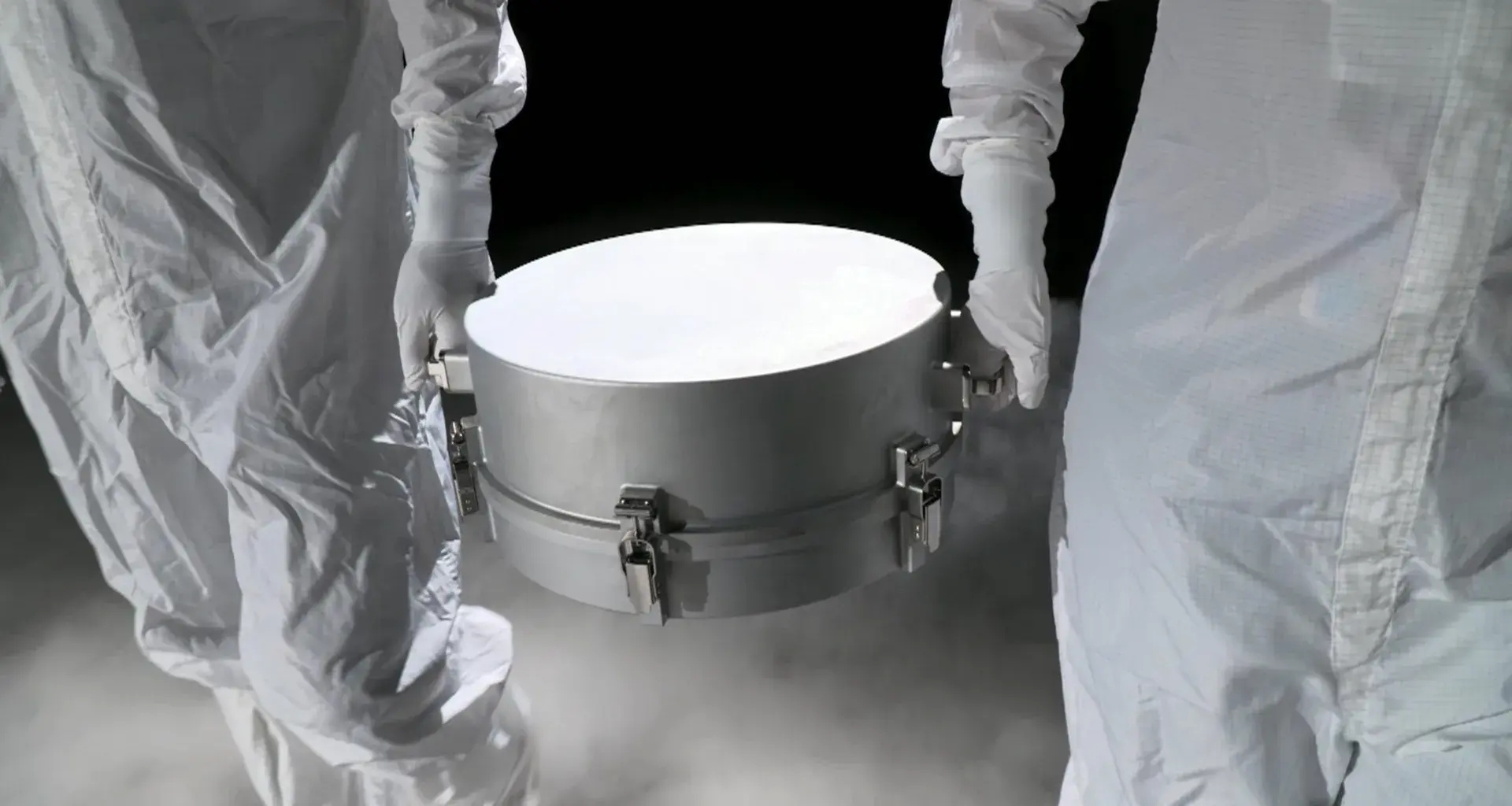
When NASA’s OSIRIS-REx mission returned material from asteroid Bennu in 2023, scientists confirmed that the 4.6 billion year old rocks contained amino acids, the essential molecules that make life possible. Amino acids are responsible for building proteins and peptides in DNA, and they are central to nearly every biological process. What remained unclear was how these molecules formed in space in the first place.
New research led by scientists at Penn State suggests that at least some of Bennu’s amino acids may have originated in extremely cold, radioactive conditions during the earliest stages of the solar system. The findings were published on Feb. 9 in the Proceedings of the National Academy of Sciences.
According to the team, the chemical signatures in Bennu’s samples indicate that these amino acids likely formed through processes different from those scientists traditionally assumed, and under much harsher conditions than expected.
“Our results flip the script on how we have typically thought amino acids formed in asteroids,” said Allison Baczynski, assistant research professor of geosciences at Penn State and co-lead author on the paper. “It now looks like there are many conditions where these building blocks of life can form, not just when there’s warm liquid water. Our analysis showed that there’s much more diversity in the pathways and conditions in which these amino acids can be formed.”
Isotope Analysis Reveals Glycine’s Origins
The researchers worked with a small amount of Bennu material, about the size of a teaspoon. Using specially adapted instruments, they measured isotopes, which are slight differences in the mass of atoms. These subtle variations can reveal how and where molecules were formed.
The team concentrated on glycine, the simplest amino acid. Glycine is a small two carbon molecule that plays a foundational role in biology. Amino acids connect in chains to form proteins, which perform nearly all essential functions in living organisms, from constructing cells to driving chemical reactions.
Because glycine can form under a variety of chemical conditions, scientists often use it as a marker for early prebiotic chemistry. Its presence in asteroids and comets supports the idea that some of the raw materials for life were created in space and later delivered to Earth.
Challenging the Warm Water Theory
For many years, the leading explanation for how glycine formed was a process known as Strecker synthesis. In this reaction, hydrogen cyanide, ammonia, and aldehydes or ketones combine in liquid water. That model suggested amino acids formed in relatively mild, water rich environments.
However, the isotopic evidence from Bennu points in a different direction. The data indicate that its glycine may have formed not in warm liquid water, but in frozen ice exposed to radiation in the outer regions of the young solar system.
“Here at Penn State, we have modified instrumentation that allows us to make isotopic measurements on really low abundances of organic compounds like glycine,” Baczynski said. “Without advances in technology and investment in specialized instrumentation, we would have never made this discovery.”
Comparing Bennu to the Murchison Meteorite
Scientists have long studied amino acids in carbon rich meteorites, including the well known Murchison meteorite that fell in Australia in 1969. To better understand Bennu’s chemistry, the Penn State team compared its amino acids with those found in Murchison.
The comparison revealed important differences. The amino acids in Murchison appear to have formed in environments that included liquid water and moderate temperatures. Such conditions could have existed on the meteorite’s parent body and were also present on early Earth.
“One of the reasons why amino acids are so important is because we think that they played a big role in how life started on Earth,” said Ophélie McIntosh, postdoctoral researcher in Penn State’s Department of Geosciences and co-lead author on the paper. “What’s a real surprise is that the amino acids in Bennu show a much different isotopic pattern than those in Murchison, and these results suggest that Bennu and Murchison’s parent bodies likely originated in chemically distinct regions of the solar system.”
New Questions About Mirror Image Molecules
The study also uncovered a puzzling result. Amino acids exist in two mirror image forms, similar to left and right hands. Scientists previously expected these paired forms to share the same isotopic signature.
In Bennu’s samples, however, the two mirror image versions of glutamic acid contain dramatically different nitrogen values. Why chemically identical mirror forms would display such different nitrogen signatures is still unknown, and researchers plan to investigate further.
“We have more questions now than answers,” Baczynski said. “We hope that we can continue to analyze a range of different meteorites to look at their amino acids. We want to know if they continue to look like Murchison and Bennu, or maybe there is even more diversity in the conditions and pathways that can create the building blocks of life.”
Other Penn State co-authors are Mila Matney, doctoral candidate in geosciences; Christopher House, professor of geosciences; and Katherine Freeman, Evan Pugh University Professor of Geosciences at Penn State.
Other authors on the paper are Danielle Simkus and Hannah McLain of the Center for Research and Exploration in Space Science and Technology (CRESST) at NASA’s Goddard Space Flight Center in Greenbelt, Maryland; Jason P. Dworkin, Daniel P. Glavin and Jamie E. Elsila of NASA Goddard’s Solar System Exploration Division; and Harold C. Connolly Jr. of Rowan University, the American Museum of Natural History, and the Lunar and Planetary Laboratory at the University of Arizona, and Dante S. Lauretta of the Lunar and Planetary Laboratory at the University of Arizona.