
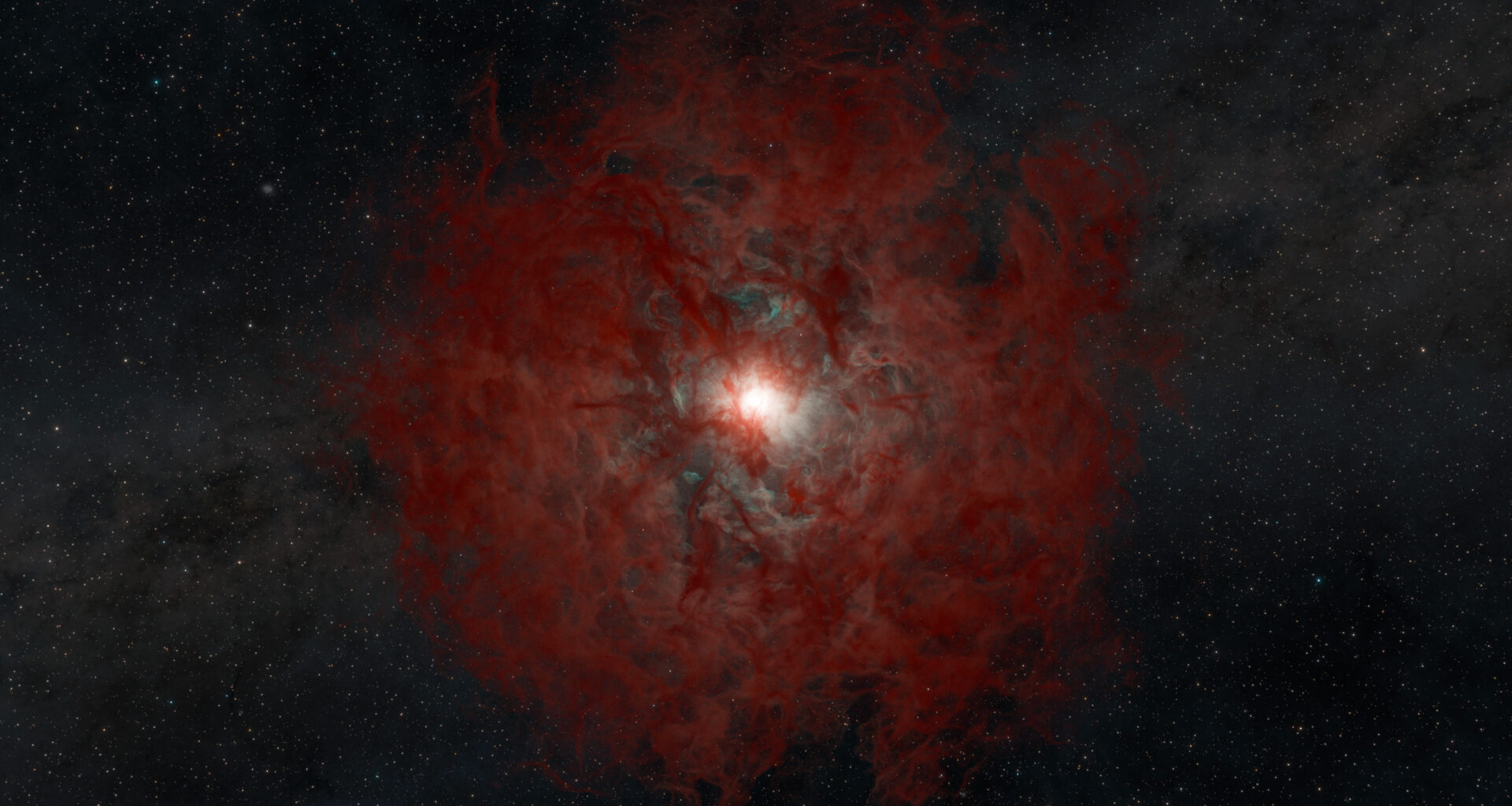
Massive stars are often known to go out with a bang: The core collapses, and a wave of subatomic particles called neutrinos erupt outward, causing the star to explode as a supernova that can outshine an entire galaxy. But 2.5 million light-years away from Earth, in the Andromeda galaxy, a dying star named M31-2014-DS1 did something unusual and it was captured by a NASA telescope. Rather than exploding, the star blinked out, leaving behind a shroud of hot gas and dust — and something else.
Using archival data from NASA’s NEOWISE (Near-Earth Object Wide-field Infrared Survey Explorer) mission along with data from other space and ground-based observatories from 2005 to 2023, astronomers pieced together the mystery of this “failed” supernova, providing the most intimate look yet at how a black hole can be born from a fizz instead of fireworks. The research, which was supported by NASA’s Astrophysics Data Analysis Program, is described in a study published Thursday in the journal Science.