
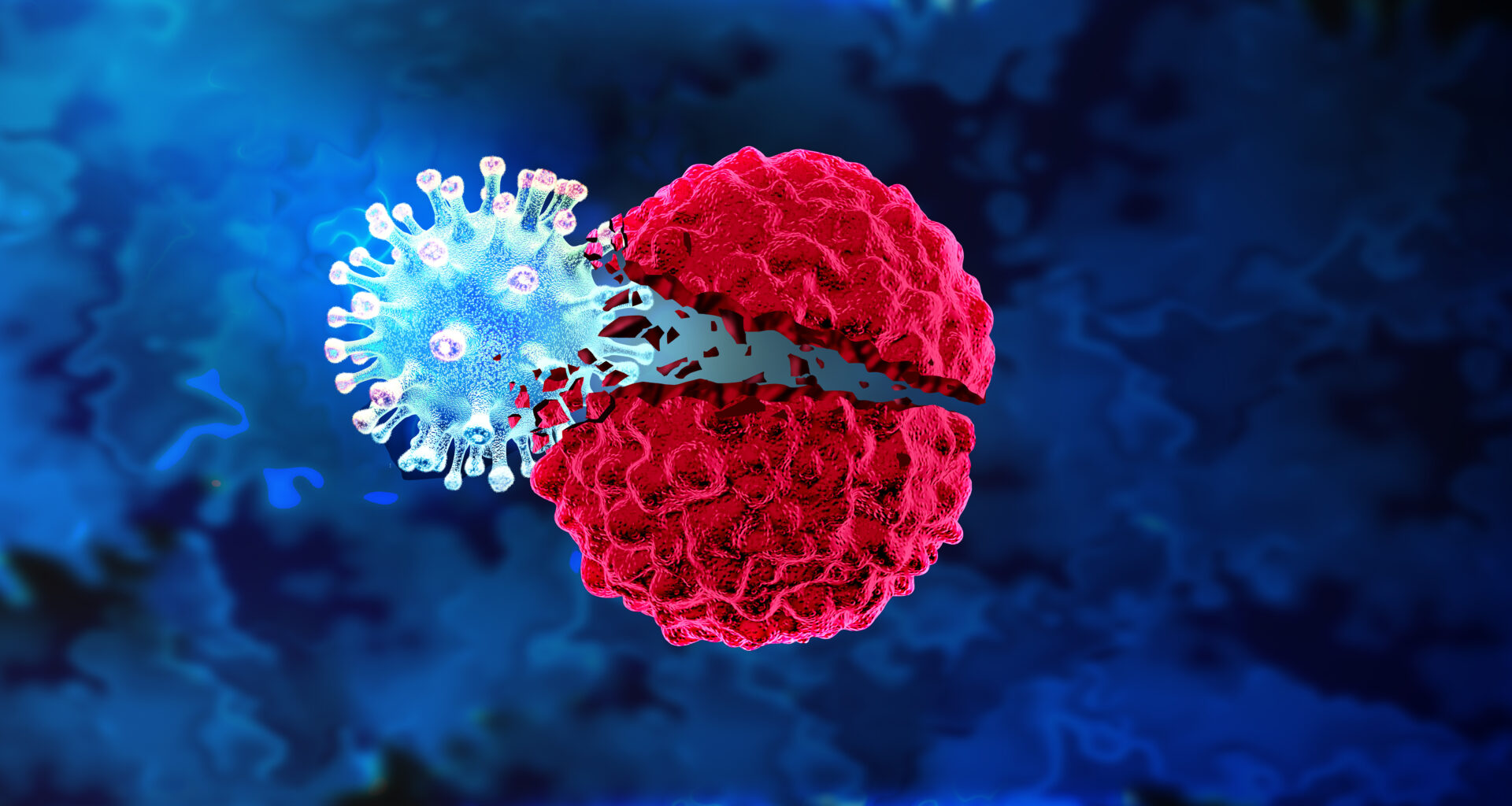
Treatment with a single injection of an oncolytic virus induces persistent T cell–mediated immunity in glioblastoma, according to findings from a trial published in Cell.
“Patients with glioblastoma have not benefited from immunotherapies that have transformed patient care in other cancer types such as melanoma because glioblastoma is a ‘cold’ tumor with poor infiltration by cancer-fighting immune cells,” explained co-senior study author Kai Wucherpfennig, MD, PhD, Chair of the Department of Cancer Immunology and Virology at the Dana-Farber Cancer Institute. “Findings from our clinical trial and our mechanistic study show that it is now feasible to bring these critical immune cells into glioblastoma.”
Background and Study Methods
Investigators conducted a first-in-human, open-label phase I clinical trial (ClinicalTrials.gov Identifier NCT03152318) evaluating a single intratumoral injection of rQNestin34.5v.2, an oncolytic herpes simplex virus engineered to selectively replicate in glioblastoma cells.
The study included 41 patients with recurrent glioblastoma and led to extended survival, especially in patients with pre-existing viral antibodies.
The investigators further analyzed immune activation from the oncolytic virus within the tumor microenvironment as well as spatial immune profiling and clinical outcomes.
Key Findings
The investigators found that the oncolytic virus treatment resulted in expansion of pre-existing T-cell clones and persistent T cell–mediated immunity against glioblastoma cells.
They also found that shorter distances between cleaved caspase-3+ tumor cells and granzyme B+ T cells were associated with prolonged progression-free survival after treatment with the oncolytic virus. Additionally, when prior tumor-infiltrating T cells expand from treatment, they result in longer overall survival; although viral remnants stay in necrotic regions, T cells infiltrated live tumor regions.
“We show that increased infiltration of T cells that are attacking tumor cells translates into a therapeutic benefit for patients with glioblastoma,” said co-senior study author E. Antonio Chiocca, MD, PhD, Executive Director of the Center for Tumors of the Nervous System at Mass General Brigham Cancer Institute. “Our findings could have important implications for a cancer whose standard of care hasn’t changed for 20 years.”
DISCLOSURE: For full disclosures of the study authors, visit cell.com.