
Today’s round of questions, my smart-aleck replies and the real answers:

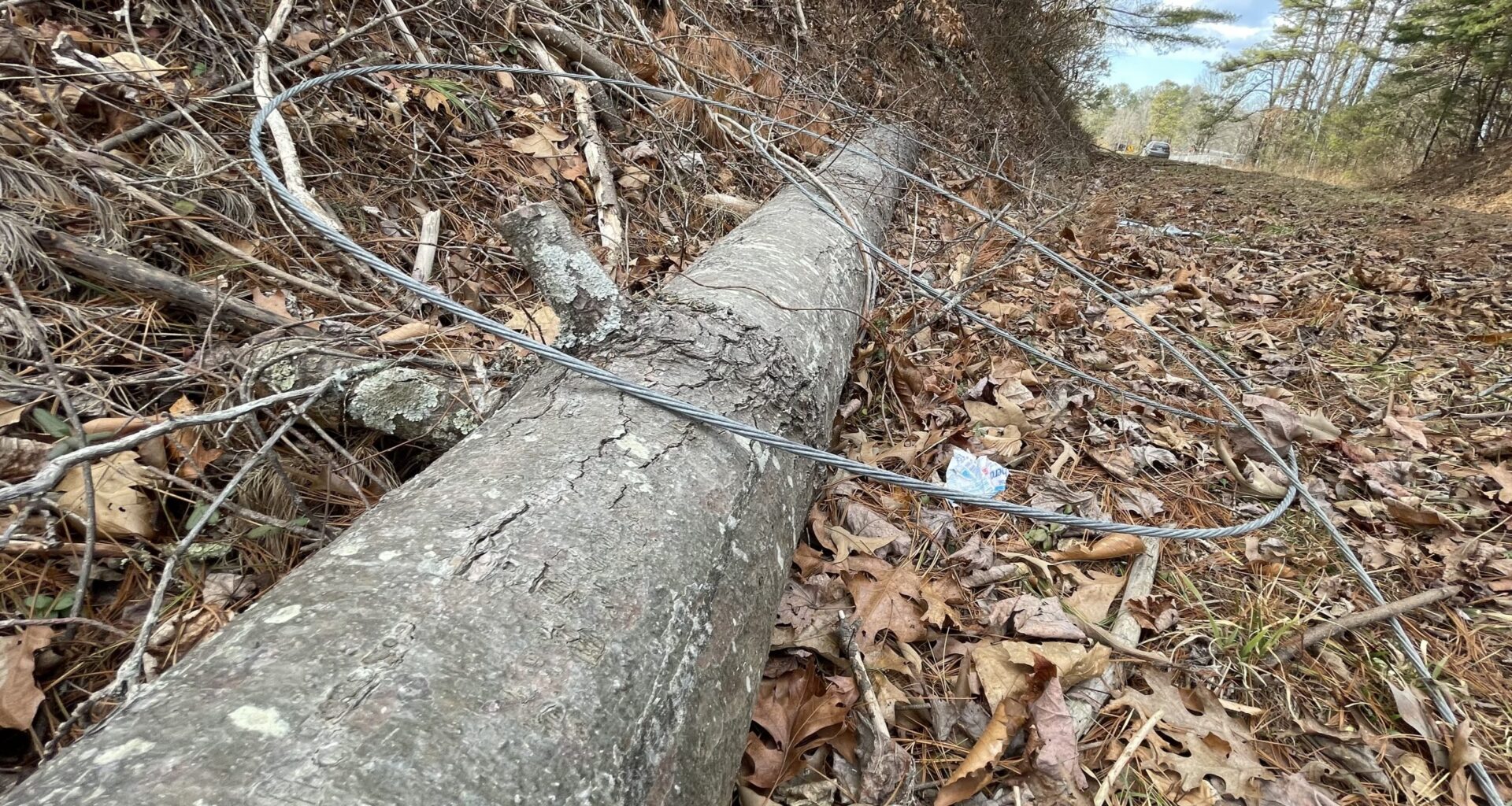
Question: I am curious who is responsible for the cleanup of tree trimming by Duke power in an easement. They have destroyed a good portion of our (easement) property with radical tree trimming and tree felling. The debris — in some cases wrapped in old steel leader lines from the power lines — still remains on the hillside from three-plus months ago. Although I have called and emailed their sites/customer service, we are still left with much tree debris, pieces too big to move, and it is still there. The last tree that fell from the storm still remains in the middle of our parking lot of our business — in several large pieces. I was just given a “work order number” from the tree trimming (not debris cleanup) department and was told we would hear from someone in 10 business days. Who is responsible for this mess? This property is on Clarks Chapel Road in Weaverville.
My answer: Hmmm…gonna make a wild guess here and say, “Not Duke?”
Real answer: Duke Energy spokesperson Logan Stewart first noted that “trees and vegetation are the No. 1 leading cause of outages system wide.
“This is especially true in western North Carolina where we have a large tree canopy,” Stewart said. “While our vegetation management program helps lessen storm damage and power outages, we do not clean up tree debris that results from severe weather.”
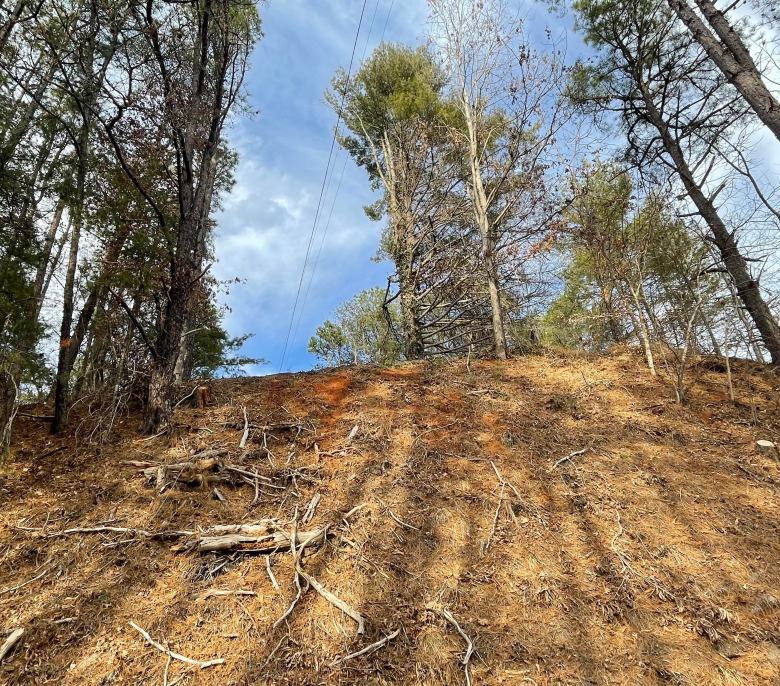 Duke Energy says its top priority after a storm is to clear trees and restore power as soon as possible. The company is not responsible for removing tree debris, a spokesperson said. // Watchdog photo by John Boyle
I drove by the area in question Tuesday, and you can see where the crews have cut around the power lines. There was one sizable log lying in the ditch that was wrapped up in the aforementioned leader cables, so that would be a difficult removal.
Stewart expanded on Duke’s responses in the wake of a storm.
“When we respond to outages following a storm, our priority is to safely clear trees from our power lines and equipment to restore power as safely and quickly as possible,” Stewart said. “Once power is restored, property owners are responsible for any tree debris.”
Stewart also addressed this site specifically.
“The property in Weaverville, as the customer mentioned, has leftover tree debris from a storm-damaged tree,” Stewart said. “Although we do not typically clean up tree debris from severe weather, when I spoke to our team, they let me know they plan to cut this tree into more manageable pieces as a courtesy to the customer.”
Stewart said customers can find out more about how Duke manages trees on this webpage. For information on storm tree cleanup, click on the ‘Removal and Cleanup’ tab. If you have questions or concerns, call the customer care line at 800-777-9898.

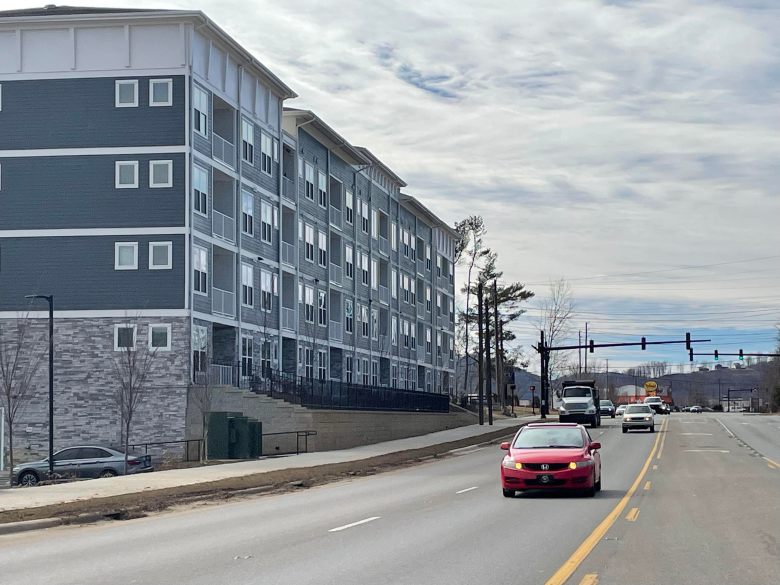 A reader wants to know why Long Shoals Road, a major thoroughfare in south Asheville with a lot of apartment complexes along the roadway, doesn’t have streetlights. // Watchdog photo by John Boyle
Question: Why are there no street lights on Long Shoals Road? There are dozens of apartment complexes on the road, but no street lights. What gives? There are street lights up and down the adjacent Hendersonville Road but nothing on Long Shoals.
My answer: Maybe one day when Long Shoals gets bumper-to-bumper traffic and horribly synchronized traffic signals, it could rate some streetlights. Till then, Hendersonville Road gets all the love.
Real answer: While Long Shoals Road (N.C. 146) is state-maintained, North Carolina Department of Transportation spokesperson David Uchiyama said the department has no plans to install lighting there by multiple apartment complexes.
“The answer is in the (NCDOT) policy: ‘Because it is not economically feasible to light every conflict point along the roadways of the state, it is the policy of the department to construct and maintain lighting systems at interchanges and along continuous sections of full control of access roadways which meet specific criteria established by the American Association of State Highway Transportation Officials and the NCDOT Roadway Lighting Committee.’”
Uchiyama said the NCDOT would allow “construction and maintenance of lighting systems by local governing bodies on state-maintained roadways through the encroachment process.”
So that would be up to the city of Asheville.
“The city of Asheville acknowledges community concerns about safety and visibility on the rapidly growing Long Shoals Road corridor,” city spokesperson Kim Miller told me via email. “As stated by NCDOT, installation of street lighting is a significant undertaking, requiring careful planning and substantial financial investment.”
That doesn’t sound good for lighting coming anytime soon. Neither did this:
“With growth occurring throughout the community, it is critical for the city to coordinate with NCDOT to review our collective processes and better align the installation of street lighting with continued development on busy arterial roads, using a data-driven approach to apply limited safety funding toward the most-needed areas,” Miller said.
Allow me to translate: Keep those headlights in tip-top shape!
Asheville Watchdog welcomes thoughtful reader comments on this story, which has been republished on our Facebook page. Please submit your comments there.
Asheville Watchdog is a nonprofit news team producing stories that matter to Asheville and Buncombe County. Got a question? Send it to John Boyle at jboyle@avlwatchdog.org or 828-337-0941. His Answer Man columns appear each Tuesday and Friday. The Watchdog’s reporting is made possible by donations from the community. To show your support for this vital public service go to avlwatchdog.org/support-our-publication/.
Related