
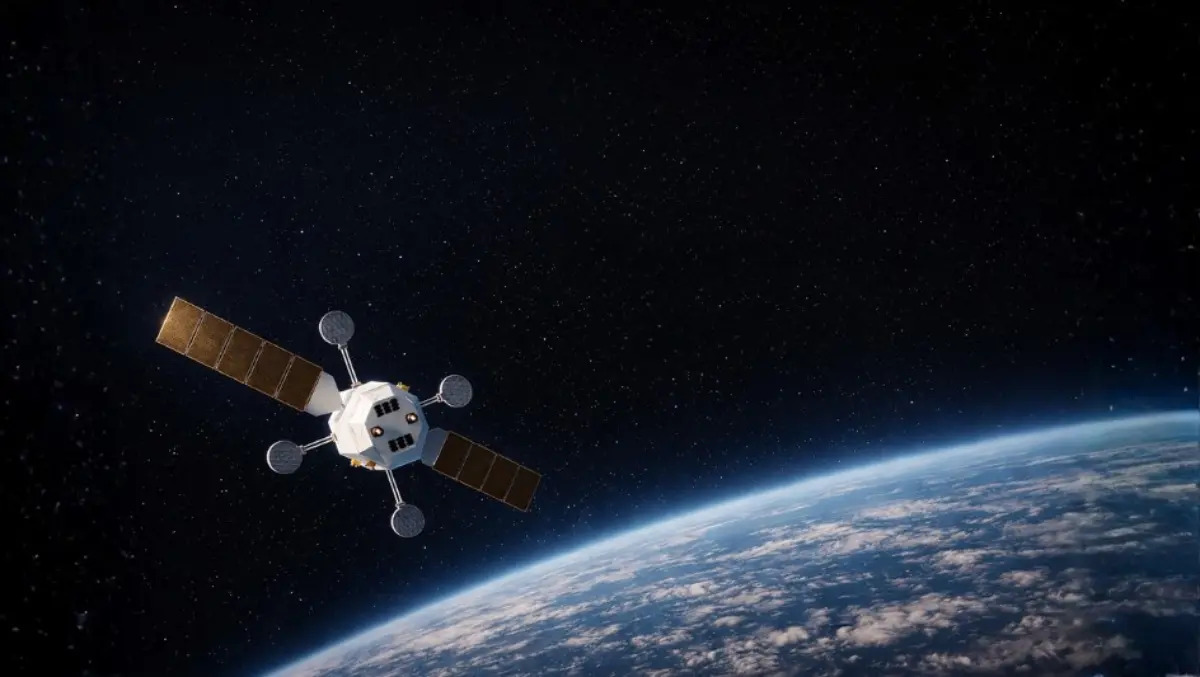
ExLabs has selected CUS-GNC’s SpacePilot onboard autonomy software for guidance, navigation and control (GNC) on its planned mission to asteroid Apophis. The deal highlights the growing reliance on autonomous decision-making for commercial deep-space operations.
SpacePilot will be part of ExLabs’ flight architecture for a mission expected to operate more than 100 million kilometres from Earth. At those distances, communications delays and limited contact windows make continuous ground control impractical.
ExLabs is a commercial deep-space mission operator developing platforms for exploration beyond Earth orbit. CUS-GNC develops guidance, navigation, control and autonomy software for space missions, with SpacePilot as its flagship product.
Deep-Space control
GNC systems determine where a spacecraft is, where it is going, and how it changes trajectory and orientation. In Earth orbit, operators can often intervene from the ground. In deep space, latency and intermittent communications increase the need for onboard decision-making.
SpacePilot is an onboard autonomy platform designed to let a spacecraft detect changes in its environment, choose actions, and execute manoeuvres without continuous oversight from mission control. CUS-GNC says the software has already been proven in orbit.
For ExLabs, the move to autonomy aligns with a mission profile driven by timing and distance. The Apophis mission is scheduled to launch during the asteroid’s 2029 close-approach window. Integration and autonomy validation are planned through demonstrations and flight-readiness milestones.
Apophis will make a close flyby of Earth in 2029, drawing interest from space agencies and commercial operators. ExLabs says the timing offers an opportunity to validate autonomy technologies while increasing private-sector participation in planetary exploration.
Operational economics
Autonomy is increasingly a commercial consideration as more private companies plan missions beyond cislunar space. The cost of staffing mission control, managing anomalies, and responding to changing conditions scales with mission complexity and distance. Software that handles routine decisions onboard can reduce demands on ground teams and lower the operational burden over long missions.
ExLabs says onboard autonomy could reduce risk and cut mission-operations workload. It also expects a more responsive spacecraft, since decisions can be made onboard rather than waiting for ground commands.
CUS-GNC describes the Apophis mission as a proving ground for an AI-driven approach to GNC. “This collaboration with ExLabs on the Apophis mission is truly exciting,” said Simone Chesi, founder of CUS-GNC. “It is a mission that pushes the boundaries of commercial space. Announcing the use of SpacePilot onboard autonomy allows us to demonstrate an AI-driven GNC approach that goes beyond standard architectures and has already been proven in orbit.”
ExLabs’ Chief Technology Officer Dalibor Djuran said autonomy needs to shift from an optional enhancement to a baseline requirement for missions operating at scale.
“Operating more than 100 million kilometers from Earth in a largely unknown and constantly evolving environment demands autonomy that is not only intelligent, but flight-proven,” Djuran said. “CUS-GNC’s SpacePilot is differentiated by its ability to close the loop onboard, adapt to uncertainty in real time, and significantly reduce reliance on Earth-based intervention. That capability is foundational to how we scale deep-space missions beyond one-off demonstrations.”
Market direction
The partnership reflects a broader shift in commercial space towards software-defined mission architectures. As launch services expand and spacecraft buses become more standardised, attention is turning to onboard software, autonomy platforms, and operational models that can be reused across missions.
In this context, autonomy sits at the intersection of spacecraft safety and operating cost. For long-duration missions with limited communications, more autonomous spacecraft can reduce the need for constant monitoring and shorten response times as conditions change.
Commercial terms were not disclosed. The companies also have not detailed how SpacePilot will interface with other onboard systems, or how its authority will be bounded and verified across different mission phases.
ExLabs plans to proceed with integration and validation ahead of the 2029 launch window, with additional demonstrations and flight-readiness milestones as the Apophis programme progresses.