
Unlock the Editor’s Digest for free
Roula Khalaf, Editor of the FT, selects her favourite stories in this weekly newsletter.
France’s biggest companies face a €7.5bn blow to their profits this year from the extension of a controversial levy on profits, which bosses warn is unpicking President Emmanuel Macron’s business-friendly legacy.
As companies have reported earnings for 2025, banks, luxury and industrial groups have been the hardest hit by the tax, which raised €8bn in 2025 and has been renewed this year.
The surcharge was introduced in last year’s budget as a one-off measure to raise about €8bn but it has been maintained with small adjustments by Sébastien Lecornu’s government as a concession to the centre-left socialist party, whose support he needed to pass a budget last month.
Proponents say the measure is needed to help restore France’s public finances and reduce its deficit to 5 per cent of GDP this year. But companies hit by the measure have warned it risks limiting their investments in France.
Aerospace and defence group Safran will pay about €470mn linked to the tax this year after paying €377mn last year.
Chief executive Olivier Andriès said on Friday: “With the surcharge, we have returned to or even surpassed a little bit the initial tax level [when Macron took office]. We’ve ended up losing all the competitiveness we had gained.”
The levy will raise the effective corporate tax rate in France for companies with annual revenues of more than €3bn to 35 per cent, and 30 per cent for those above €1.5bn, by adding a surcharge to standard corporate tax paid on profits made in France.
It is a reversal of Macron’s supply-side approach at the beginning of his time in office in 2017, when he gradually reduced the corporate tax from 33 per cent to 25 per cent.
Despite small changes to the 2025 measure, to raise the threshold at which it takes effect from €1bn to €1.5bn, the signal sent to investors and businesses was part of the reason for a muted stock market response to Lecornu’s budget last month, said Thomas Zlowodzki, head of equity strategy at ODDO BHF.
“This has prevented Cac 40 shares from taking off after the passing of the budget. The impact would have been less negative if they had lowered the rate a little bit, which would have suggested the additional taxes were going to disappear. Now that seems less likely,” he added.
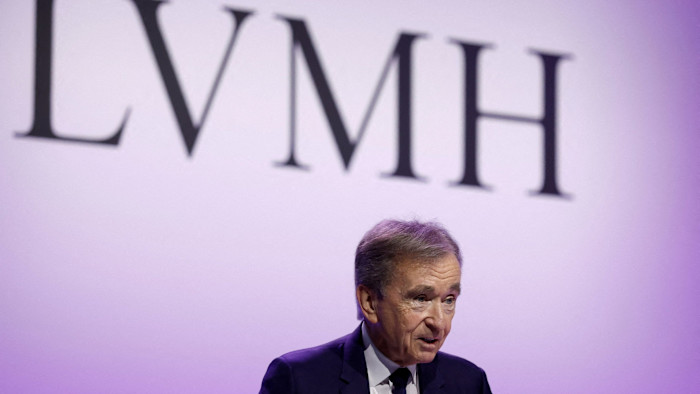
LVMH chief executive Bernard Arnault said last week that France’s policy to “tax companies to the hilt and create unemployment” added to existing uncertainty for businesses and meant he was “somewhat reserved” on the company’s prospects in 2026.
The measure meant LVMH’s total income tax payments rose to about €5.5bn last year, more than €300mn higher than 2024, finance chief Cécile Cabanis told analysts this week.
That came despite the luxury conglomerate benefiting from lower US tax rates under US President Donald Trump’s “One Big Beautiful Bill”. She said she expected an “identical” tax rate in France in 2026.
French banks face a hit of more than €1bn, according to the French banking federation. Those with large domestic operations will bear the brunt, with co-operative banks Crédit Mutuel, Crédit Agricole and BPCE paying a combined €800mn, the federation said.
This reflects the disproportionate impact of the measure on companies with high sales and profits in France, compared with French-headquartered businesses with significant foreign revenues.
Vinci, the motorway operator, booked a €425mn hit to free cash flow last week, although France’s biggest bank BNP Paribas said the impact had been negligible.
The additional surcharge means that, at 36 per cent for large companies, France has the OECD’s highest statutory corporate income tax rate — a measure the organisation uses to compare headline tax rates faced by businesses across countries.
François Ecalle, a former top finance ministry official now leading non-profit public finances institute Fipeco, wrote in a recent note that the “exceptional, limited tax” has little effect on economic activity but that uncertainty over how long it would be applied was “damaging because it puts brakes on investment”.
The additional tax comes as larger companies continue to perform relatively strongly despite the French political turmoil. The prospect of extending the tax further is set to spark more debate later this year.
“We’re talking about a surcharge on 300 businesses which are the biggest in France,” socialist party leader Olivier Faure told broadcaster France Inter last month. “These are people who have distributed more than €100bn in dividends and share buybacks last year. Do you think we can’t take €8bn?”
However, Philippe Juvin, a rightwing lawmaker and leading parliamentary negotiator on the 2026 budget who opposed the tax, warned: “France already has among the highest tax rates in the world. Companies are not cows to be milked.”
Additional reporting by Sarah White, Leila Abboud and Adrienne Klasa