
In laboratories around the world, scientists have long dreamed of building machines so small that they could grip, bend, and move objects thinner than a strand of hair. However, controlling something so tiny precisely and reversibly has been a big challenge.
Now, a team of researchers from the Polish Academy of Sciences has shown that even a bare carbon fiber, no thicker than a human hair, can bend and straighten on command, without any direct wiring.
Their proof-of-concept study reveals a new way to turn ordinary carbon fibers into miniature actuators. This achievement could reshape micromechanics and soft robotics by offering a simpler route to motion at the microscopic scale.
“We anticipate that these results will enrich the tool case for research in the field of soft robotics and micromechanics,” the study authors note.
The long-standing challenge of smart fibers
For years, researchers have tried to make smart fibers—materials that change shape when exposed to electricity, light, heat, or changes in acidity. Smart polymers already exist and can respond to such stimuli, altering their color or shape and then returning to their original state.
However, when it comes to microfibers and nanofibers, things become harder. Many systems require special coatings, structural modifications, or complex fabrication steps to make the fibers responsive. This adds cost, complexity, and limits real-world use.
The core problem has been precise and reversible control. Scientists could sometimes make a fiber move, but not in a controlled and repeatable way. That is where the study authors took a different approach.
Instead of heavily modifying the fibers, they used uncoated and unaltered carbon fibers and focused on how electricity interacts with them.
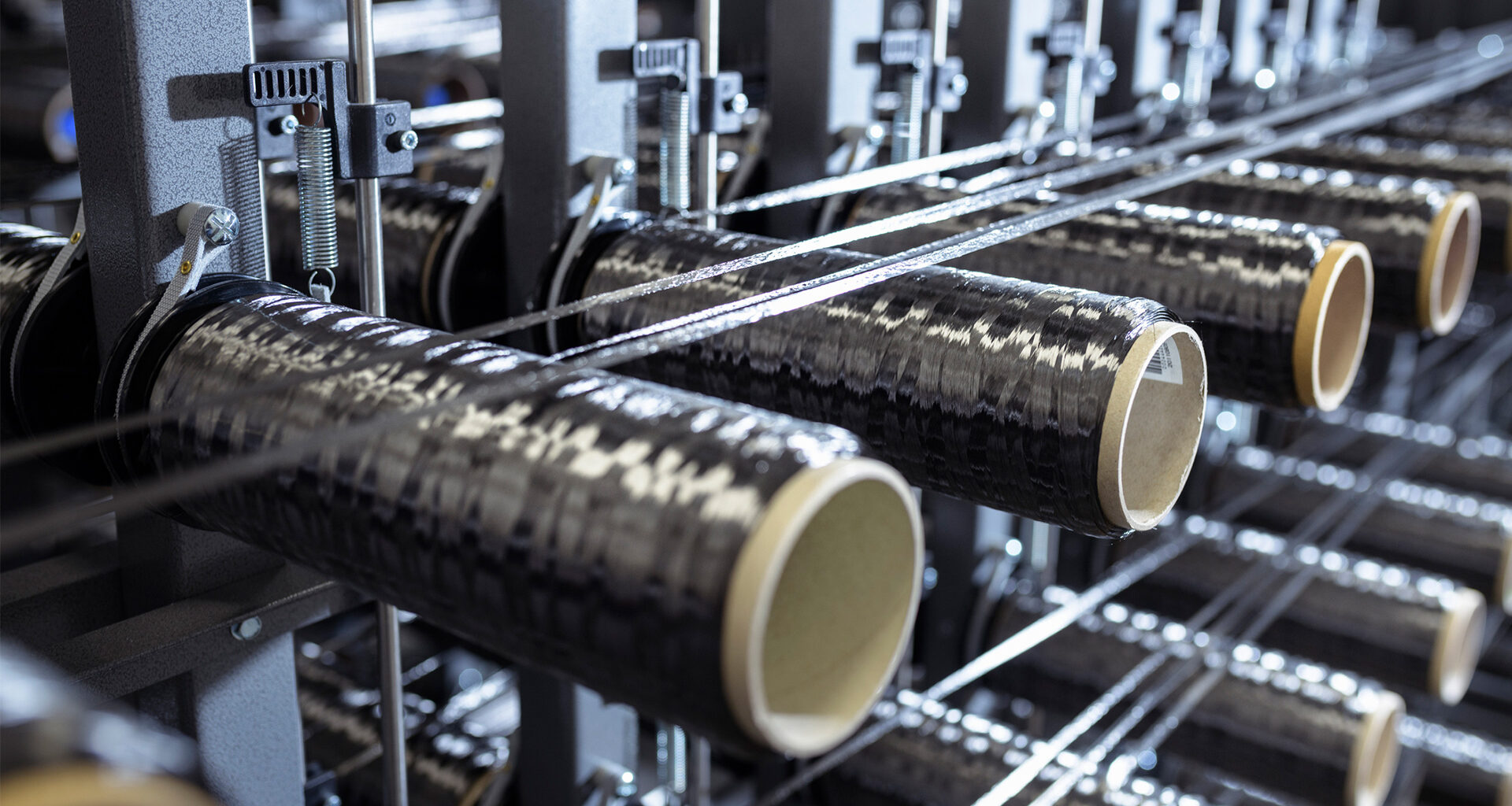
Carbon fibers are already valued in engineering. They are lighter than steel or aluminum but extremely strong. They also conduct electricity, which makes them ideal for electrochemical experiments.
The researchers placed a single microdiameter carbon fiber inside a special electrochemical setup called a bipolar cell. This type of system has been used since the 1970s in biosensors, reactors, and batteries. Here’s how their setup worked in simple terms:
Electricity made a carbon fiber bend
The fiber was placed between two compartments filled with a liquid containing ions—charged particles such as lithium (Li⁺) and perchlorate (ClO₄⁻). The solution also contained a redox pair: benzoquinone and hydroquinone, which help drive oxidation and reduction reactions.
When an external voltage was applied across the cell, something remarkable happened. The team compared two kinds of fibers: smooth ones and naturally rough ones. The rough fibers had tiny grooves and uneven pores on their surfaces. In these rough fibers, the distribution of pores was not symmetrical. That natural asymmetry turned out to be crucial.
When voltage was applied, ions from the liquid entered the fiber surface unevenly. On one side of the fiber, oxidation occurred; on the other, reduction. As ion insertion was stronger on one side than the other, the fiber experienced uneven tension.
This caused it to bend. When the voltage was reversed or removed, the ions left the fiber surface. The tension disappeared, and the fiber straightened again. In short, ions moving in and out of the carbon fiber caused it to bend and unbend.
The motion was fully reversible and depended on the applied voltage and the fiber’s length.
Importantly, the fiber was not directly connected to a wire. The closed bipolar cell allowed simultaneous oxidation at one end and reduction at the other, enabling wireless actuation.
“We successfully used the closed bipolar cell to wirelessly actuate a freestanding carbon fiber electrochemically,” Wojciech Nogala, one of the study authors, said.
The researchers also showed that voltage pulses could be applied in cycles. By carefully controlling the pulse duration and voltage level, the fiber could move up and down repeatedly—like microscopic tweezers. This demonstrates that the system is not just a one-time effect but a controllable mechanical response.
A promising proof of concept
This study is still at the proof-of-concept stage, but its implications are wide. If simple, prefabricated asymmetric carbon fibers can act as tiny actuators, engineers may not need complicated coatings or redesigns to build micro-scale devices.
Such fibers could be used in synthetic muscles for microrobots, in microelectromechanical systems, or in devices that need to move or grip objects at extremely small scales. The motion strength depends on voltage and fiber length, which means the system can be tuned.
Going forward, the team plans to explore actuators based on prefabricated asymmetric carbon fibers and to optimize performance.
If successful, this simple mechanism, driven by ions flowing in and out, could help power the next generation of soft robotic systems and microscopic tools, bringing us closer to machines that operate at the scale of cells and tiny structures.
The study is published in the journal Nature Communications.