
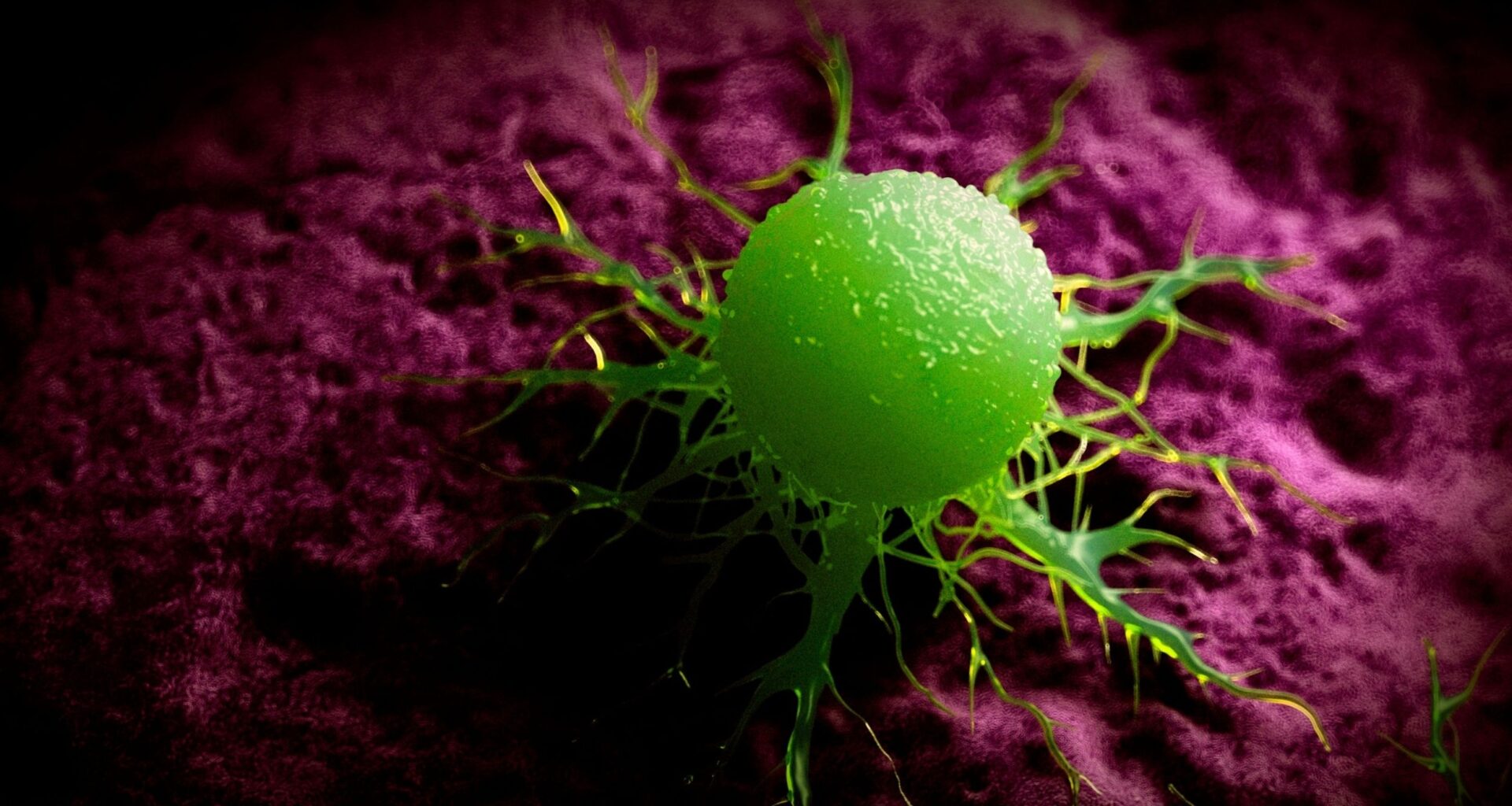
A few drops of medicine placed in a mouse’s nose have shown to clear aggressive brain cancer tumors by sparking a localized immune system attack.
Some treated mice later resisted a new tumor, suggesting the therapy can train the immune system for longer protection.

In tests reported in a research paper, nasal droplets carried an immune-activating payload into brain tumors.
Tagged particles helped Alexander H. Stegh, Ph.D., at Washington University School of Medicine (WashU Medicine) confirm that the droplets reached tumors.
The research group saw the signal concentrate in immune cells inside the brain tumor, not in the rest of the body.
That kind of delivery could spare patients repeated brain injections, but it still needs a way to beat tumor defenses.
Tumors and the blood-brain barrier
Doctors often call this cancer glioblastoma, an aggressive brain tumor that returns quickly after treatment.
Many promising drugs never reach it because the blood-brain barrier, a tight filter of brain vessels, blocks them.
Across the United States, the incidence runs about three cases per 100,000 people each year. Even after surgery and radiation, most patients face relapse, so new ideas often focus on delivery as much as drugs.
Instead of injecting fragile immune drugs, the team built Spherical Nucleic Acids (SNAs) consisting of DNA packed tightly around a tiny core.
On contact with immune cells, SNAs entered on their own and protected the DNA trigger from breaking down quickly.
Gold cores carried paired DNA strands designed to activate DNA sensors inside immune cells, a step that free DNA rarely manages.
By keeping the immune trigger intact, the particles made non-invasive dosing possible, but the immune system still had to respond.
Immune response within the brain tumor
Inside the tumor, the goal was to activate the STING pathway, a DNA-sensing system that starts immune responses.
When cGAS, a DNA-sensing enzyme in cells, grabbed the DNA on SNAs, it triggered STING to attract immune cells.
After STING turned on, macrophages – immune cells that can swallow debris and signal threats – became more inflammatory inside tumors.
Still, cGAS and STING activation alone could not finish the job, because the cancer found ways to dampen later immune attacks.
Tracking the journey
To prove the drops reached the brain, the team added a glowing tag to the SNAs and tracked it. From the nose, the signal traveled along the trigeminal nerve, a facial nerve with direct connections into brain tissue.
Across most organs outside the head, the tag stayed low, while brain tumors and nearby lymph nodes lit up.
Limited spillover should reduce whole-body inflammation, yet any inhaled dose still needs monitoring for lung exposure.
Combining immune signals
Adding checkpoint-blocking drugs turned the nasal therapy from a slow-down into a clearer win against established tumors.
Those immune checkpoint inhibitors – drugs that stop signals that restrain T-cells – let the primed immune attack keep going.
In mice, one or two nasal doses plus checkpoint drugs wiped out tumors and left most female animals alive in the long term.
Male mice benefited less, which means future trials must watch for sex-linked immune differences and adjust dosing plans.
Protection after clearance
Months later, some survivors resisted a fresh tumor planted in the opposite side of the brain. That pattern fits immunological memory, a learned defense that responds faster after the first threat is gone.
Instead of needing ongoing drug exposure, the immune system seemed able to recognize the cancer again and respond without help.
Such protection in mice does not guarantee the same in people, where tumors evolve for longer and treatments vary widely.
Safety questions ahead
After treatment, the animals showed no obvious behavior changes, and most of the signal stayed in brain tissue.
Tests of lung tissue found little evidence of short-term inflammation, even though small amounts did reach the lungs.
Long-term cGAS-STING activation could also inflame healthy brain cells, so the same immune power that helps might also harm.
Before any human trial, the WashU Medicine team will need detailed dosing schedules and extended safety studies that look for delayed inflammation.
Treating human brain tumors
Moving this idea into clinics means proving that nasal dosing reaches deep tumors reliably across different skull shapes and airways.
Next versions may carry more than one immune trigger, so a single drop can push several defenses at once.
Financial ties also matter, since Stegh reported a stake in Exicure and a patent linked to SNA delivery.
“This is an approach that offers hope for safer, more effective treatments for glioblastoma and potentially other immune treatment-resistant cancers, and it marks a critical step toward clinical application,” said Stegh.
Nasal dosing delivered immune triggers into brain tumors, and checkpoint drugs let that attack spread through the tumor’s defenses.
If future studies confirm safety and consistent delivery in people, this approach could make brain immunotherapy feel more like routine care.
The study is published in Proceedings of the National Academy of Sciences.
—–
Like what you read? Subscribe to our newsletter for engaging articles, exclusive content, and the latest updates.
Check us out on EarthSnap, a free app brought to you by Eric Ralls and Earth.com.
—–