
ⓘ Jack B via Unsplash
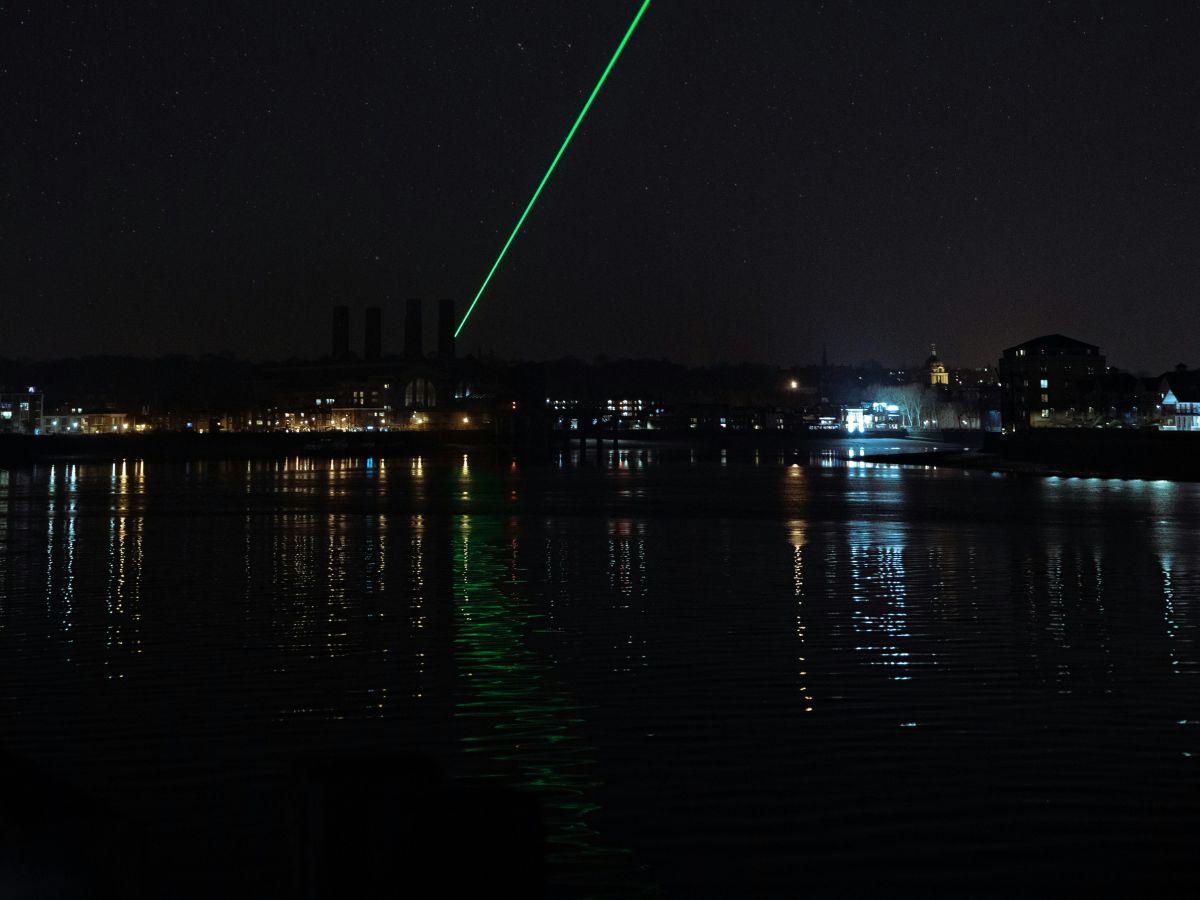
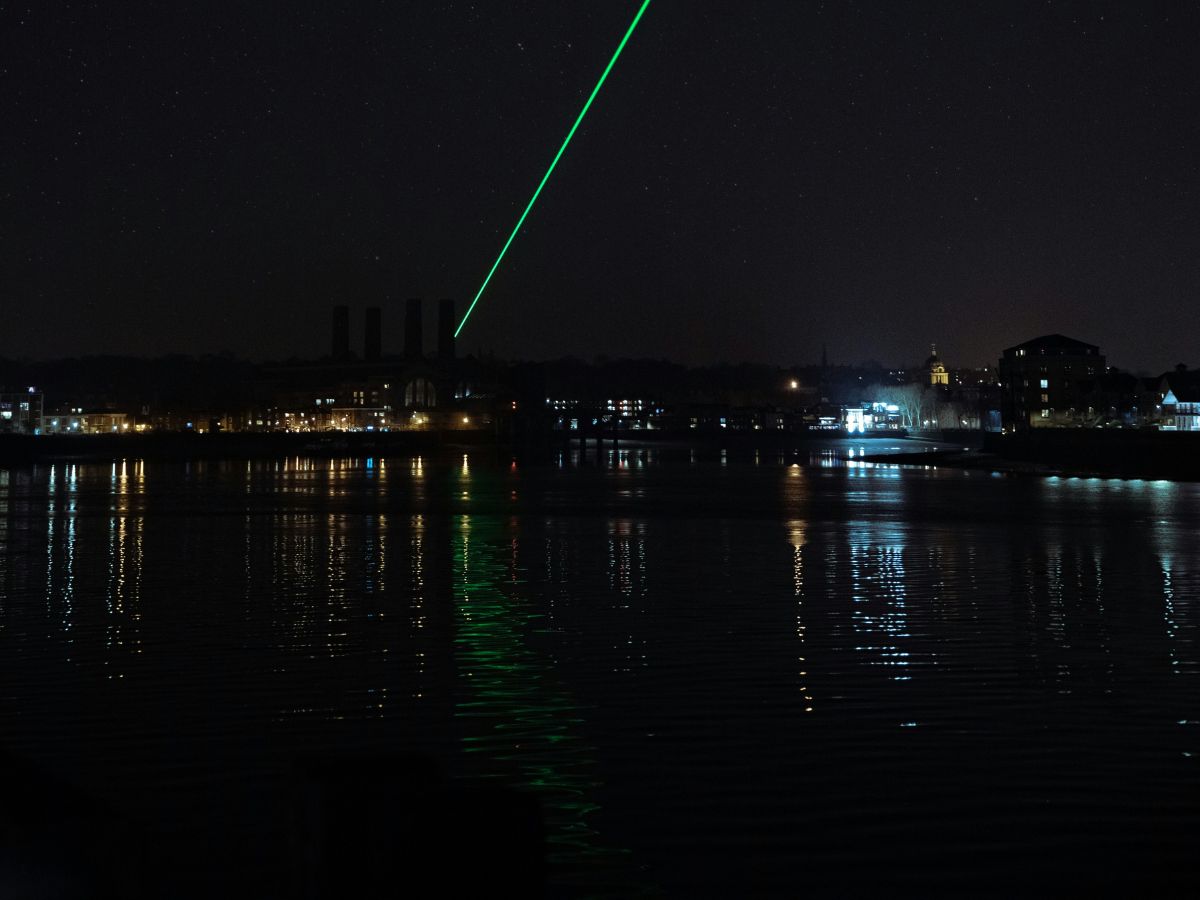
A skyline featuring a light beam
By reconfiguring satellite software in orbit, researchers on the Pamir Plateau have doubled the capacity of existing laser communications, setting a new domestic speed record.
The Aerospace Information Research Institute (AIR) under the Chinese Academy of Sciences has successfully completed an operational application experiment that pushes satellite-to-ground laser communication past the 100-gigabit-per-second (Gbps) threshold. Achieving a peak transmission speed of 120 Gbps, this milestone marks a significant improvement in high-speed space data transmission capabilities.
This achievement builds upon a rapid succession of technological leaps by the AIR team, which previously recorded speeds of 10 Gbps in 2023 and 60 Gbps in 2025. The recent experiment utilized a self-developed 500-millimeter aperture laser ground station situated on the Pamir Plateau in the Xinjiang Uygur Autonomous Region of China, communicating directly with the AIRSAT-02 satellite.
The engineering team made this breakthrough without any physical hardware modifications to the AIRSAT-02 satellite. The capacity was effectively doubled from 60 Gbps to 120 Gbps purely through in-orbit software reconfiguration, fully unlocking the potential of the existing laser communication payload.
The test data attest to the stability and efficiency of the new system:
Rapid link acquisition. The satellite and ground station established connections in seconds, maintaining a success rate exceeding 93%.Continuous transmission. The system sustained a maximum continuous communication duration of 108 seconds.Massive data volume. A total of 12.656 terabits of data were transmitted during the window.
Li Yalin, senior engineer at AIR and the team’s technical lead, noted the exponential difficulty of this advancement. Li compared the previous 10 Gbps benchmark to a simple single-lane bridge, while describing the 120 Gbps achievement as a complex multi-lane highway requiring both rapid construction and high-efficiency parallel traffic.
The laser ground station used to carry out the experiment
 Chibuike Okpara – Tech Writer – 400 articles published on Notebookcheck since 2024
I have always been fascinated by technology and digital devices my entire life and even got addicted to it. I have always marveled at the intricacy of even the simplest digital devices and systems around us. I have been writing and publishing articles online for about 6 years now, just about a year ago, I found myself lost in the marvel of smartphones and laptops we have in our hands every day. I developed a passion for learning about new devices and technologies that come with them and at some point, I asked myself, “Why not get into writing tech articles?” It is useless to say I followed up the idea — it is evident. I am an open-minded individual who derives an infinite amount of joy from researching and discovering new information, I believe there is so much to learn and such a short life to live, so I put my time to good use — learning new things. I am a ‘bookworm’ of the internet and digital devices. When I am not writing, you will find me on my devices still, I do explore and admire the beauty of nature and creatures. I am a fast learner and quickly adapt to changes, always looking forward to new adventures.