
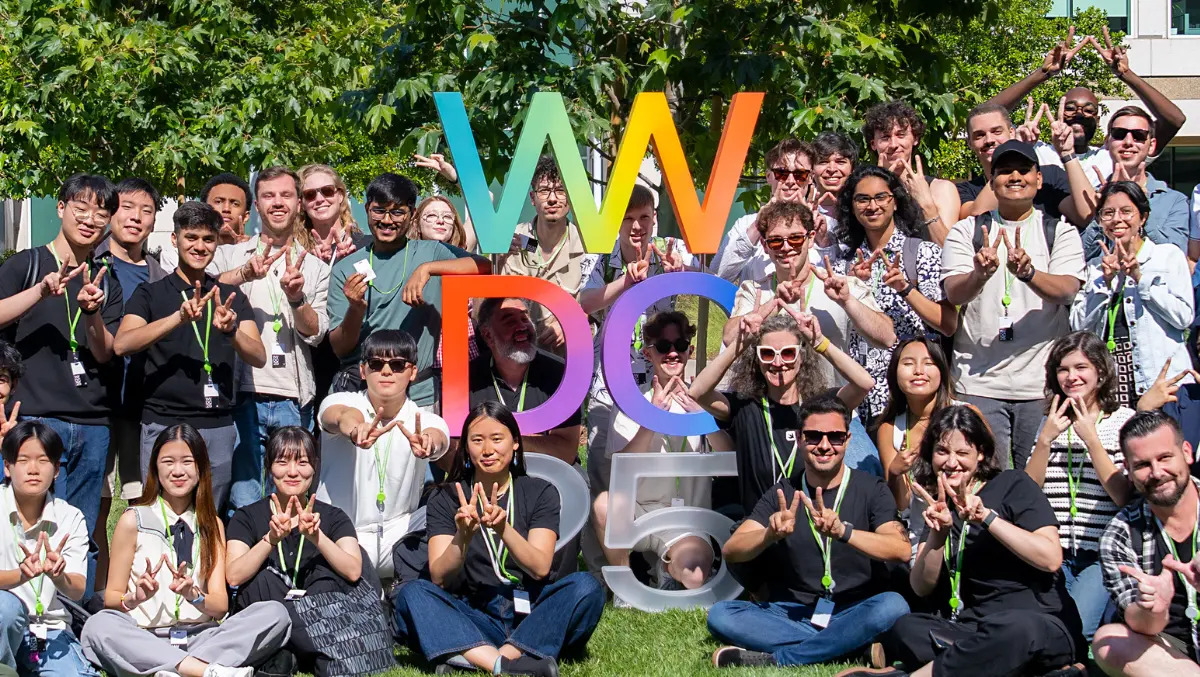
Apple has opened submissions for the 2026 Swift Student Challenge, inviting student developers worldwide to design and submit Swift-based app playgrounds that demonstrate creativity, social impact, inclusivity or technical skill.
Challenge scope
The challenge invites students to create an app playground that can be experienced within three minutes. Submissions must be self-contained and able to run without a network connection. Any resources used must be stored locally within the submission package. Entries must be provided as an app playground project file with a .swiftpm format compressed into a ZIP archive of up to 25 MB.
Each submission must be created individually. Templates may be used if modified by the applicant. Third-party open-source code, public-domain images or sounds may be included with attribution and explanation of use.
Apple will recognise 350 winners whose work demonstrates excellence in innovation, creativity, social impact or inclusivity. From this group, 50 Distinguished Winners will be selected and invited to Apple’s campus in Cupertino for a three-day programme. All winners receive one year of membership in the Apple Developer Program and a gift from Apple.
Eligibility rules
The challenge is intended for students developing software skills. Applicants cannot be employed full time as professional developers. Participants must meet minimum age requirements defined by country or region. The minimum age is 16 in the Philippines, Germany, Malaysia, Netherlands, Poland, Romania, Singapore and Slovakia. Other regions have thresholds of 13, 14 or 15 depending on jurisdiction.
Applicants must also be registered with Apple as a developer or hold membership in the Apple Developer Program. They must meet at least one academic eligibility condition. These include current enrolment in an accredited academic institution or official homeschool equivalent, enrolment in an Apple Developer Academy or STEM educational curriculum, or recent graduation from secondary school with pending or confirmed admission to higher education. Graduates of accredited institutions remain eligible for up to 90 days after completion, and recent secondary-school graduates remain eligible for up to six months.
An individual may receive a Swift Student Challenge award up to three times. Distinguished Winner status may be granted once.
Development tools
Entries must be built using Swift Playground 4.6 or Xcode 26 or later. Both environments support creation of app playgrounds for Apple platforms. Swift Playground enables direct app creation workflows on supported devices. Xcode supports app playground creation through the iOS App Playground project type.
Participants may incorporate Apple Pencil input where relevant. Apple provides learning resources through the Develop in Swift tutorials. These materials introduce the app design process across discovery, prototyping, validation and iteration stages. They also cover interface design and functional implementation.
Developers may explore additional topics such as machine learning, artificial intelligence and spatial computing where relevant to the app’s purpose. Apple positions these resources as preparation pathways for participants learning application development on its platforms.
Community support
Apple promotes preparation through Swift Coding Clubs. These programmes aim to help students learn app development skills and collaborate with peers while preparing submissions. Apple also directs participants to the Apple Developer Forums to ask questions and discuss challenge requirements. Applicants are instructed to use the Swift Student Challenge tag when posting technology-specific questions.
Educators are provided with teaching resources to support classroom participation. Apple offers an educator guide aligned with the Develop in Swift tutorials. Additional materials are available through the Apple Education Community to assist teachers integrating app development into curricula and encouraging student participation in the challenge.
Submission process
Participants must submit an app playground built in Swift Playground or Xcode that can be experienced within three minutes. Apple requires all content in the submission to be in English. Submissions are evaluated offline, which requires that all functionality and media be included locally in the project archive.
Apple states that the challenge is designed to enable students to demonstrate coding ability through practical application projects. The company positions the programme as an opportunity for students to apply development skills to issues relevant to their communities and personal interests.
Submission period
Submissions for the 2026 Swift Student Challenge are open until 28 February 2026. Apple states that students may use Swift to build apps addressing problems important to them and participate in a global developer community centred on the Swift programming language.