
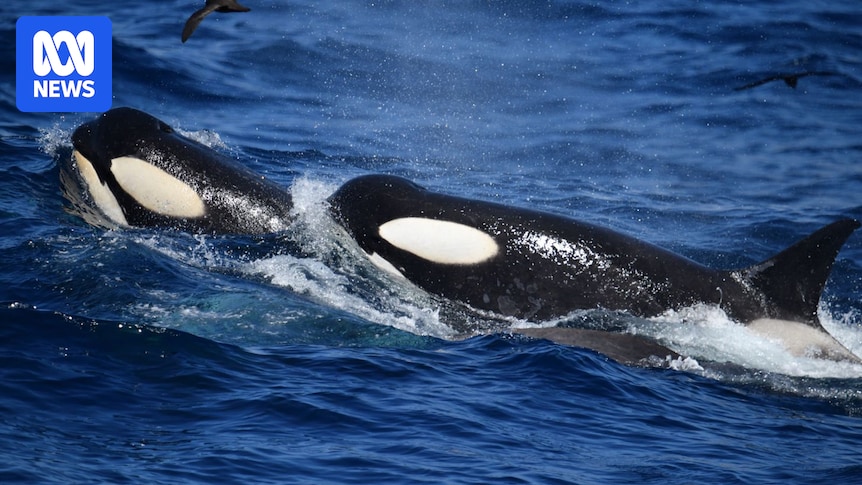
A tour group visiting Bremer Bay Canyon off Western Australia’s south coast has reported what is believed to be the first sighting of Antarctic type B killer whales in the area.
The canyon, about 500 kilometres south-east of Perth, is a feeding hotspot frequented by Bremer Canyon killer whales in the summer, but rarely visited by Antarctic killer whales.
Killer whales are classified into several distinct ecotypes, which have unique behaviour, diet and dialect.
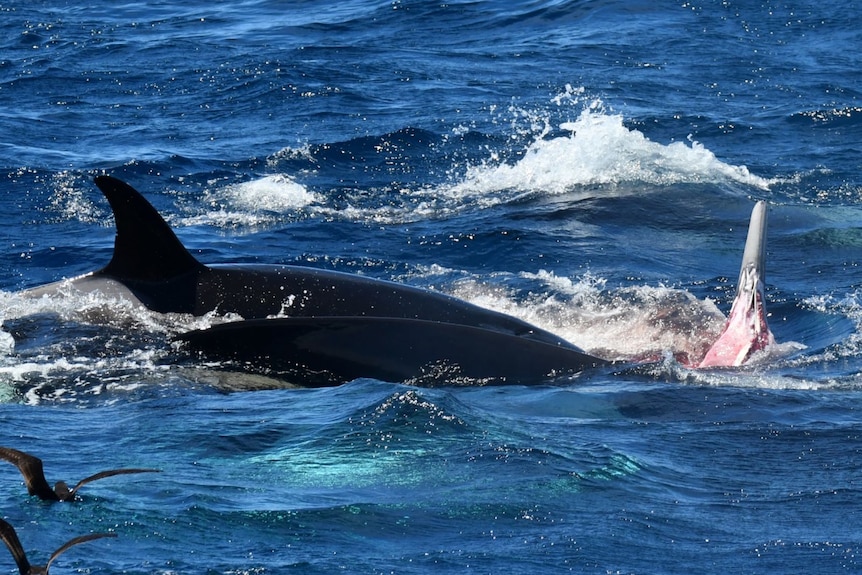
Killer whales eating a beaked whale in the Bremer Bay. (Supplied: Whale Watch Western Australia)
It could also be the first documented interaction between these two different ecotypes in Australian waters, according to Whale Watch Western Australia owner Gemma Sharp.
Ms Sharp said the tour had been watching a group of about 18 local killer whales hunt a beaked whale on Thursday.
“They had been feeding for about half an hour when all of a sudden we had four completely different-looking orcas surface right on the bow,” she said.
“It was at that moment that they surfaced that we noticed Queen, the matriarch of the Bremer orca family we know, move all of her pod members together really closely and move away from the area.
“‘She actually left what remained of their beaked whale meal behind, near the surface, and these four orcas came in, grabbed that and began to consume it.”
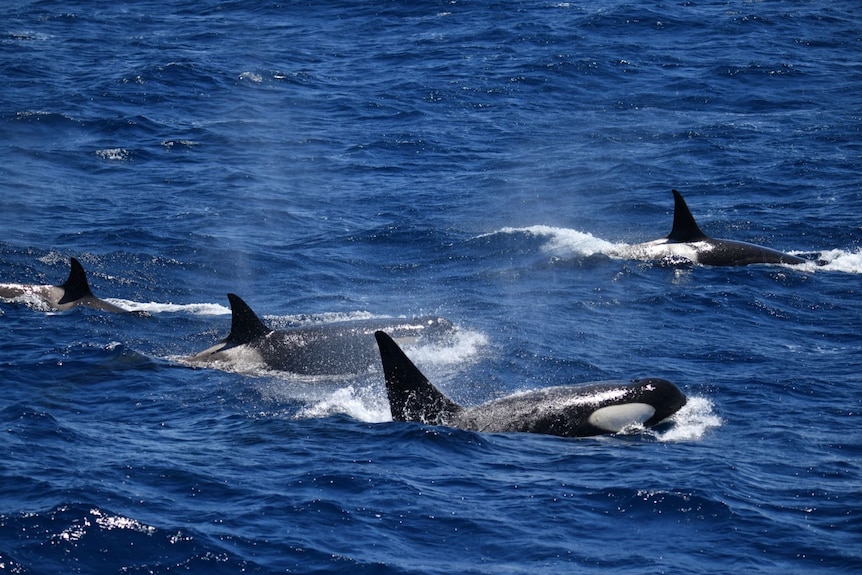
Antarctic type B killer whales are known to travel into warmer waters to clean themselves. (Supplied: Whale Watch Western Australia)
Ms Sharp said the difference in appearance was noticeable.
“They have almost a dusty appearance when they come up from Antarctica because their skin is quite grey and it has a lot of that algae or diatoms on there,” she said.
“They have more of a bulbous melon on the top of their head there, that looks very different; their eye patches are enormous.”
Ms Sharp said further research and genetic testing would be needed to confirm the sighting.
“Even though they appear to be the type B orca, genetically, unless you get that tested and studied, you still won’t know exactly where they’re from,” she said.
A similar sighting of a pod of what was likely to be the type C or Ross Sea ecotype of orca was reported at Bremer Canyon in 2022.
Interesting insights
Ms Sharp said that although the encounter was brief, it provided some interesting insights.
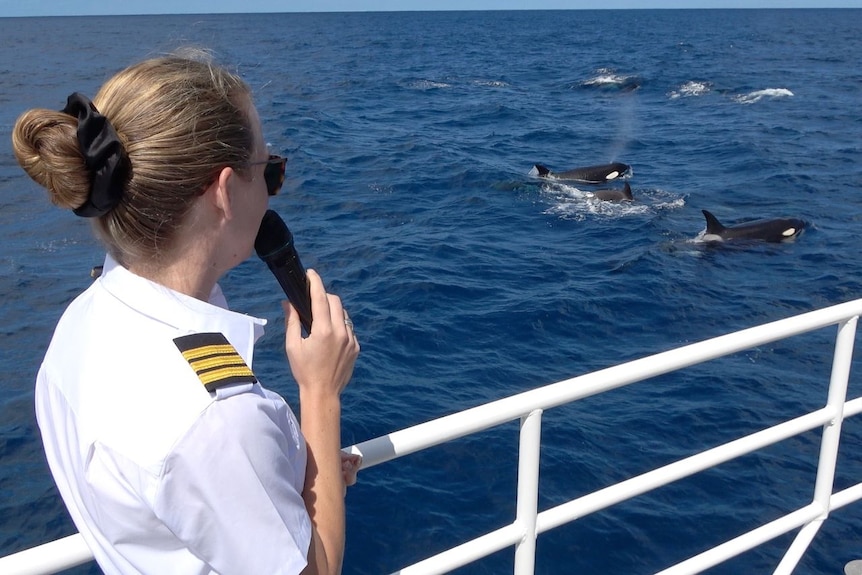
Gemma Sharp says those onboard were able to see the difference between the two ecotypes. (Supplied: Whale Watch Western Australia)
“It’s really interesting and certainly answers the question we had earlier in the season as to who had caused that scarring and wound on Queen’s back,” she said.
“We suspect perhaps it is this ecotype, rather than the Bremer Bay orcas, in the way she responded when they approached her.”
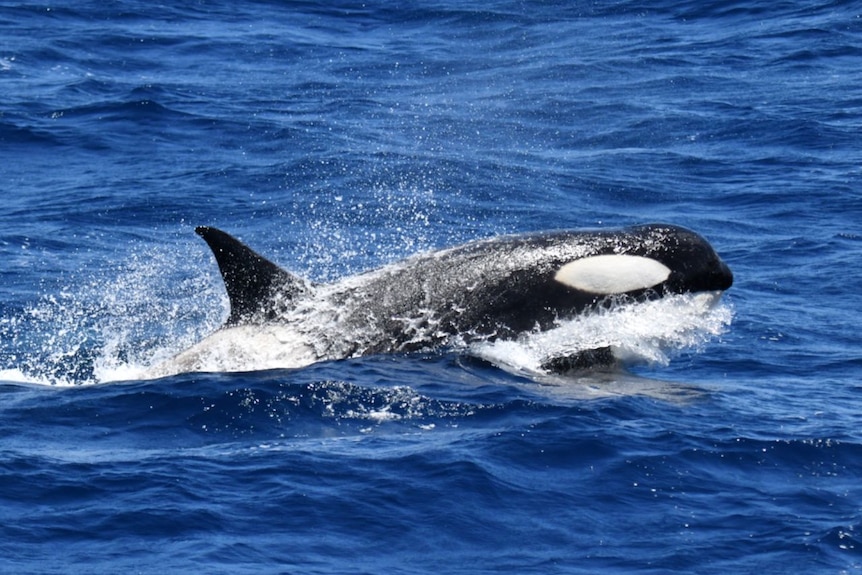
Recently published research indicates mating between different ecotypes of killer whales. (Supplied: Whale Watch Western Australia)
John Totterdell from the Cetacean Research Centre said Antarctic type B orcas often travel to warmer waters for health reasons.
“Down in the ice, they get covered in diatoms and they lose condition,” he said.
“It’s very good feeding down there, but it’s not the best place to hang for too long, so it’s been proven that they do migrate out, clean themselves up and then go back.”
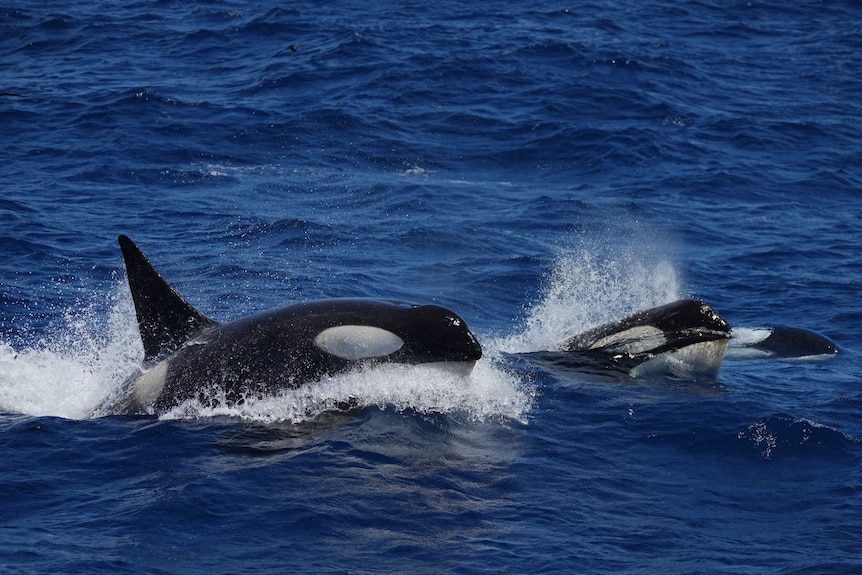
The group of what appears to be Antarctic type B orcas included a calf. (Supplied: Whale Watch Western Australia)
Mr Totterdell said the sighting was timely in relation to research the CETREC team published last year.
“That discusses admixture increases in local killer whales or some of the killer whales at Bremer [Bay], which implies there’s been some mating going on quite recently with animals from the ice, that is [Antarctic] type Bs or type Cs,” he said.
“We’ve just previously got genetic evidence that there’s mixing, that’s there’s genetic overlap, so it’s just wonderful to have the sighting to validate that.”