
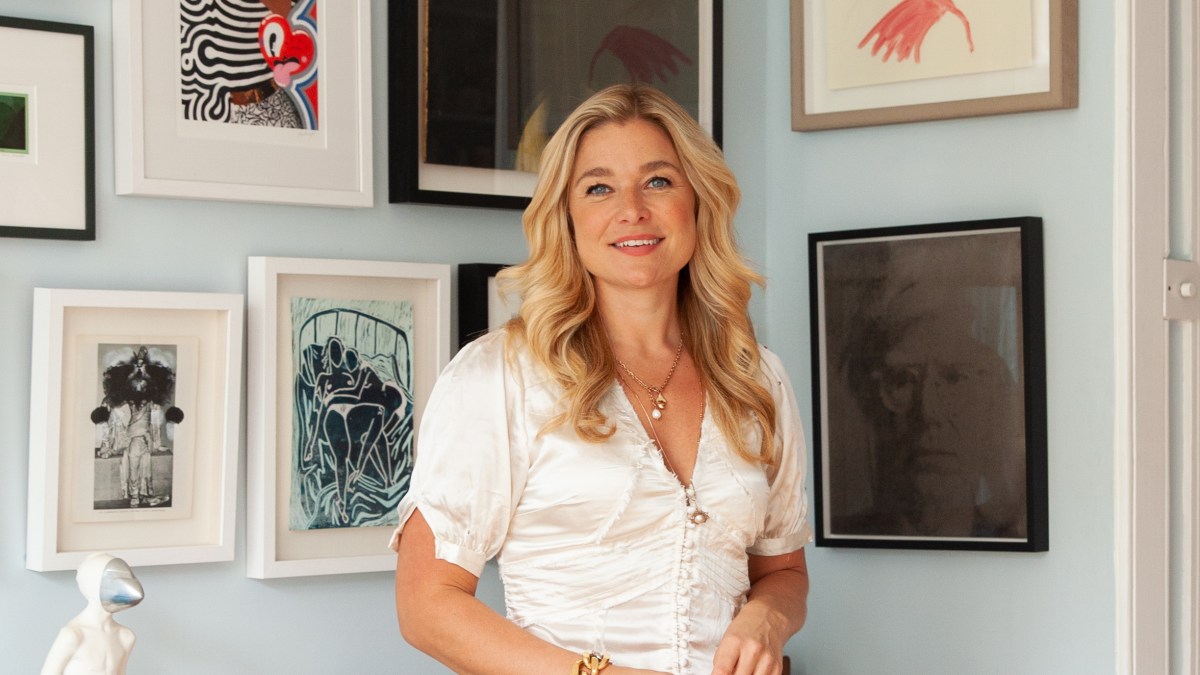
I did not grow up in a rarefied world. I went to a local comprehensive and, in a pre-internet age, I did what everyone else did: played until dark in the street, listened to CDs and watched Tony Hart, the brilliant art teacher, on the telly. I made art all the time and slowly, through a few good books, found myself learning about famous works.
After studying art history I worked at the British Museum, where I often felt out of place. I had zero connections in the field. I remember being asked a few times, “What does your father do?” and replying “When?” while thinking, What does he do when … he wakes up? I spent years learning how to fit in.
Now, as curator of Soho House’s global art collection, I have spent more than half my life looking at art and I’m certain that it’s made me more receptive to the thoughts and experiences of people I might never meet, ancient and contemporary. It’s a shame that so many of us miss out on this. I can’t count the times people have said something to me along the lines of, “I don’t know anything about art but I do like David Hockney.” No one is embarrassed when they say, “I don’t know anything about music but I do love Coldplay.”
This, then, is a call to arms, an invitation to bring art into your life. Along with the artist David Shrigley — whose witty paintings you see here — I want to decode a world that can seem pretentious and intimidating. Let’s dive in. The water’s lovely.

• Inside the family home of the woman who curates art for Soho House
How to talk about art you don’t like
You don’t have to like everything. In fact you need to give yourself permission to actively dislike things. You do it with music, you do it with movies — do it with art.
My number one ick is the 18th-century Venetian Canaletto, who could not stop painting his home town. There are loads of his canals in British museums and I dislike them all. I feel similarly about Antonio Canova, who sculpted in the whitest of white marble and created objects that say nothing. You can find his snooze-inducing art across Italy, in the Met in New York and in the Louvre.
Take responses like these and use them: it will give you more confidence in your own opinions. For instance, why am I so frustrated by Canaletto? I lived in Venice for a while when I was at university and as a tutor in my early twenties. Having spent so much time there I’ve always felt his paintings came up short. I was almost angry at them for failing to transmit Venice’s magnificence.
But Canaletto isn’t really to blame: he had bills to pay and there was no such thing as a museum when he was alive. He sent all his paintings to their owners and didn’t intend for them all to meet up to irritate me with their aristocratic uniformity.
There is plenty of art that will bore you. No one talks about it very much but it’s par for the course. Just keep moving.
• David Shrigley: ‘At art school I thought printmaking was boring’
How to look at Van Gogh’s Sunflowers
There are more films and TV programmes about Van Gogh than any other artist but the most compelling is a three-minute clip on the Doctor Who YouTube channel. In Vincent van Gogh Visits the Gallery, a curator (Bill Nighy) gives a rousing overview of the artist’s legacy without knowing that a time-travelling Vincent is there, crying tears of joy.
On the surface Sunflowers is a straightforward picture. We know exactly what it depicts (15 flowers in a pot), when it was painted (one week in August 1888) and where Van Gogh installed it (a guest bedroom intended for Paul Gauguin). Yet I have always found it mysterious, for two reasons. First, many people have no idea you can see this for free any day of the week. (Go to the National Gallery an hour before closing to be among the last people there.) Second, it is difficult to pinpoint the source of its profound impact. It is not a traditionally beautiful work. The flowers are painted rather coarsely and the scene is devoid of other interest. Some of the flowers are past their best.
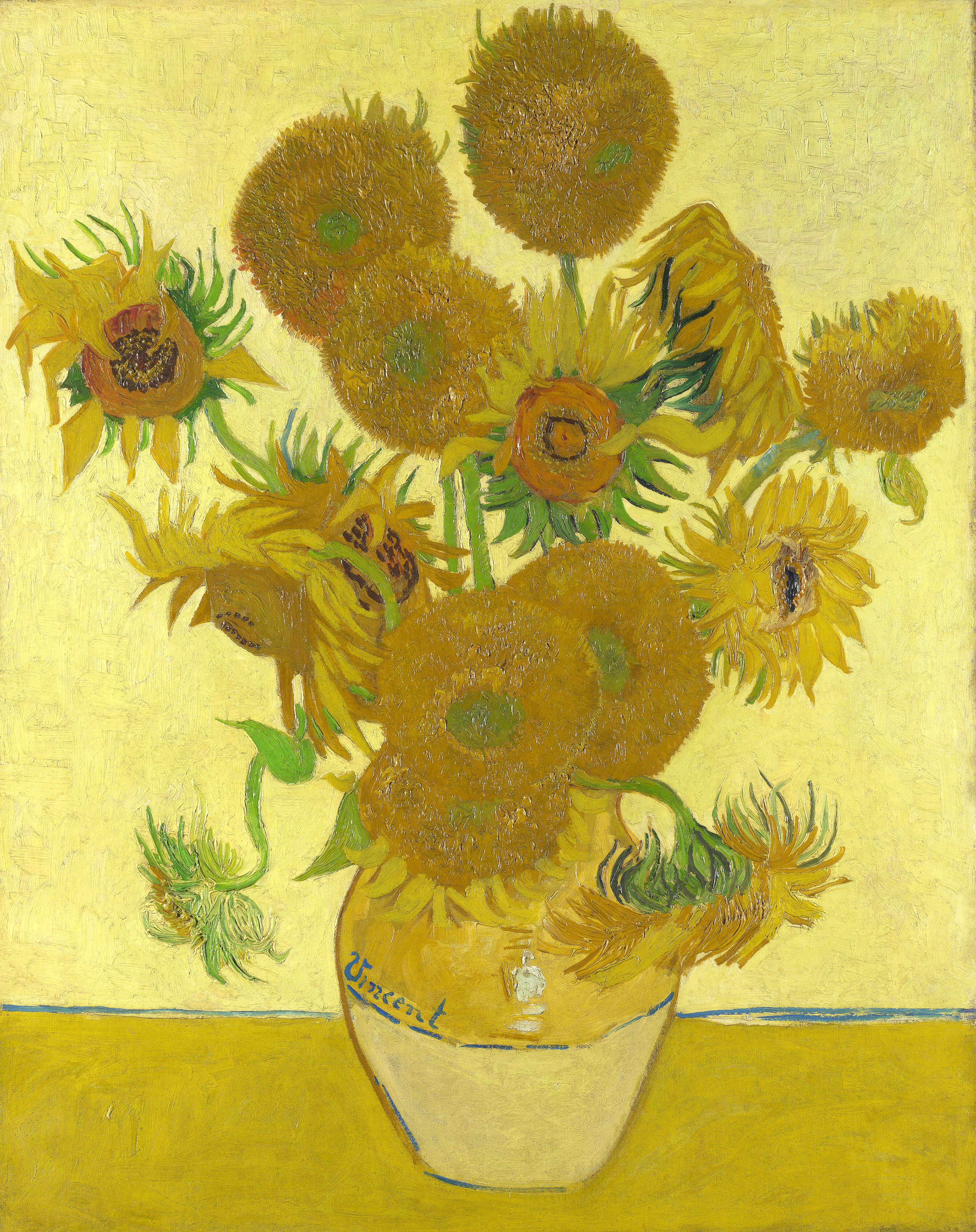
Van Gogh’s 1888 Sunflowers is free to see at the National Gallery
ALAMY
But the painting’s honest simplicity means it has not aged: sunflowers still look like that and so do pots. Van Gogh selected his colours very carefully. He was making a radical gesture by reducing his palette, positioning the sunflowers against a yellow background and in a yellow vase. The painting is a symphony of thickly painted yellow tones, some muddied with brown, some bright like a canary, others almost golden. He used a beautiful bright blue to sign his name in a slightly shaky line. That signature was painted more than 130 years ago but when I look at it I feel he has just stepped out of the room.
How to look at art with a toddler
When my daughter was two I devised a foolproof system. It worked in London galleries, which I know well, but crucially it worked everywhere. I hope it works for you. My system:
• Ensure the child is well-rested, fed and watered.
• Before you leave write a simple checklist in colourful pens (with a big tick box next to each item) of things you are going to find at the gallery.
• Bring a pencil (not a pen, unless you like to live dangerously) to tick them off.
• In a historic collection, you should find:
– dog
– lamb
– horse
– bird
– baby
– blue sky with clouds
– bouquet of flowers
– wild-looking man
– sad-looking woman
– someone with no clothes on
Questions to ask throughout:
– What can you see? Describe the artwork to me.
– Do you like it?
– Which one do you think looks funny?
– Which one do you think looks a little scary?
– Do you need a wee?
 How to buy inexpensive art
First you need to ask yourself: can I afford this? Do I trust the sellers? Will I still love it next year? You wouldn’t buy a car, a designer handbag or a house without asking the same things. Every week I am asked where to buy less expensive work (£500 or less). Here are my tips.
Open studio weekends
Search Google Maps for artist studio blocks near where you live. If you can get to a big city such as London or Paris, you will be falling over for open studio events, where there is no pressure to buy, but they also happen in smaller cities. They tend to be busiest on opening night but quiet on a Sunday.
Emerging galleries
These are mostly led by young dealers representing strong emerging talent. For a long time “emerging” meant “young” but today there is more awareness that you can emerge late in life. In London I recommend Sid Motion, Soft Opening, Ginny on Frederick and Union Pacific.
Museum gift shops
The best UK example is the House of Voltaire, a small gallery, café and studio complex in south London. The Whitechapel Gallery in east London sells work by a great line-up of artists. And Tate Modern runs Tate Edit, which commissions contemporary artists to make multiples. Many of these sell out quickly so it’s worth joining Tate’s mailing list.
Art fairs
The Other Art Fair is thoroughly democratic, with artists presenting their own work in friendly booths and live music. Similar in spirit is London’s Art Car Boot Fair, a quintessentially British affair where artists make inexpensive items that are on sale for one day only.
Graduate shows
Look up the dates on art school websites. You don’t usually need a ticket.
On Instagram
During the pandemic the British painter Matthew Burrows developed the Artist Support Pledge, whereby artists all over the world could sell their art on Instagram and the public could easily find art for £200 plus postage. Every time an artist made £1,000 they committed 20 per cent to purchasing the work of another artist using the hashtag #artistsupportpledge. Search for the hashtag to get involved.
How to make your dog more cultural
A great way to undermine the snootiness of art world folk is to make your dog more cultural. With a dog as your companion you are asserting a “take me as I am” attitude. Plus there are plenty of places where you can include your four-legged friend. The following tips are designed for dogs but could be adapted for another pet.
If the opportunity arises to name a dog, give it something that conveys that this ain’t no philistine pup. Take a trip to your local gallery and find a name that resonates. Rothko, Kahlo and Riley are all great.
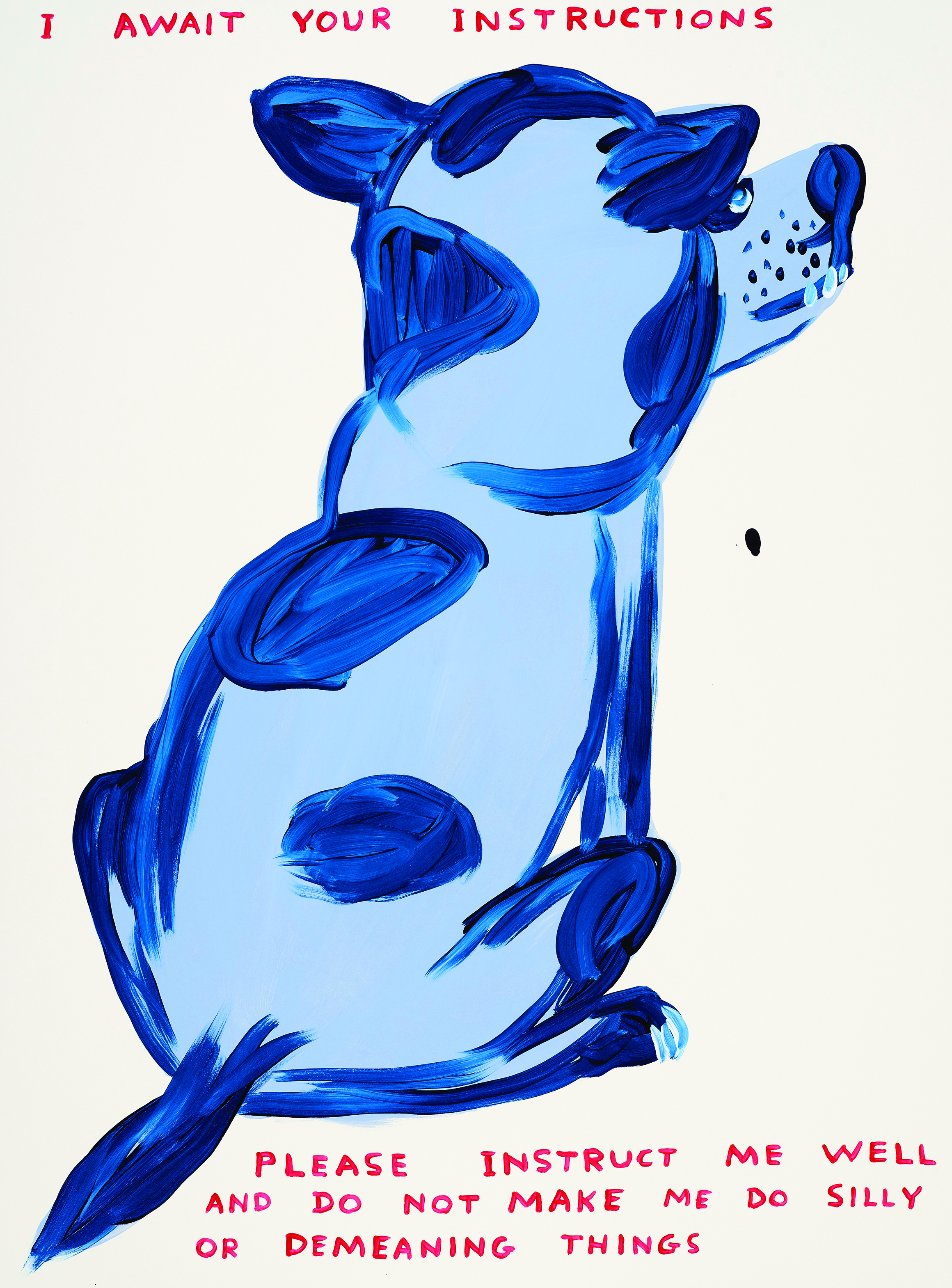
Many galleries have extensive grounds. In south London the gardens of the Horniman Museum boast many erudite-looking dogs. Also in London is the excellent public sculpture walk, the Line, which connects the Queen Elizabeth Olympic Park and the O2, is 4.8 miles long and very much welcomes dogs. In New York an organisation called dOGUMENTA (a play on Documenta, the art gathering that happens every five years in Germany) hosts exhibitions for dogs — the most New York thing ever.
Next time you visit a museum take a good picture of all the animals you see, then observe what your dog responds to when it looks at the photos on your phone. If you own a dog that howls at paintings of cats, you are doing brilliantly. Dogs also respond well to images of other canines.
When showing your dog art, remember they don’t see as much colour as humans: they are limited to blue, yellow and shades of grey. They’ll probably like Shrigley’s work so you can show them this drawing if you like.
• Read more art reviews, guides and interviews
What not to say to an artist
Artists are sensitive creatures and I have learnt over the years (and from my collaborator, Shrigley) that there are some things to avoid saying. To improve your art chat here are some things not to say and more diplomatic suggestions.
“Your work is exactly like X’s work”
Better would be, “I see something of X in your work — are they an inspiration for you?”
“This looks like it didn’t take very long”
Instead try saying, “It has such a fresh/energetic/spontaneous quality to it.”
“Have you been able to sell any of these?”
Just say, “How has the work been received?”
“Am I supposed to see something?”
When referring to an abstract painting, a gentler thing to ask is, “What are your inspirations?”
“Hmmm”
Silence or grunting might be your strategy when you don’t know how to express what you are thinking but it could be read as indifference. Instead either be honest and try, “I am not sure how to express what I think,” or move the discussion away from the work by asking something like, “Are many of your friends artists?”
“My five-year-old could have done that”
Ah, this old classic. Just say, “It’s deceptively simple and has a really great energy.”
“I just really don’t get this modern stuff”
Why not ask, “I’d love to get my head around this, can you talk me through it?”
“I like it but would prefer it in blue. Let me show you a picture of my sofa.”
Just stop.
How to Art by Kate Bryan with illustrations by David Shrigley (Cornerstone £16.99). To order a copy go to timesbookshop.co.uk. Free UK standard P&P on orders over £25. Special discount available for Times+ members.