
Lesley Brooks, 46, Luke Shaw and Jacob “Pudding” Coady, both aged 24, died in the December 7, 2024, crash. Jeremy Capper was seriously injured, losing an arm and a leg.
Thompson claimed that moments before the crash he had dropped his phone and was reaching down to pick it up when he also began sneezing.
He told police that as he reached down – “bang” – and when he sat back up and opened his eyes there were “bikes everywhere”.
Months later, Thompson told a pre-sentence report writer he wanted to speak to those affected by his offending to say he was “deeply sorry”.
However, any chance of his remorse being genuine was undermined by his attempt to minimise his actions by maintaining it was an accident and he was not responsible for what occurred.
Lesley Brooks, 46, died in the triple fatal crash along SH1 near Taihape in December 2024. Photo / Supplied
In the same interview, he told the report writer he disagreed he was under the influence of drugs at the time of the crash and described his cognitive ability as fine.
“I find that a staggering position to maintain given the knowledge of the extremely high level of both methamphetamine and diazepam in your system,” Judge Justin Marinovich told Thompson at his sentencing.
The judge added the only person Thompson was fooling was himself.
Thompson was sentenced on three charges of driving with a high-risk drug level, causing death, and a fourth count of the same but causing injury.
He was sentenced in the Whanganui District Court on January 16. Judge Marinovich’s sentencing notes and the summary of facts were released to NZME on Friday.
The documents highlight Thompson’s lengthy criminal history, which includes six years’ imprisonment in 1995 on two aggravated robbery charges and three years and two months in 2012 for possessing methamphetamine for supply.
NZME has previously reported that Thompson was once acquitted of a murder charge relating to the death of elderly doctor Howard Teppett in Foxton 32 years ago.
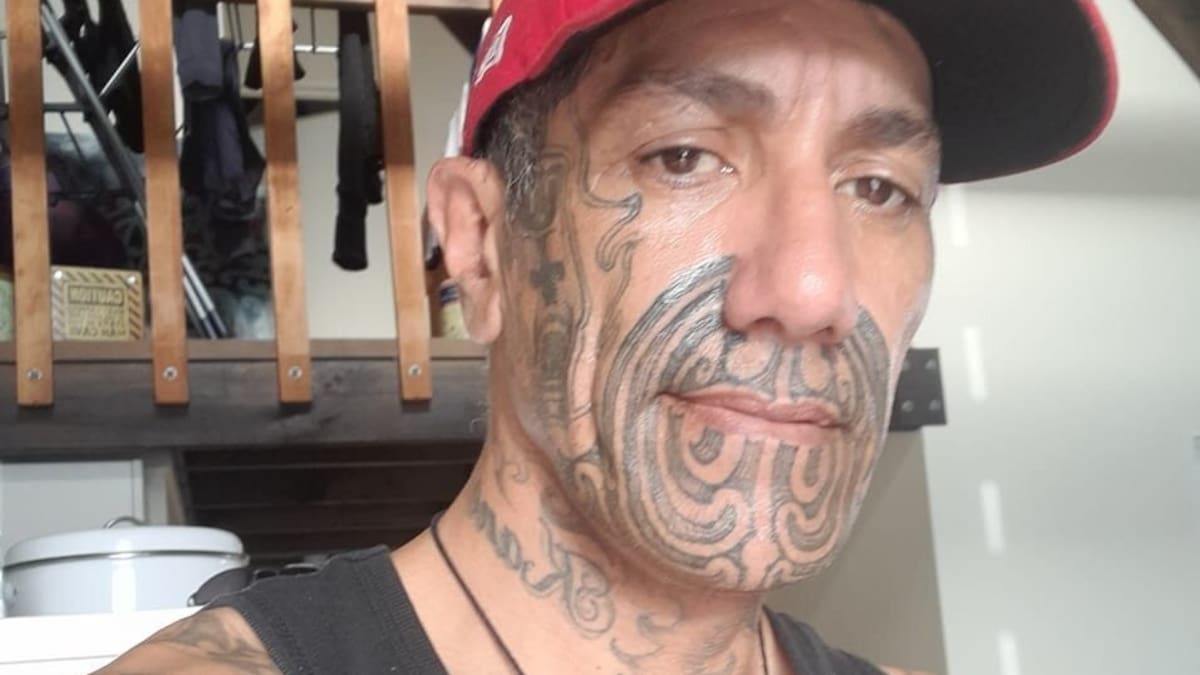
Garth Timokina Thompson has a long history of criminal offending. Photo / Supplied
The 79-year-old was viciously beaten with an iron bar and died from severe injuries.
Thompson and his co-offender were charged with murder. The co-offender was later found guilty of manslaughter, while Thompson was acquitted.
However, his 1995 sentence for the two aggravated robbery charges related to Teppett’s home and the home of Teppett’s neighbour.
Three fatalities and the sole survivor
According to the documents from the recent sentencing, Capper, the president of the Sulphur City Motorcycle Club in Rotorua, had been staying with members of other clubs at a campground in Mangaweka.
About 7.30am on the day of the crash, Capper, Brooks, Shaw and Coady rode their motorcycles from the campsite to Taihape for breakfast.
After breakfast, they headed back to the campsite, riding in a staggered formation, with Capper leading the group.
But as they came to a long sweeping right bend in the road, Thompson’s vehicle swooped into the opposing lane.
Capper tried to take evasive action but Thompson’s ute collected the side of his bike. He was thrown about 80m across the road on his stomach, losing his left foot in the process.
The other three were unable to avoid Thompson.
His ute ploughed into Brooks and Coady. The front forks of one of the motorcycles were later found attached to the front of the ute and the bikes were found entangled.
Jeremy Capper, pictured with his wife Tania Capper, was the sole survivor of the fatal crash. Photo / Mike Scott
Thompson then collided with Shaw, who was thrown into the centre of the road, before his ute finally crashed into a ditch.
Brooks and Coady died before emergency services arrived at the scene, while Shaw died while receiving first aid.
Capper was flown to Wellington Hospital in a critical condition and then to Hamilton, where he was in an induced coma for almost six weeks.
He suffered many injuries as a result of the crash, losing an arm and a leg, and underwent multiple surgeries.
‘The ripple effect is massive’
In his sentencing notes, Judge Marinovich said Capper and many family members and friends of the victims had attended the hearing, filling two courtrooms and also watching remotely.
The judge said many victim impact statements had been read to Thompson, and described them as harrowing.
“People at another time, reading the statements or reading this judgment, will not understand the hurt that has been expressed today by so many.
“They, as has been said often today, are serving life sentences of hurt, struggle and pain. They have all lost beautiful, kind, loving family members and friends.
“Their hurt is extreme and their lives altered in the most unimaginable way.”
Judge Marinovich said Coady and Shaw, as young men, had so much to offer life and so much to experience.
“That has been taken.”
Brooks would not have the opportunity to celebrate her children’s successes, nor would they with her, or grow old together with her husband, Michael.
“Their dreams are but that.”
Luke Shaw and Jacob Coady were both 24 when they were killed in the crash. Photo / Supplied
Capper lived with the daily reminder of Thompson’s offending, Judge Marinovich said.
“Reliving what occurred, images of his mates, the noise, the smell, the impact.
“He has lost his mates, his dream job, ability to provide, to hold his wife, his independence. This pain and trauma are shared by his family and will be with them forever.”
Judge Marinovich said the ripple effect of Thompson’s actions was massive.
No personal mitigating factors
In sentencing him, he found Thompson’s level of culpability was high.
Thompson’s methamphetamine levels were in the range of three-and-a-half to five-and-a-half times greater than the high-risk level, and 17 to 27 times the tolerance legal limit.
His diazepam levels were two to three times greater than the high-risk level and four to six times higher than the tolerance legal limit.
Given Thompson was prescribed diazepam, the judge said he would have been aware of the risks with respect to driving.
He was also on his learner’s licence, without a supervising passenger, and had reached for his cellphone while driving.
The judge said Thompson should have felt the rumble strips as his ute continued to cross the centre line, yet there was no correction, indicating a high level of inattentiveness or inhibition.
Judge Marinovich took a starting point of 10 years’ imprisonment for the totality of Thompson’s offending, the maximum penalty for one charge of drug-driving causing death.
He then applied a six-month uplift for Thompson’s relevant convictions. He has six previous driving with excess breath alcohol convictions, and two of dangerous driving.
While the judge allowed 20% credit for Thompson’s guilty pleas, he found there were no personal mitigating factors that warranted a discount.
Defence submissions reported Thompson was disconnected from his iwi and wanted to re-establish his cultural heritage, but he had said the same seven years earlier when being sentenced on another matter and nothing had since changed.
The possible hardships on Thompson’s family and young children were also considered, but similarly, he had received warnings about the effects of his offending on his loved ones at a previous sentencing.
Judge Marinovich also did not accept that Thompson had shown any genuine remorse.
Thompson was sentenced to eight years and six months’ imprisonment with a minimum period of imprisonment of 50%, and was disqualified from driving for five years once released from prison.
The judge told Thompson his rehabilitation, if achievable, would require intensive efforts from him and professional input, and the community remained at risk until that occurred.
Tara Shaskey is an assistant editor and reporter for the Open Justice team. She joined NZME in 2022 and has worked as a journalist since 2014.