
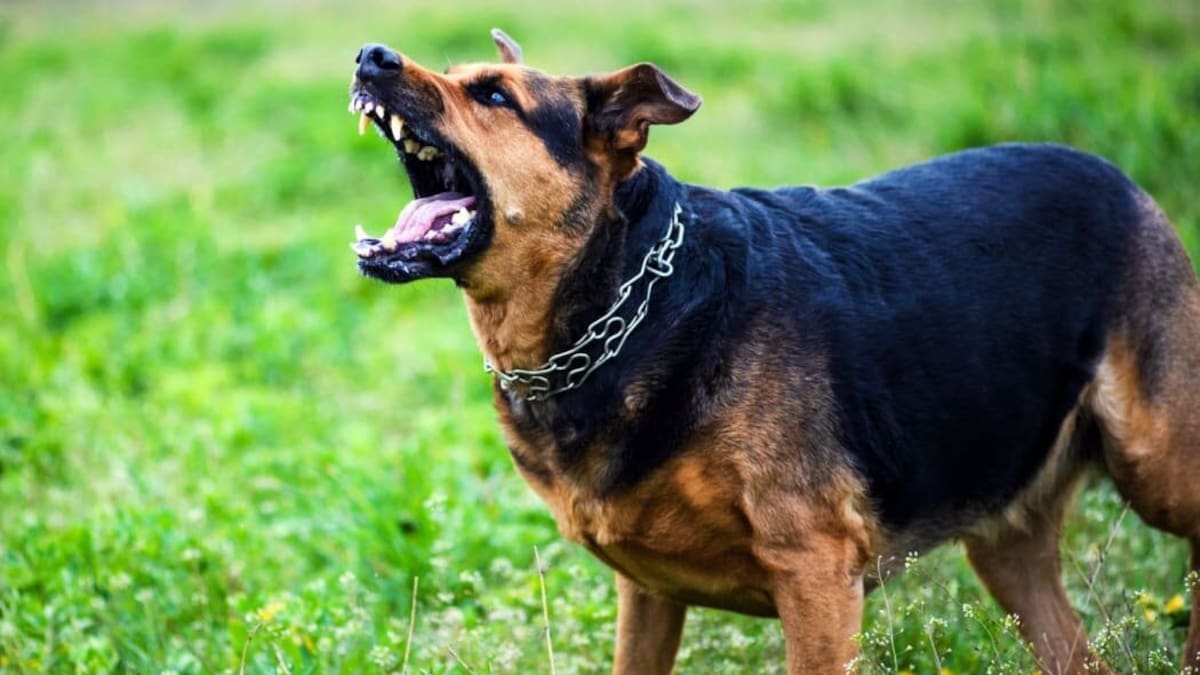
There are also growing calls for an overhaul of the 30-year-old Dog Control Act in the face of increasing attacks.
Yassaie said it is not just roaming dogs that are a problem, but also children around unsupervised or unfamiliar dogs.
“It’s really common, obviously, with all sorts of injuries they come in fits and starts, but it’s always common.”
While this week had already brought two surgeries caused by dog attacks for Yassaie, it has been an issue for a long time.
“A paper that some of my colleagues had written about dog bites quite a few years ago [showed] that there were 100,000 dog-related injuries over a five-year period between 2014 and 2019, and 3500 of those required hospitalisation, so it’s a fairly big problem.”
She said the severity of injuries can range greatly, but even minor injuries could have severe consequences.
“Typically, because children are affected so much, they are a small injury but they are a lifelong injury with a visible difference, usually on the face. So even though they’re small and easy to repair, they have long-lasting consequences.”
Some attacks were so bad people had lost parts of their faces, such as ears and noses.
“Really destructive tearing type injuries, which for at least one person I’ve seen in my career, the conversation was about things like face transplants, so they can be absolutely devastating.”
Yassaei said treating the injuries came with a number of difficulties.
“They’re multifactorial injuries. So there’s not just the lacerations of tissue, but there is the destruction and tearing forces of everything underneath. So things like nerves, muscles.
“There’s also the factor that a lot of the tissue that gets torn is devitalised, also doesn’t have a blood supply so you can’t necessarily repair that, you have to get rid of that and then reconstruct.”
She said contamination from the dog bite itself added an extra challenge to treating the wounds, as well as further contamination from the environment, such as soil.
“For the repair of them, usually for the big ones, it’s a multi-stage process where the first thing is cleaning the wounds, giving them a day to settle, just removing any of the dead tissue that you can’t use, and then coming back to reconstruct, which can be from one to multiple operations depending on the area and what’s injured.”
Most of the severe injuries Yassaei sees are from large dogs, such as pitbulls, shar peis, bullmastiffs and other crossbreeds within those types of animals.
“It’s just the nature of biology, really. They’re stronger, they have different types of instinctual behaviour and they can bring the most force and damage to people.
“We’ve always wondered whether there should be some sort of either registration programme or some rules around public access to these dogs to try and reduce risk. But I understand that comes with a lot of debate.”
She said a mandatory requirement to report dog bites and attacks as they come into hospitals could be a step forward in tackling the issue.
“The more data you have, the more you can accurately assess whether it is a breed issue, or it is a location issue or it is a training issue.”
Currently, data is available through ACC, which Yassaei said shows a correlation between areas of deprivation and dog attacks.
“When you look at the decile 10 areas compared to decile one, those in greater deprivation are much more likely to be admitted to hospital with a dog bite. So it is not only a medical issue, but a social issue as well.”
While most injuries occur among adults, she said children who get bitten are more likely to require hospitalisation and surgery.
“When they looked at it with regards to Māori and non-Māori, there’s a much higher rate of hospitalisation for Māori children compared to non-Māori.”
Like many others, Yassaei believes it is time to take a look at the current dog laws.
– RNZ