
COLUMBUS, Ohio (WSYX) — As Earth’s orbit becomes increasingly cluttered with thousands of satellites and rocket fragments, a Cedarville University professor is using artificial intelligence to help clear the view.
Dr. George Landon, head of computer science and cyber operations, is partnering with the U.S. Air Force Academy to improve how space junk is identified using ground-based telescopes. The task is notoriously difficult, as debris often appears as a single, noisy pixel moving at high speeds.
“AI can be great for specific problems like this one,” Landon said. “But when you’re working with real-world data sets, it’s never straightforward.”
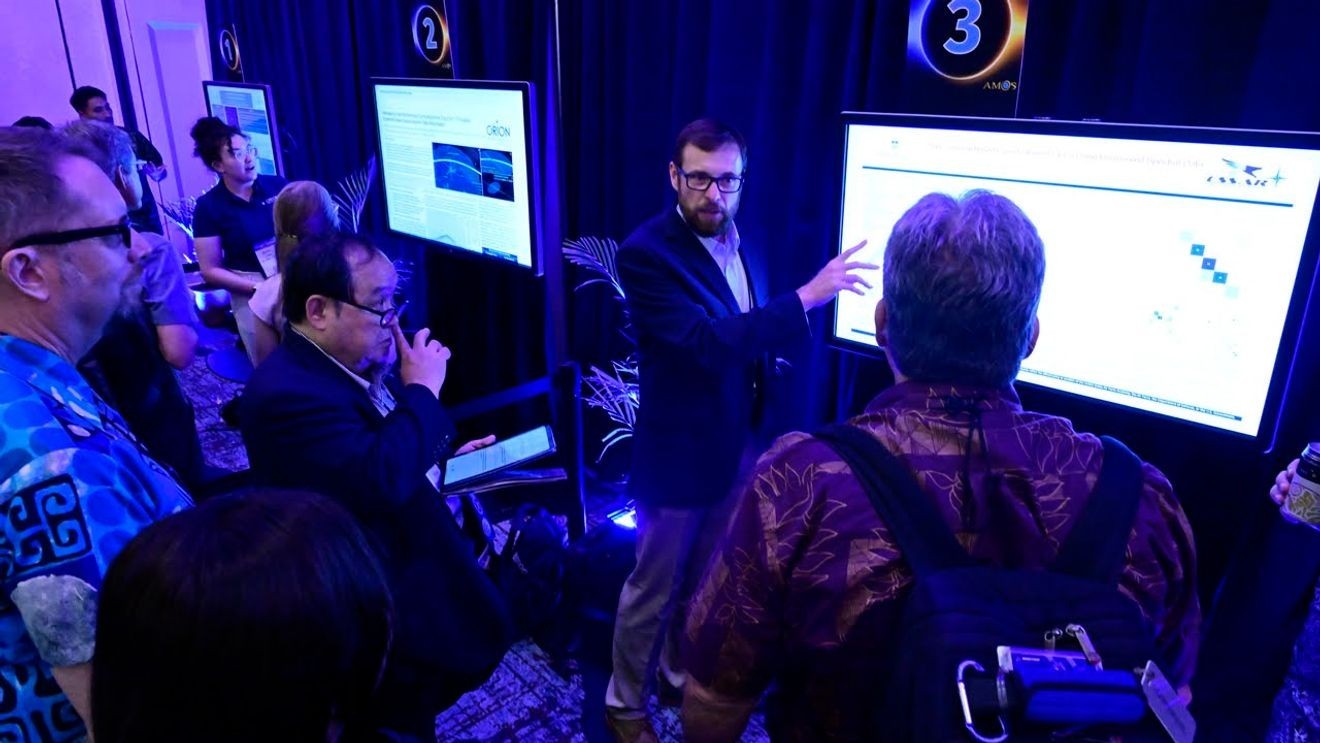
Landon recently presented his research to organizations like NASA, Amazon, and SpaceX at the 2025 AMOS space surveillance conference. He noted that while specialized AI can classify objects, the process involves constant trial and error.
“Methods that looked great on paper often failed in their real-world applications,” Landon said.
Landon is now bringing those “messy” real-world results into the classroom to teach students AI literacy. He wants future developers to understand both the power and the limitations of the technology.
“We don’t want students to be scared of AI, but we also don’t want them to have a higher view of it than they should,” Landon said. “We want to prepare them to use it… but to be skeptical of it too.”
Two students, Doxa Kudari and Elijah Lewis, have joined the research to help develop AI that tracks how rocket bodies move in orbit—work that could eventually guide debris removal efforts and prevent collisions.