
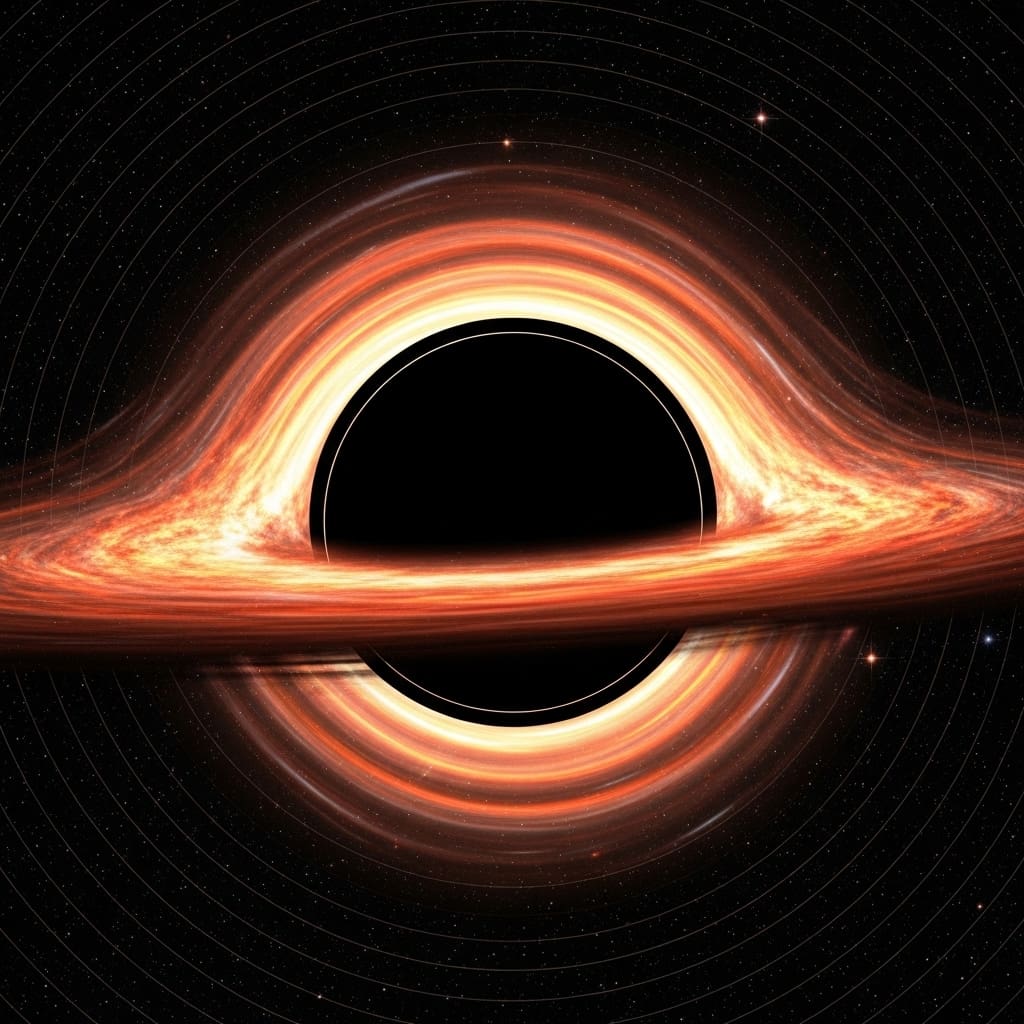
Researchers have investigated the fundamental limits of knowledge regarding simultaneous measurements in quantum mechanics, a cornerstone differentiating it from classical physics. Rui-Jie Yao and Dong Wang, both from the School of Physics & Optoelectronic Engineering at Anhui University, present a novel generalized entropic uncertainty relation (EUR) for multiple measurements, achieving a demonstrably tighter bound than previously established formulations. This work extends to an examination of the proposed EUR within the extreme gravitational environment of a Schwarzschild black hole, revealing how multipartite coherence and entanglement evolve in curved spacetime. Notably, the authors establish an exact equivalence between entanglement and the -norm coherence for arbitrary -partite Greenberger-Horne-Zeilinger-type (GHZ-type) states, and demonstrate that increasing Hawking temperature leads to diminished coherence alongside a stable maximum in measurement uncertainty. These findings significantly advance our understanding of non-classicality and quantum resources present in black holes.
This work introduces a generalised mathematical formulation applicable to multiple, simultaneous measurements on many-body quantum systems, surpassing the precision of existing uncertainty relations. Researchers rigorously tested this new bound by applying it to the intensely curved spacetime surrounding a Schwarzschild black hole, demonstrating its superior performance in quantifying uncertainty in these conditions. The study reveals a fundamental connection between multipartite coherence, a measure of quantum ‘sameness’ between particles, and entanglement, proving their equivalence for specific Greenberger-Horne-Zeilinger-type (GHZ-type) states, regardless of the number of particles involved. This achievement builds upon the established uncertainty principle, which distinguishes quantum mechanics from classical physics by fundamentally limiting the precision with which certain pairs of physical properties can be known. The newly derived entropic uncertainty relation leverages Holevo quantities, a measure of information transfer in quantum systems, to achieve a more refined understanding of quantum limits. By examining the behaviour of quantum coherence and entanglement near a Schwarzschild black hole, the research illuminates how these quantum resources are affected by strong gravitational fields. Specifically, the findings demonstrate that as the Hawking temperature increases, quantum coherence diminishes while measurement uncertainty rises to a stable maximum. The research team’s work not only advances the theoretical understanding of quantum uncertainty but also provides new tools for exploring the interplay between quantum information and gravity. This improved EUR offers a more accurate framework for analysing quantum systems in curved spacetime, potentially leading to insights into the nature of quantum gravity itself. The demonstrated equivalence between entanglement and a specific type of coherence for GHZ states represents a significant conceptual link, suggesting a deeper relationship between these fundamental quantum properties. Ultimately, this study contributes to a more complete picture of non-classicality and quantum resources within the extreme conditions found near black holes, paving the way for future investigations into the quantum nature of spacetime. A generalised entropic uncertainty relation (EUR) forms the basis of this work, representing a significant refinement of existing formulations. The research establishes a novel approach to quantifying uncertainty, moving beyond traditional bounds by considering multiple measurements simultaneously. The generalised EUR was derived through a meticulous summation and normalization process applied to inequalities involving quantum memory B1 and a fixed measurement M1 belonging to the set S1, iteratively repeated for all measurements within S1 and extended to subsequent subsets S2 through Sn, ultimately yielding the consolidated generalised EUR. Coefficient analysis played a crucial role in defining the precise mathematical form of the derived inequality. The complete set of coefficients, detailed in Table I, arises from the combinatorial structure inherent in pairwise summations within the system, governing the weighting of uncertainty, logarithmic components, conditional entropies, and Holevo quantities. This detailed coefficient analysis ensures the accuracy and tightness of the final EUR, demonstrated through investigations into the behaviour of multipartite coherence and entanglement within the curved spacetime of a Schwarzschild black hole, modelled using sub-matrices B and C, where b2q and c2q were identified as non-zero to simplify calculations. Analytical expressions were a tripartite Greenberger-Horne-Zeilinger-type (GHZ-type) state and a tripartite Werner state, allowing for a precise understanding of how coherence and entanglement are affected by the extreme gravitational environment near a black hole. Researchers have established a significantly tighter bound for generalised entropic uncertainty relations (EURs) applicable to arbitrary multi-measurement scenarios, surpassing existing bounds demonstrated through analysis within the context of a Schwarzschild black hole. The study rigorously derives this improved bound, revealing its superior tightness in describing uncertainty in black hole environments and providing insights into the evolution of multipartite coherence and entanglement in curved spacetime. Specifically, the work establishes an inequality relating entropy, offering a more precise quantification than previously available. Further inequalities are then derived for subsequent measurement subsets, building towards a comprehensive understanding of uncertainty in multi-partite systems. Notably, the research demonstrates an exact equivalence between entanglement and the -norm coherence for arbitrary -partite Greenberger-Horne-Zeilinger-type (GHZ-type) states, clarifying the fundamental connection between these two crucial quantum properties. Investigations into C) + 1 2H(M2: C) + 1 2H(M3: C), confirming the tighter bound achieved by the new EUR since both mutual information and Holevo quantity are non-negative. For a tripartite system with measurements {M1, M2, M3}, the derived bound is expressed as S(M1|B) + S(M2|C) + S(M3|C) ≥ −1 2log2(3 Y.
The significance of this lies in its implications for quantum technologies and our understanding of black holes. Tighter uncertainty relations directly impact the precision of quantum sensors and the security of quantum communication protocols, offering a more accurate benchmark for assessing the feasibility of these applications, especially where gravity plays a crucial role. The specific application to Schwarzschild black holes is particularly compelling, revealing how coherence and entanglement, key resources for quantum technologies, degrade as one approaches the event horizon. However, the study’s focus on a specific spacetime geometry limits its immediate generalizability, as real astrophysical black holes are likely far more comple.
👉 More information
🗞 Generalized entropic uncertainty relation and non-classicality in Schwarzschild black hole
🧠 ArXiv: https://arxiv.org/abs/2602.11503