
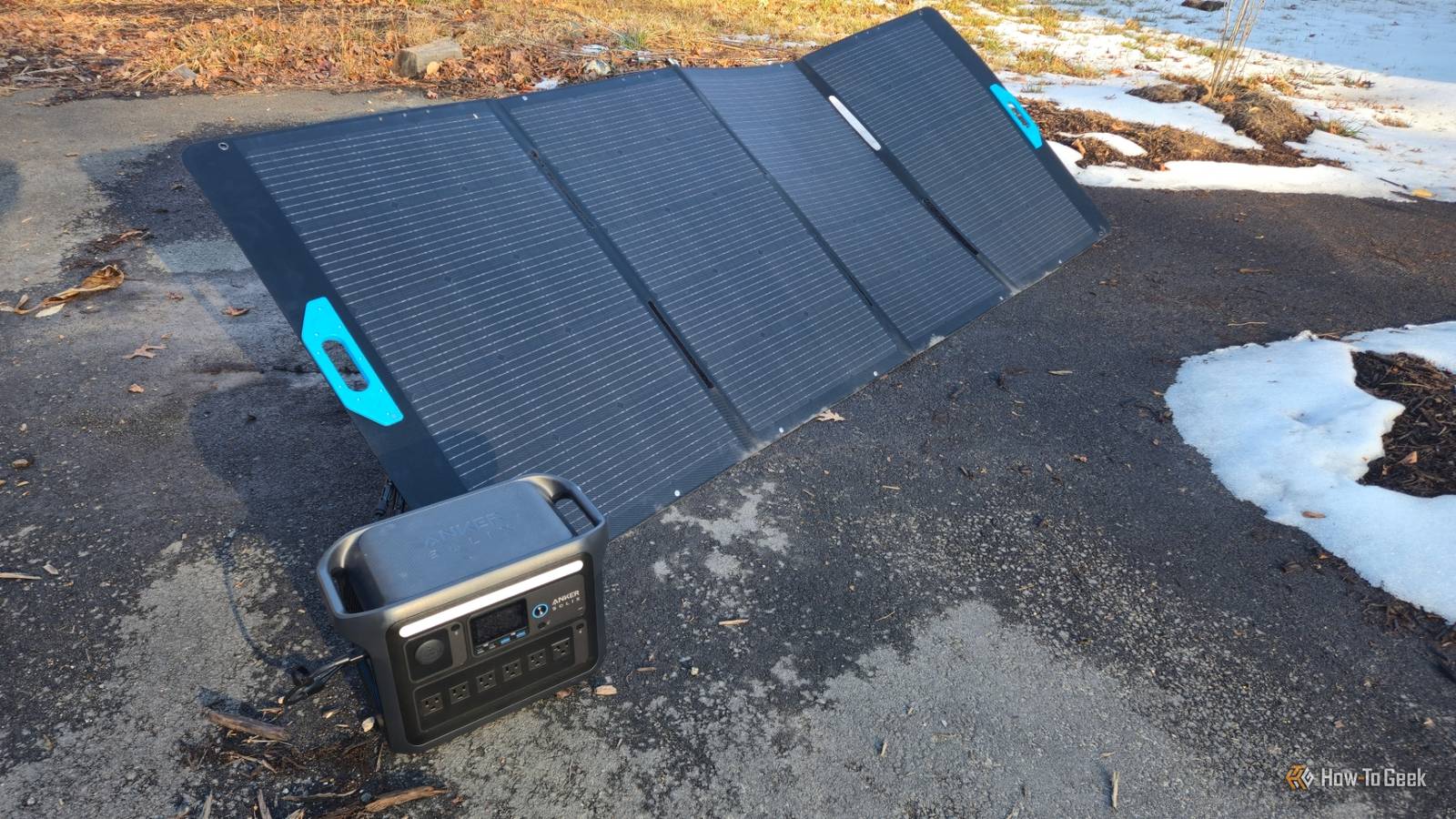
In my house, we rely exclusively on batteries for electricity when our power goes out. Portable solar panels are a vital part of our home survival kit—even in the dead of winter.
Portable solar panels are available when our rooftop solar isn’t
Our rooftop solar goes down with the grid
Portable solar panels are not fixed in any place, like those mounted to a rooftop or placed on a ground mount out in a yard. Many are flexible solar panels that you can fold and carry into your house, a shed, or the back of a vehicle. You can also use regular rigid solar panels and make them portable by attaching folding legs, like these from Powered Portable Solar.
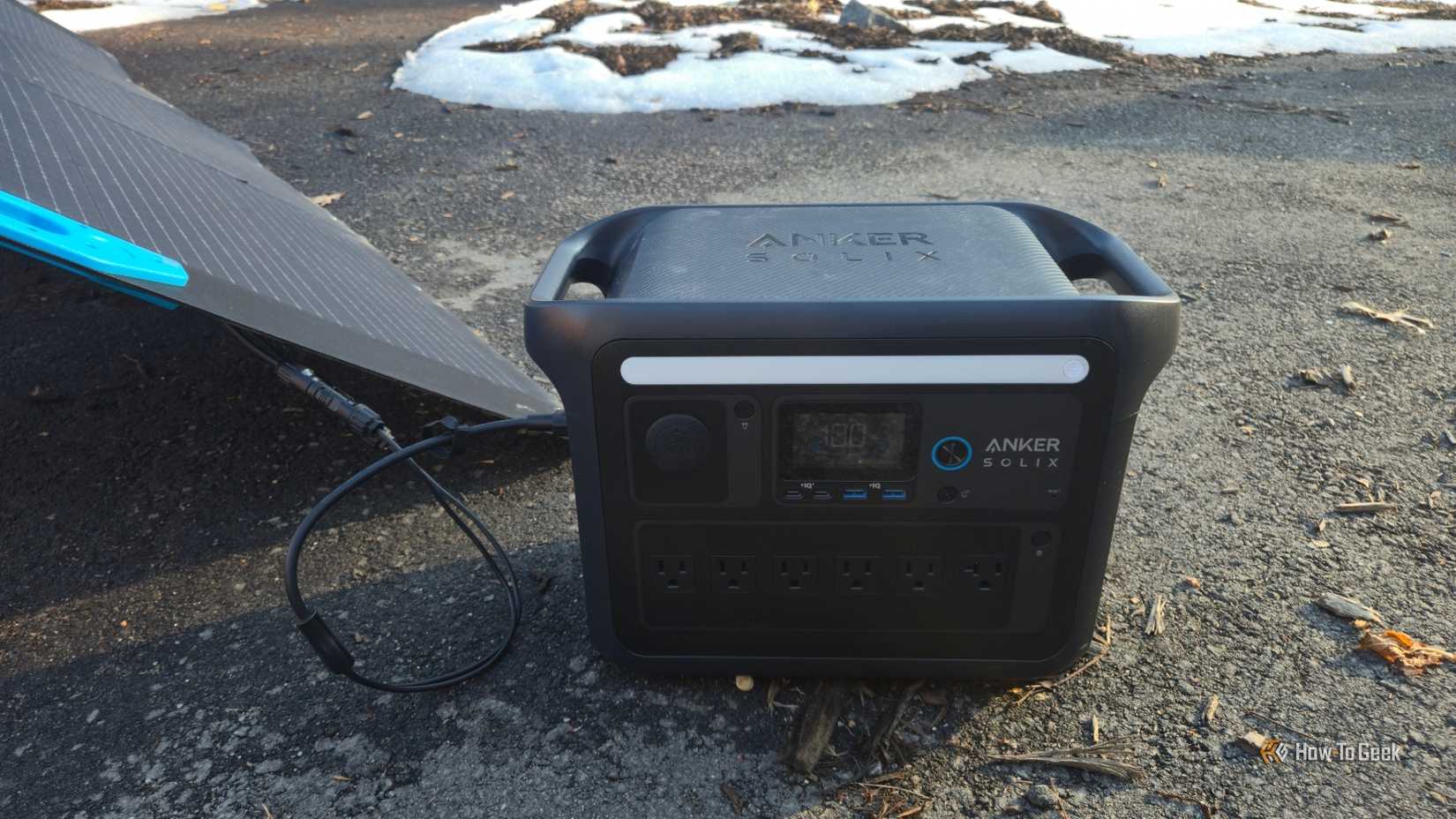
I currently rely on various Anker SOLIX portable power stations. I bought many of them as an alternative to a Tesla Powerwall, and several came in bundles that included foldable solar panels. If you’re going to buy panels separately, rigid ones (the kind you see on rooftops) will save you a great deal of money, since even off-brand flexible solar panels will cost more and ultimately won’t last as long. Foldable solar panels last years, whereas rigid ones will last decades.
Credit: Bertel King / How-To Geek
Either type will do a good job charging your batteries during an outage. I invested in a 60-foot extension cord that allows me to place my portable panels out in the yard while the battery being charged is still in use inside. This allows me to refuel my power sources indefinitely during an outage without having to worry about long lines at a gas station or whether I have enough cash on hand to buy more. This came in handy over the summer when several outages put my batteries and panels to the test.
Snow can cover fixed solar panel arrays
Snow buries solar panels like everything else
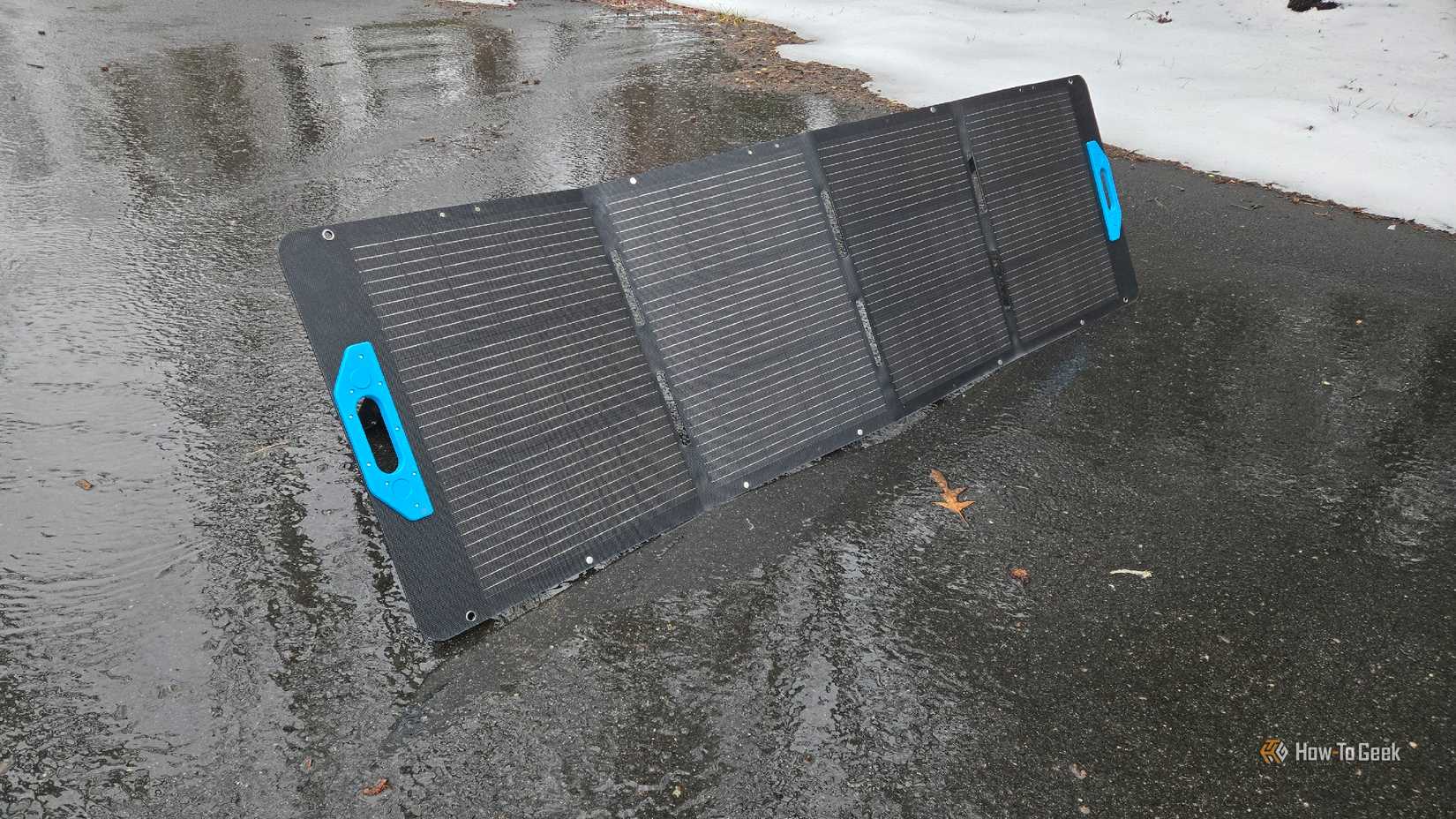
If you have rooftop solar like we do, winter presents a distinct challenge compared to spring and summer. When the power goes out during a winter storm, snow can blanket your panels. During our most recent storm, the panels were covered for several days. When I opened the Enphase Enlighten app to check on them, I could see their energy production reduced to zero.
There’s the option to clean off these panels, which is harder on a rooftop than on ground mounts. Even though our rooftop is quite accessible and easy to walk on, our most recent winter storm covered the panels not just with snow but with ice. This made the roof too slippery to traverse safely and the ice too difficult to remove without risking damage to the panels.
Portable solar panels are stored somewhere safe and dry while the snow is falling. I can then place them outside when the storm has passed. That way, they are on top of the snow, not the other way around.
Portable panels can move with the sun
Don’t leave your panels languishing in the shade
The primary challenge winter presents to producing solar energy is that we get fewer hours of sunlight. The sun rises later in the morning and sets earlier in the evening, which means there’s less energy available to put into batteries. The sun also reaches different angles in the sky, which is why mounted solar panels don’t produce the same amount of energy year-round.
With portable solar panels, I can move the panels around throughout the day to maximize the available sunlight. They can go into the part of my yard that the sun hits first in the morning, and I can relocate them to the area that last receives sunlight in the evening. I can also adjust their angle as needed. I can stand them up steeply to face the sun when it’s near the horizon, and I can lay them down nearly flat for when the sun is high in the middle of the day.
Credit: Bertel King / How-To Geek
Charge multiple batteries at once
More panels, more power, and more flexibility
My portable solar panels came in bundles for different-sized portable power stations. I have massive 400W panels for my Anker SOLIX F3800 Plus and the original F3800. Batteries big enough to plug into an inlet port and power your home can take in thousands of watts of energy. The F3800 can handle 2400 watts, while the upgraded model can bring in 3600.
These 400-watt panels also work with my smaller Anker Solix C1000. With two of those attached, the C1000 can recharge in two hours of peak sun. That’s fast enough to recoup their energy even in the shorter winter hours.
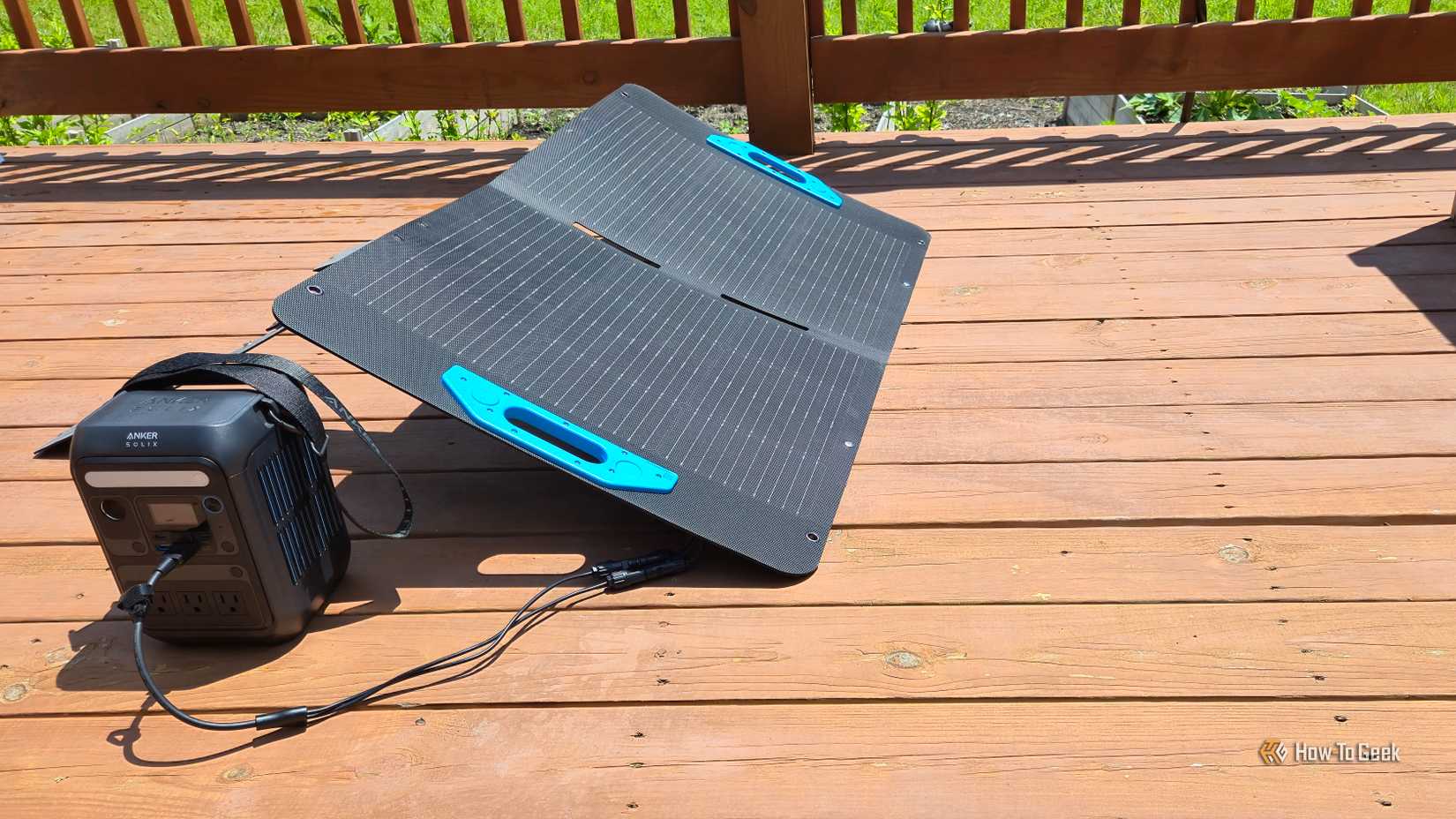
I also have 200-watt and 100-watt panels. The smallest is reserved for my Anker SOLIX C300. I learned the hard way not to plug a bigger panel into this model after I accidentally fried my first two. This unit isn’t strong enough to power cooking appliances, but it’s still my favorite and most used power station, thanks to its light weight. It’s still plenty large enough to charge our phones, laptops, tablets, and gaming handhelds. That makes it the battery we keep closest and move around with us. We’ve invested in multiples so one can be outside charging while others are in use.
Credit: Bertel King / How-To Geek
Solar panels don’t recoup energy in minutes like gas does. They take hours. The ability to have multiple panels set up with multiple batteries provides the least disruption.
Relying on portable solar panels is not a cheap solution. Depending on the size and number of batteries you’re looking to charge, this option sits somewhere between the cost of a portable gas generator and a whole-home backup one. But you don’t have to choose between one or the other. If you’re looking to maximize your energy security during an outage, the most security comes from a mix of both. You can rely on gas to charge your power stations when the sun is down or blocked by the weather, and you can use your batteries to extend how long your gas lasts, since the gas generator only needs to run long enough to recharge your batteries.
I’ve chosen to invest entirely in renewable energy sources. That is why, ahead of this most recent winter storm, I wasn’t concerned about stocking up on gas, but I did get a new chainsaw to make sure we had enough firewood for our wood stove, which can heat our living area, cook food, and boil water for bathing.

8/10
Brand
Anker
Dimensions
27.6×10.3×15.6
Weight
136.7lb/62kg
AC Output ports
One NEMA TT-30R, One NEMA L14-30R, Six NEMA 5-20R
AC Input rating
1800W
DC Output ports
120W, 12V/10A
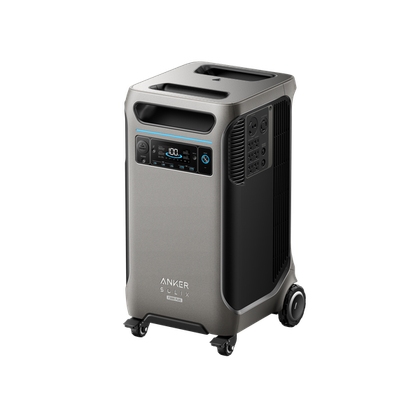
The Anker F3800 Plus is an updated version of Anker’s F3800 solar generator, offering the same 3.84kWh capacity and 6000W output. This model comes with improved charging, with a new max solar input of 3200W and 165V, along with support for 240V from a gas generator.
8/10
Brand
Anker
Dimensions
14.8×8.07×10.5 in
Weight
28.4 lb
AC Output ports
Six / 1800W Pure Sine Wave (2400W Surge)
AC Input rating
1300W
DC Output ports
120W, 12V/10A
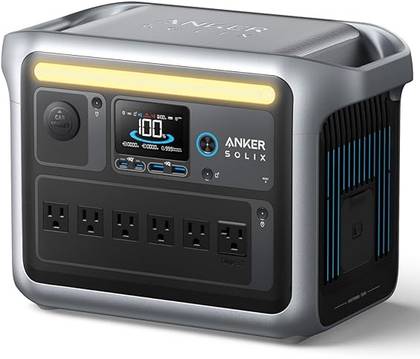
The new Anker SOLIX C1000 is a compact yet powerful 1800W portable power station. It packs 11 different ports, 2400W AC power surge, built-in lighting, and more. Charge all your gear or be prepared for an emergency.
Dimensions
6.46″L x 6.34″W x 9.45″H
Weight
4.1 Kilograms
AC Output ports
8
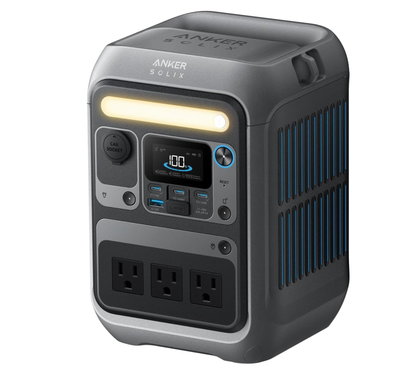
Anker’s SOLIX C300 solar power station weighs just 9 pounds but offers a 288Wh capacity and a large selection of ports, including three A/C outlets. It’s an excellent option for camping, travel, or short power outages.