
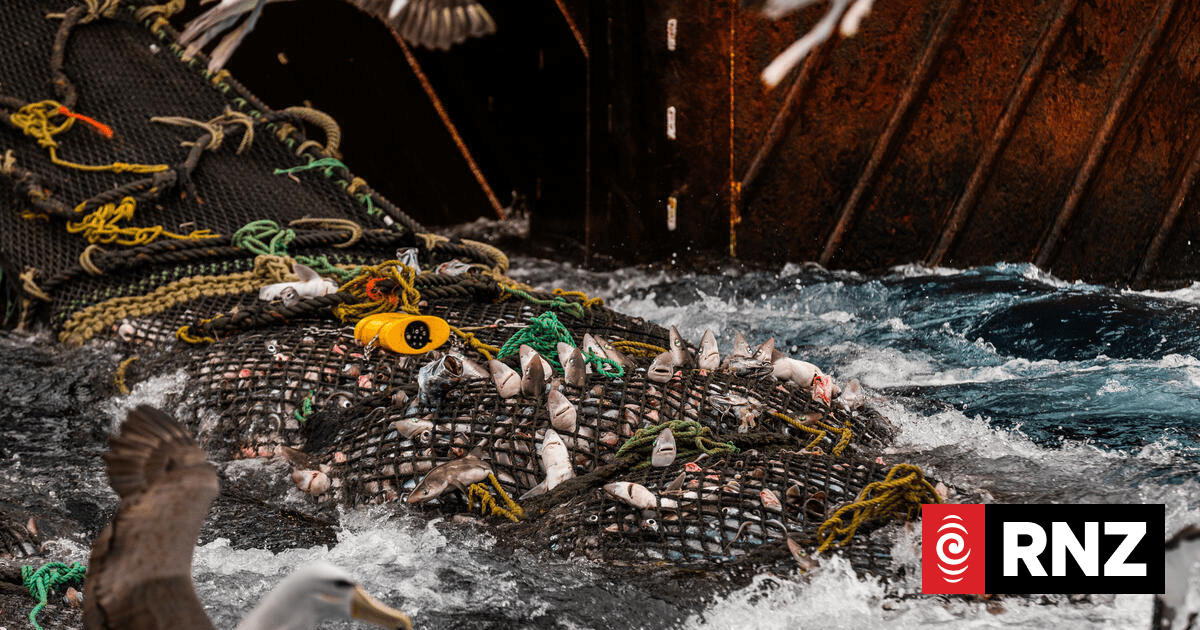
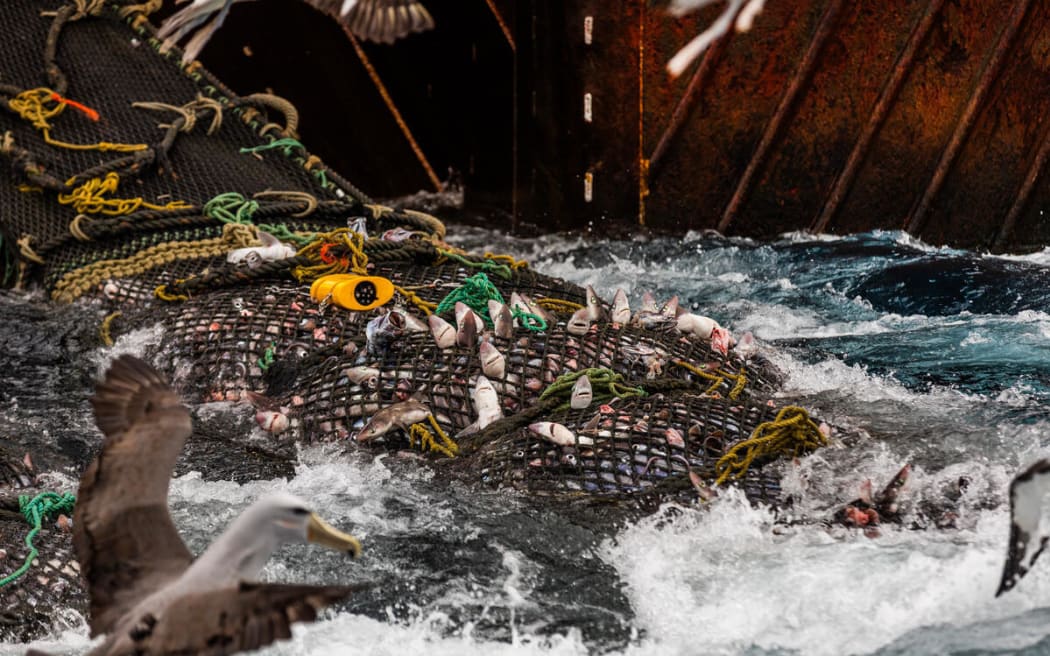
Greenpeace Aotearoa activists confront the Talley’s bottom trawler Amatal Atlantis on the Chatham Rise, painting “ocean killer” on its hull to protest destructive bottom trawling.
Photo: Paul Hilton
A new poll shows a majority of New Zealanders want the fishing method of bottom trawling banned, as New Zealand is the last country operating a bottom trawling fleet in the high seas of the South Pacific.
But the Oceans and Fisheries Minister Shane Jones said it was too valuable an industry for the country to get rid of, and claims that Greenpeace – who is leading calls for a ban – was trying to trying to terminate the New Zealand fishing industry in the Pacific.
The Horizon polling reveals that 78 percent of New Zealanders want a ban on bottom trawling in the high seas .
An oceans campaigner at Greenpeace, Juan Parada, said other Pacific regional countries have been advocating for stronger rules against bottom trawling.
“It’s highly destructive. It has a high impact on the ocean’s health. Bottom trawlers drag heavy weighted nets across the sea floor, and they wipe out entire ecosystems in their way,” Parada explained.
“This is destroying corals and sponges, catching all the creatures, like sharks, sea birds, and we know that this is really harmful for entire ocean communities, because these ecosystems are really slow to grow, and they get wiped out in minutes.”
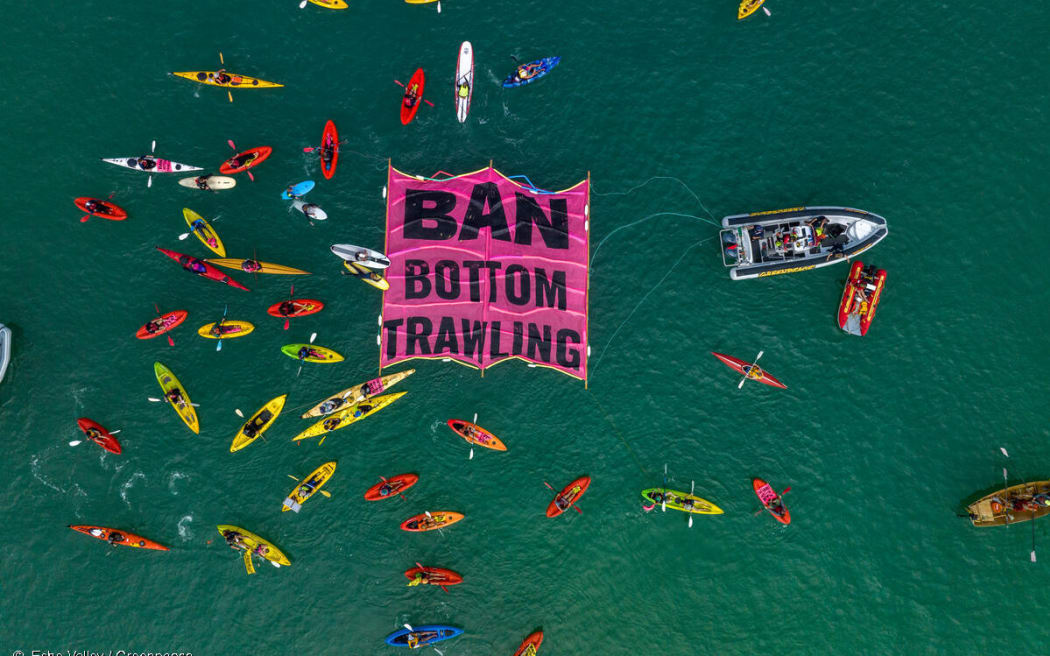
A flotilla of crafts, from fishing boats and yachts to kayaks and stand up paddle boards, surrounding a floating ‘ban bottom trawling’ banner at Mission Bay in Auckland, New Zealand in a show of opposition to bottom trawling in the Hauraki Gulf marine park.
Photo: Simon Murtagh
Regional management
Greenpeace is particularly concerned that New Zealand’s government is planning to propose at the upcoming meeting of the South Pacific Regional Fisheries Management Organisation to increase the amount of coral that can be caught before the area must be closed.
“This is a really bad look for New Zealand, because it goes against what pretty much all the other countries are working for.
“It is out of step with what New Zealanders want, and I just think that New Zealand government needs to listen and stop bottom trawling now, because this destruction is not what anybody wants, really.”
However, Shane Jones said bottom trawling takes place in a tiny area that is less than one percent of the 56 million square kilometres of sea managed by the Organisation.
“The bottom trawling that takes place in the Pacific pertains to a tiny area akin to a beauty spot,” Jones told RNZ Pacific.
“There’s over 1000 ton – I can bet you – of orange roughy fishery resource up there. That’s important for jobs. It’s important for economic export revenue, and it’s wrong for Greenpeace and other fellow stakeholders of an international character, to terminate the presence of New Zealand in the Pacific.”
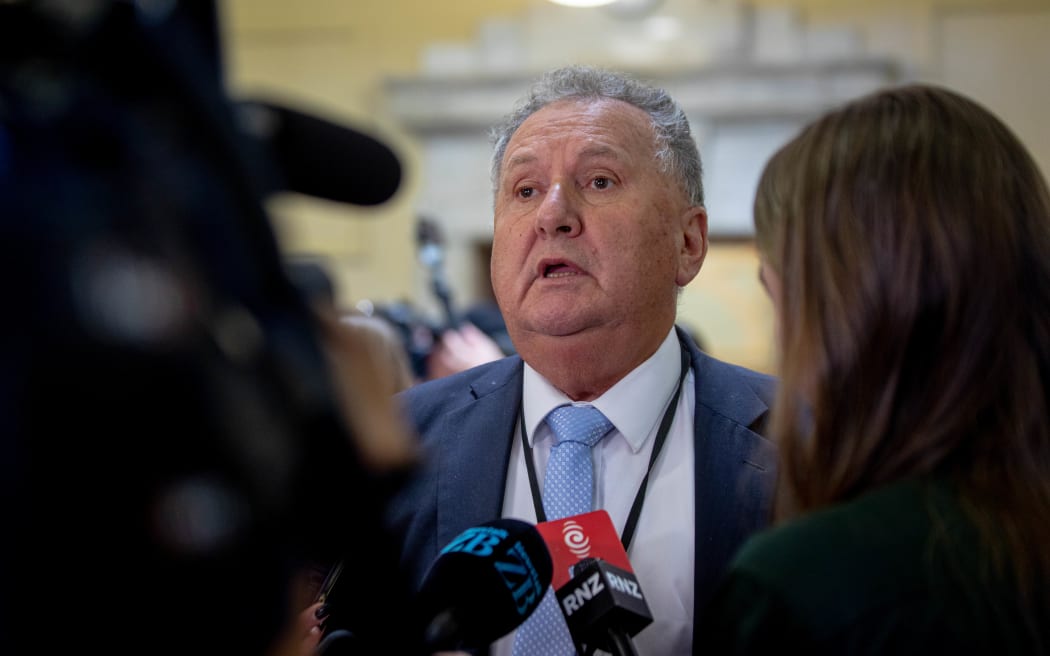
Shanes Jones
Photo: RNZ / Mark Papalii
NZ reputation in the Pacific
Jones defended the country’s bottom trawling practices against criticism by Greenpeace.
“The New Zealand fishing industry has a proud and very long history of catching fish sustainably in the Pacific,” Jones said.
“It is wrong for green zealotry to force Kiwis out of the Pacific, especially when the other nations that are there do not have the same track record for fishing as we Kiwis have.”
While other regional countries may oppose New Zealand’s proposal, Jones admitted a range of views would be heard at the plenary of the upcoming meeting of South Pacific Regional Fisheries Management Organisation.
He said it would be “a contest of ideas” but New Zealand’s official position at the meeting may be the hurdle to consensus.