

Adults living with obesity face a significantly higher risk of serious infections, a new international study shows. Researchers found that people with obesity are 70% more likely than those of a healthy weight to develop severe infections requiring hospitalisation or causing death. The analysis drew on health data from more than 540,000 adults in Finland and the United Kingdom.
Infectious diseases, caused by bacteria, viruses, parasites, or fungi, range from mild illnesses like influenza, pneumonia, urinary tract infections, and stomach infections to more serious conditions such as COVID-19. The study suggests that excess body weight can increase the risk that these infections become severe.
To understand the link, researchers analysed long-term data from two Finnish health studies and the UK Biobank. Participants were followed for an average of 13 years, with their body mass index (BMI) recorded at the start. BMI, calculated from a person’s height and weight, is commonly used to assess whether someone is within a healthy weight range.
A BMI between 18.5 and 24.9 is considered healthy, while a BMI of 30 or more is defined as obesity. The researchers divided obesity into three levels, with the highest category including people with a BMI of 40 or above. The results showed a clear pattern: as BMI increased, so did the risk of severe infection. People with the most severe obesity faced nearly three times the risk compared with those in the healthy weight range. The link was observed across many bacterial and viral infections, with particularly strong associations for skin and viral diseases.
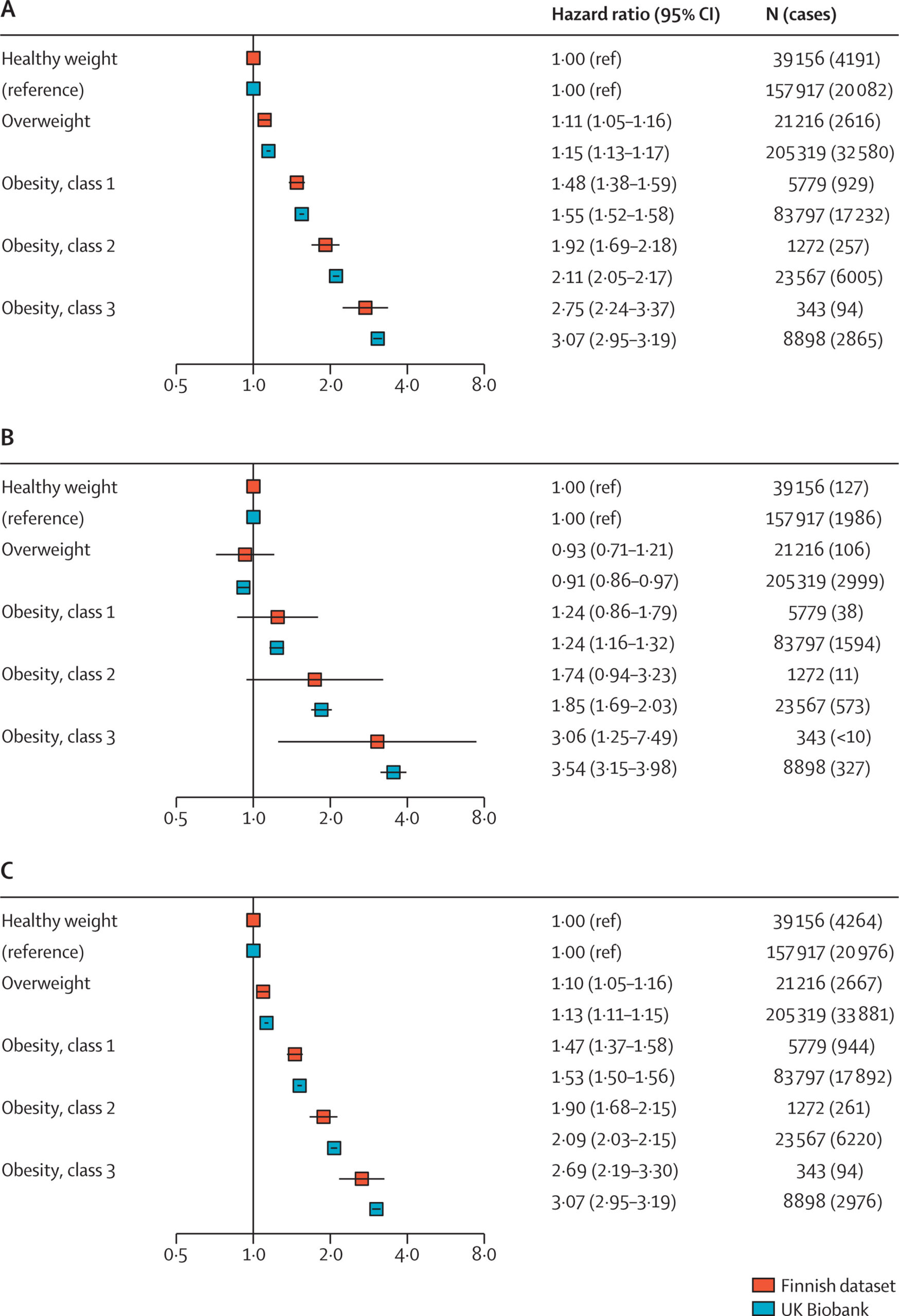 © Nyberg, Solja T et al.
Beyond individual risk, the researchers also examined the global impact of obesity on infectious disease deaths. Using international health data, they estimated that around 600,000 of the 5.4 million infection-related deaths worldwide in 2023 may be linked to obesity. This represents roughly one in ten such deaths. During the COVID-19 pandemic in 2021, the proportion was even higher, reaching about 15%.
The burden varies between regions. North Africa and the Middle East showed some of the highest proportions of infection deaths associated with obesity. In contrast, South Asia recorded much lower percentages. These differences largely reflect how obesity rates vary across countries and populations.
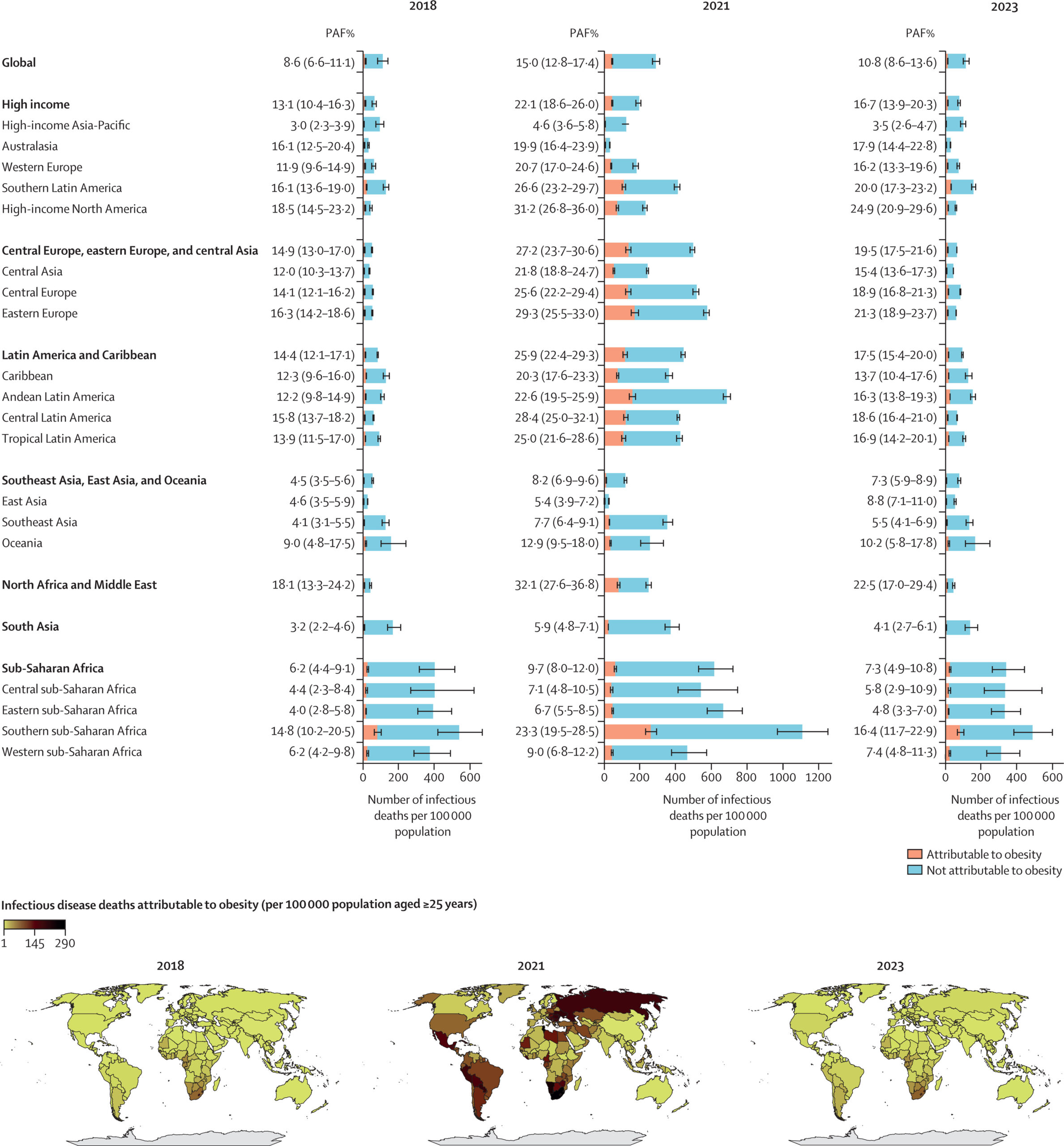 © Nyberg, Solja T et al.
Scientists believe several biological factors may help explain the connection. Obesity can affect how the immune system works, reducing the body’s ability to fight off harmful germs effectively. The immune system acts as the body’s defence mechanism against infections. When it does not function properly, illnesses can become harder to control.
Obesity is also linked to chronic inflammation, meaning the body remains in a constant low-level state of stress. Higher blood sugar levels and other metabolic changes can create an environment in which bacteria and viruses grow more easily. These combined effects may increase the severity of infections once they occur. However, researchers emphasise that more studies are needed to fully understand the exact biological mechanisms involved.
@letstalkaboutmedical Obesity is not a look its internal damage #obesity #obesityawarness #learnwithme #fyp #viral ♬ Suave – The Pianist & D’Michel leb
Changes in body weight over time also appear to play a role. People who gained weight and moved into the obesity category increased their risk of severe infection. Those who lost weight experienced a modest reduction in risk, although it did not completely return to the level seen in individuals who had always maintained a healthy weight. This finding highlights the importance of preventing weight gain early on.
The authors note that the study is observational, meaning it cannot prove that obesity directly causes severe infections. It also relies mainly on BMI, which does not measure body fat distribution in detail. Nevertheless, the very large number of participants and the consistent results across different groups strengthen confidence in the findings.
Obesity has long been associated with chronic conditions such as diabetes and heart disease. This research shows that its impact may extend beyond long-term illnesses to include infectious diseases as well. As global obesity rates continue to rise, experts warn that the consequences for public health could include a growing burden of severe infections worldwide.