
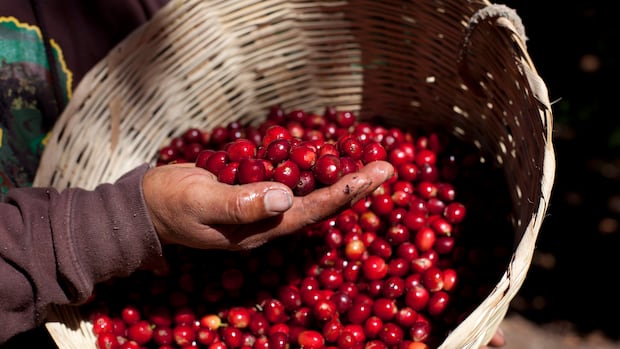
Cultivating coffee in Colombia for more than 100 years, Chalo Fernandez’s family knew a time before climate change had become so pronounced.
Fernandez, who now runs his family farm as well as Trebilcock Coffee Roasters in Pickering, Ont., remembers how his grandfather could forecast the weather and rain by looking up at the mountains near their farm. The family could rely on that information to plant their crops, dry their beans, and take steps to cover their crops to protect them.
That reliable weather is long gone, and producers like Fernandez are increasingly facing wild swings in temperatures and rain year-to-year that are leading to losses in harvest.
“Sometimes we get too much sun, so the trees [grow out] all the flowers, but then they die because they don’t get the right amount of water,” he said. Those berry-producing flowers, he explained, are sometimes also shocked by the opposite: weeks of non-stop rain.
The climate-related challenges facing Fernandez’s family farm are spreading across the world’s top coffee producers— Colombia, Brazil, Indonesia, Vietnam and Ethiopia — which produce 75 per cent of what is one of the world’s most popular beverages.
According to a new analysis from the U.S. non-profit Climate Central, these countries are experiencing, on average, 57 extra days of coffee-damaging heat because of climate change. Some countries are affected even more — Brazil, the world’s largest coffee producer, is experiencing 70 extra days of damaging heat per year.
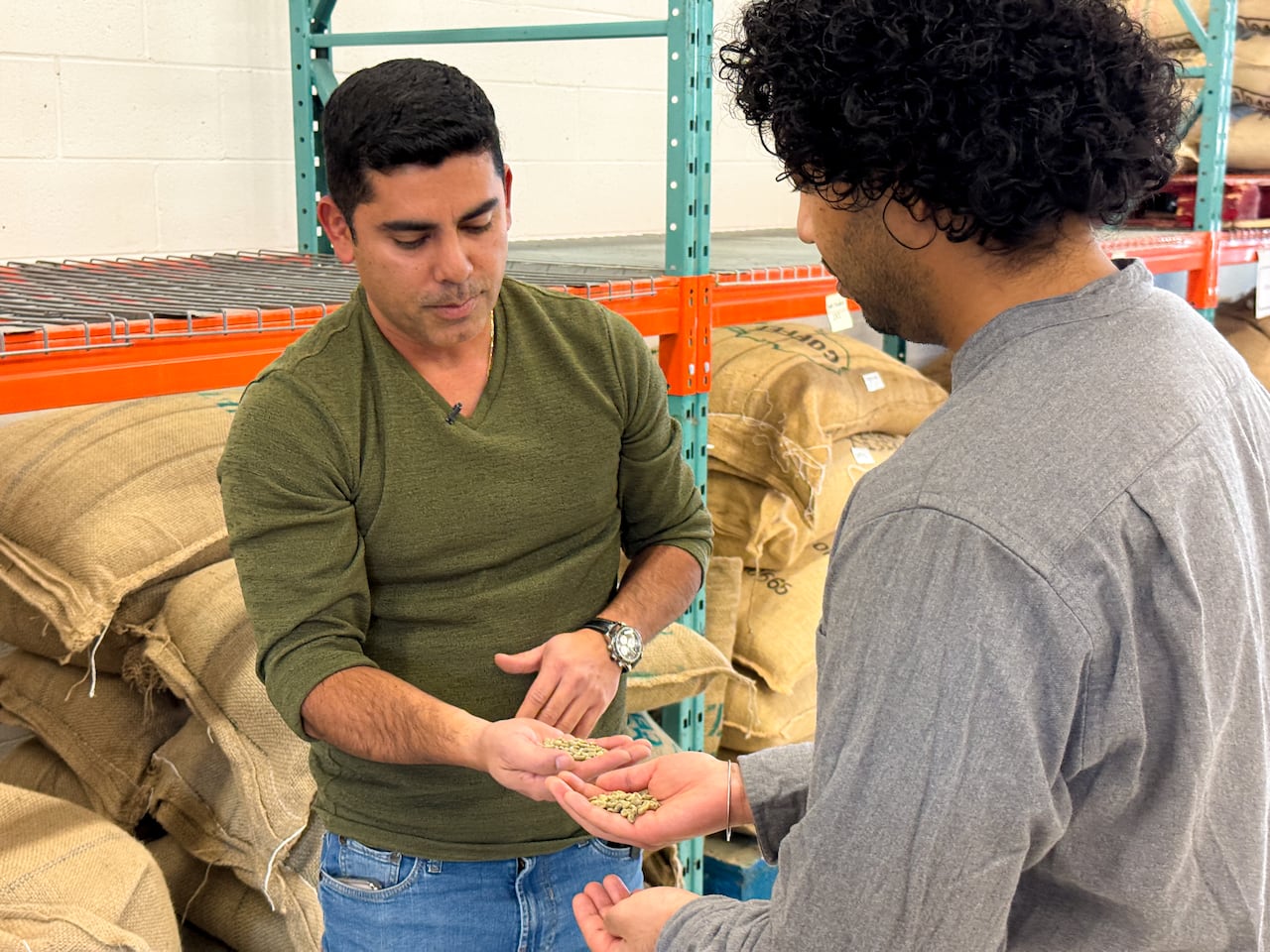 Chalo Fernandez, a fifth-generation coffee farmer from Colombia, spoke about navigating climate-related challenges in the coffee business at his roastery in Pickering, Ont. (Anand Ram/CBC)
The heat directly damages coffee plants, causes erratic rainfall and increases the spread of pests, which can further damage crops. The analysis suggests that the problem is much more widespread than just one or two bad years temporarily hitting coffee production in certain areas.
Colombia, where Fernandez’s farm is located, is facing 48 extra days of coffee-damaging heat, according to Climate Central. He says that three years ago his farm lost over half of its harvest to the extreme weather — losses that farmers have to financially absorb, because it’s hard to raise their prices to international importers.
“[Coffee growers] have been going through so many difficult times that sometimes we don’t produce any money,” he said.
“But you just love your plantation, you just love what you do that you just keep doing because that’s what we love.”
How heat impacts coffee crops
Climate Central analyzed the weather in 25 coffee-producing countries using its Climate Shift Index, a system to attribute changes in temperature to climate change. The system compares current temperatures to a modelled estimate of what the temperature would have been without the influence of human-caused climate change in the atmosphere.
A temperature of over 30 C was considered to be damaging to the coffee plant, according to the analysis. Experts say those high temperatures put stress on the plant, affecting yield as well as quality.
Lily Peck, an evolutionary biologist at the University of California, Los Angeles, compared the impact of heat on coffee plants to heat that forces humans to sweat.
“That’s your body using more energy to try and cool you down than you would be doing in your optimum temperature,” said Peck, who studies how plants and animals respond to human-caused climate change.
“So the plant kind of has to divert its resources away from general function to kind of prioritise surviving.”
That leaves the plant more susceptible to disease, Peck said. On the other end, the warmer temperature or higher moisture levels from heavy rain can also promote the growth of fungus in the plant, making things worse.
Mike von Massow, a food economist at the University of Guelph who reviewed the Climate Central research, said the increasing variability in weather could lead to increasingly unstable prices. Heat can reduce the yield of the coffee plant and also lead to smaller beans that are of lower quality and more difficult to roast.
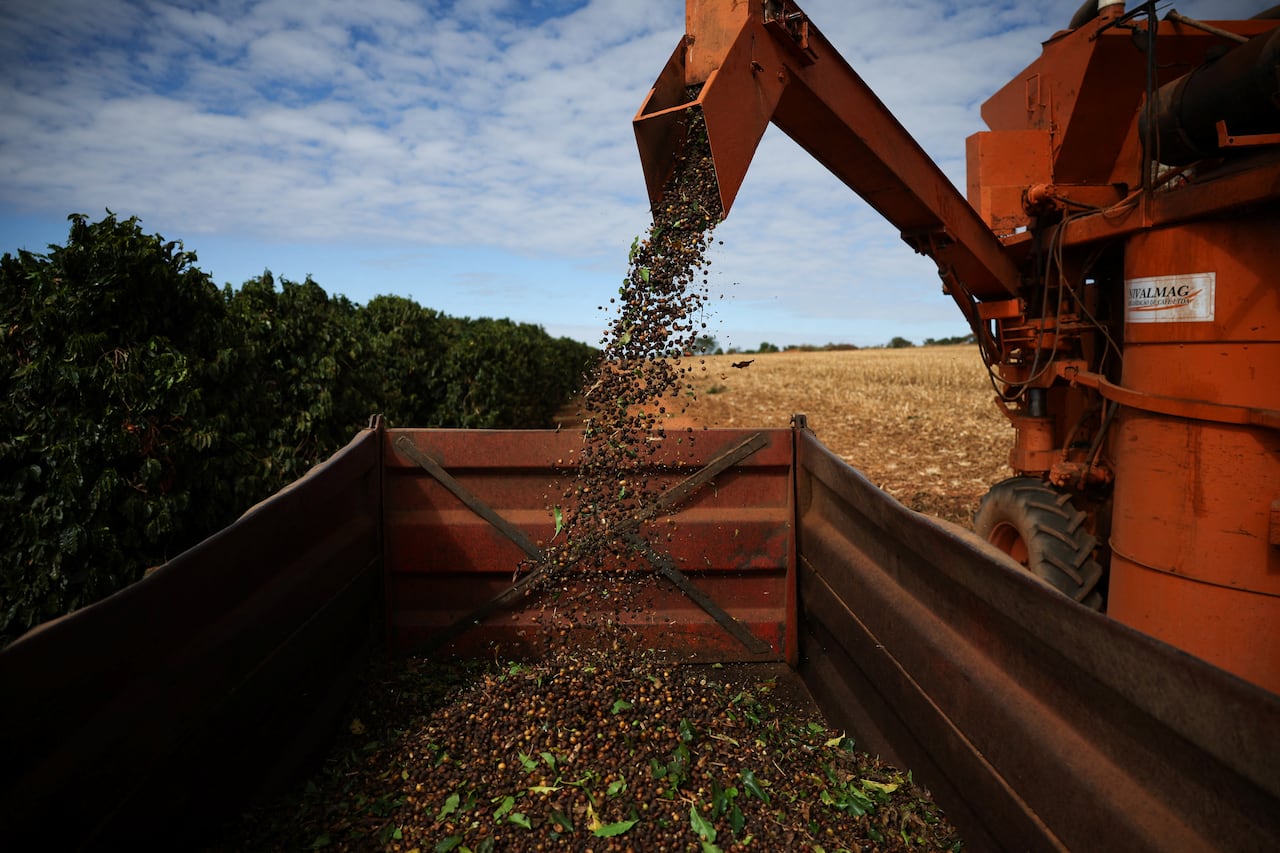 Coffee cherries being processed at a farm in Brazil. The country is the world’s largest coffee producer and faces 70 extra damaging-heat days per year because of climate change, causing uncertainty for farmers and the coffee market. (Adriano Machado/Reuters)
In the past, he said, when crop yields went down in one region, they could at least be partially offset by increases in yields elsewhere. But climate change is impacting coffee producers everywhere.
“Everyone’s yields are coming down. It’s hard to replace that by building resilience into the system,” he said.
How it’s affecting coffee growers
Von Massow and Peck say that most of the coffee in the world is produced by smallholder farms. The problem with extreme heat across the so-called Bean Belt — the equatorial countries of the world — is that everyone feels the pinch and smaller farmers don’t have the resources to cope in the long-term.
And those troubles get passed on to the end consumers abroad, like in Canada, which has one of the highest per capita rates of coffee consumption. Last year was volatile for coffee prices, in part because of lower harvests but also tariff-related trade problems. Retail prices for roasted or ground coffee were 37.4 per cent higher in January 2026 than a year before, according to Statistics Canada’s Consumer Price Index.
Von Massow says if coffee producing regions continue to get hit by climate change impacts, it will lead to higher prices for Canadian and other coffee drinkers. But like other foods that are such a big part of peoples’ identities and routines, the demand will not go down.
“So while we’re seeing this transition in the coffee industry, I think what happens is many of us just say, ‘We’re going to have to spend more for coffee,'” he said.
Fernandez, the coffee grower and roaster, sees firsthand coffee farmers in his community struggling or having to turn to other crops to sustain themselves.
He shares some of those climate-related challenges on his social media, in an effort to raise awareness and be more transparent. In a post last June, he spoke about how heavy rain was making road transportation to his farm treacherous and causing fungus problems.
“You can see the next generations not be interested in coffee farming because of these problems.
“Because if you start going year by year by year and losing and losing and losing, there’s going to be a time where we’re not going to have coffee producers anymore,” he said.