
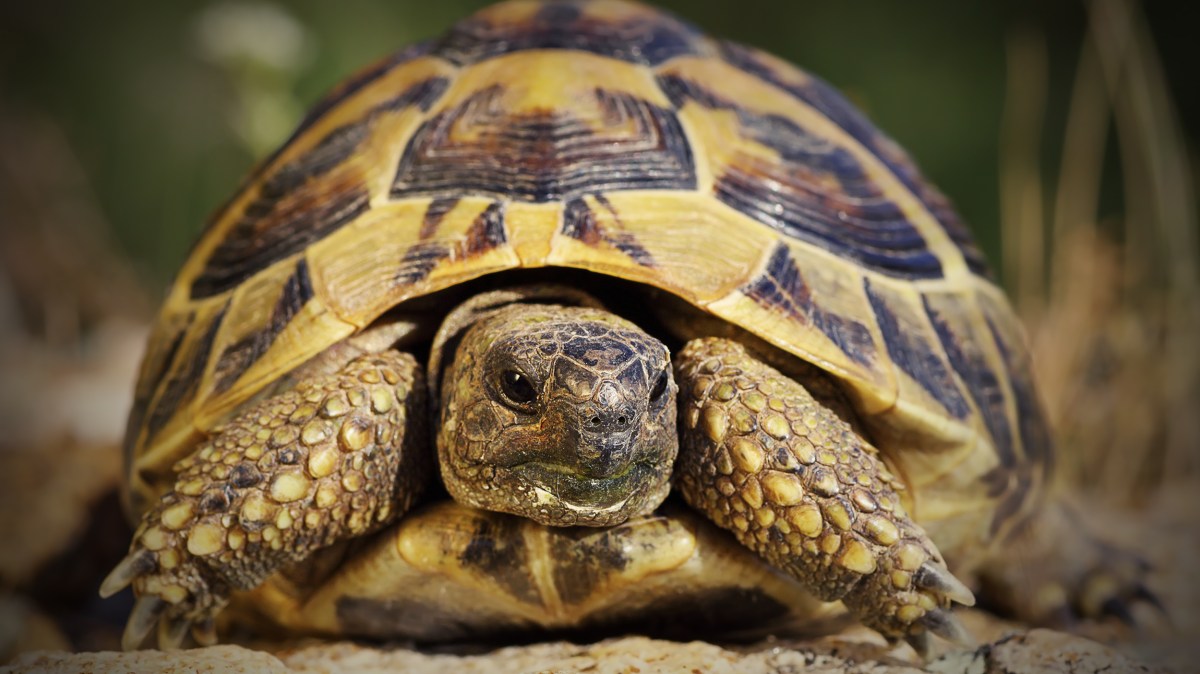
The classical tragedians would have struggled to write a play so dark.
On a lake amid the mountains of Macedonia, there is an island. Here, where Greece meets Albania, there is food. There is safety. There are no predators. But the residents of this haven are doomed to extinction.
Why? There are too many males. And the females — battered, sexually harassed, exhausted — would as soon flee as reproduce, and are slipping and falling off cliffs.
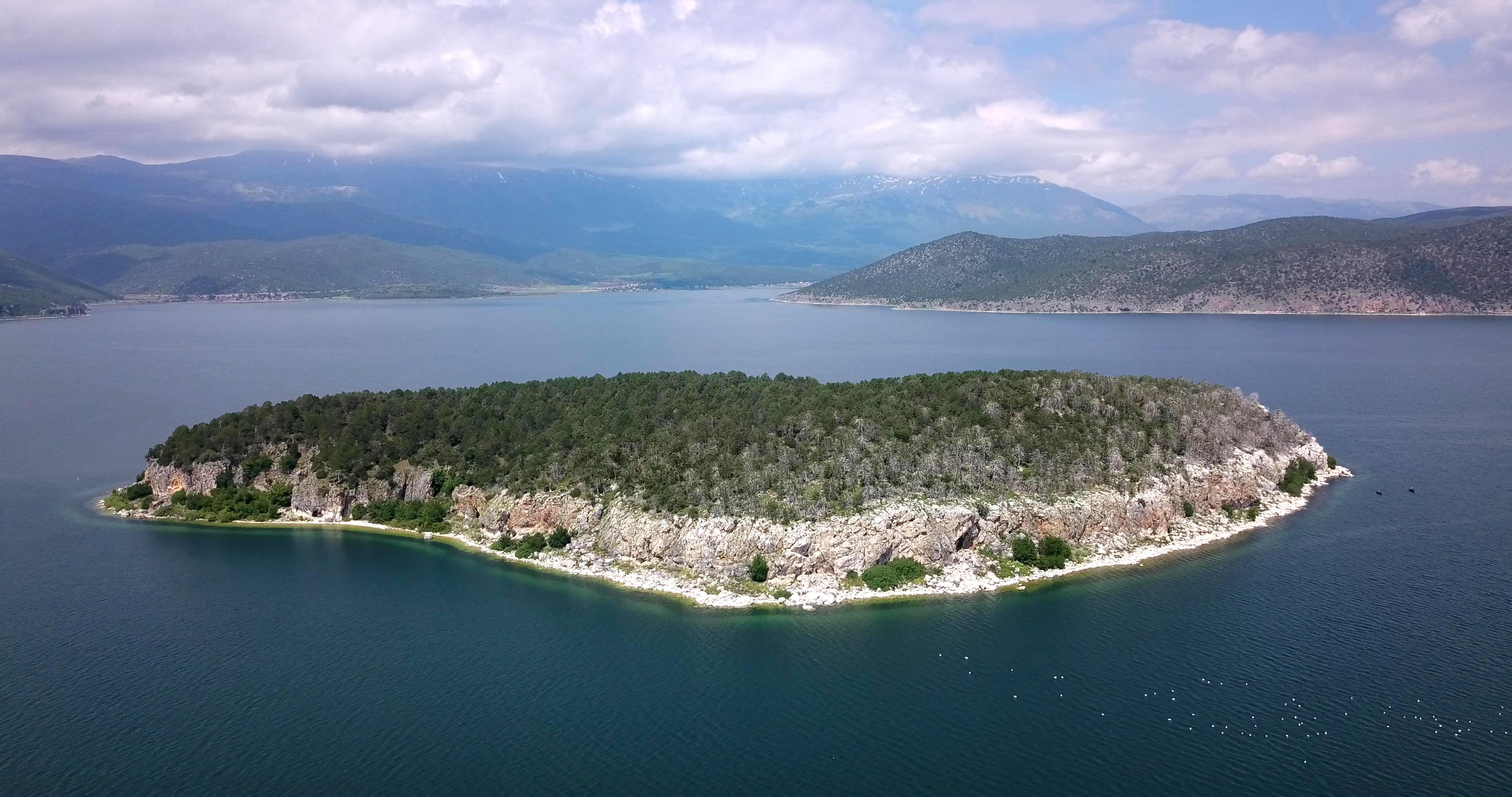
Scientists have calculated that the last female Hermann’s tortoise of Golem Grad will starve, fatally fall or die of stress sometime in the 2080s. When she does, she will be a rare example of what biologists call a “sex-biased extinction vortex”.
“Life for a female on Golem Grad is very, very difficult,” said Dragan Arsovski, from the Macedonian Ecological Society. “And these difficulties start from an early age.”
It took Arsovski some time to realise this. In fact, when he first set foot on Golem Grad, he thought the tortoises were amusing. Because of the lack of females, the sex ratio was about 19 to 1, the males would form what he called “trains”. “There would be a tortoise mounting another one, and then being mounted from behind, and then that tortoise being mounted itself. We found this really comical.”
Then, though, he and his colleagues started analysing the mortality rates of the tortoises. The females, oddly, were dying far younger. “This was the first hint.” It was the first sign that his lake island paradise was anything but. “After that we started looking at everything with different eyes. Things started unravelling.”
In a paper in the journal Ecology Letters, they outline that unravelling. First, they analysed the health of the reptiles. The females, they found, were smaller and more likely to be wounded. Their genital areas showed signs of injuries.
• Killer tortoise devours bird to leave scientists shellshocked
Then there was the behaviour. They found they hid from the “relentless courtship” of the males, meaning they missed out on grazing and the basking that is crucial for cold-blooded animals.
There was worse, though. Four tortoises had been seen tumbling from the cliffs. The scientists looked at the collected shells cracked and smashed at their base, and found females hugely overrepresented. Arsovski thinks that in trying to evade the attentions of 19 males for every female, they slip and fall.
He did not give up on their future. Scouring the island in 2023, he found a female of reproductive age with eggs. He put a GPS tracker on her, to see where she laid them. “She represented hope, the little spark of hope for the population.”
One day they saw the device had malfunctioned. The place it had gone wrong? The cliffs. They found her carcass, smashed open to reveal the eggs. Arsovski said: “It was very emotional. She was a victim of the island, and whatever is going on there.”
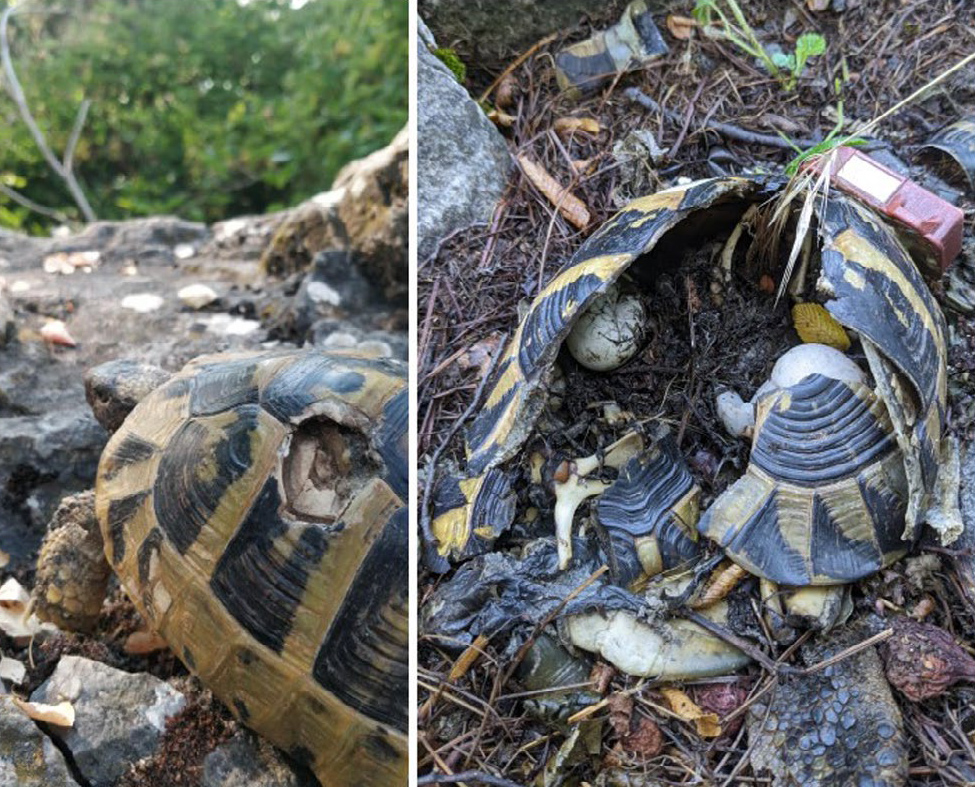
Tortoises have been seen with severely injured shells after falling while escaping males
And what is it, exactly, that is going on there? Even in normal circumstances, Hermann’s tortoises do not exhibit enlightened sexual politics. The males have what is known as a “coercive mating system”, chasing, bumping, biting and “vigorously poking”.
With a low population density and similar numbers of males as females, the females can cope. But once males begin to outnumber females mating is so traumatic that the ratio becomes more and more skewed, developing the extinction vortex.
The question, then, is how the ratio became biased in the first place. There are clues. In the 1920s, a Serbian monk lived on the island, recorded the fauna and did not mention tortoises. Given there are more than 1,000 of them now, that would be odd. Were the tortoises introduced later?
If so, the 122 oldest males on the island might represent that introduced population. Each has a number engraved on its shell. But that is where the clues end.
Arsovski said that trying to understand this had become, at one point, an obsession. “But now I’ve given up, I just study the consequences of it. It’s a ridiculous mystery.”